Gary Eugene Howell uses the Berean Standard Bible. The Holy Bible, Berean Standard Bible, BSB is produced in cooperation with Bible Hub, Discovery Bible, OpenBible.com, and the Berean Bible Translation Committee. The Text of the Berean Standard Bible was dedicated to the public domain as of April 30, 2023.
Verses 1-2
When Jesus had finished saying all these things, He told His disciples, “You know that the Passover is two days away, and the Son of Man will be handed over to be crucified.”
Commentary
Over a thousand years before Jesus walked the earth, the Jewish people were enslaved in Egypt. their physical slavery foreshadowed our spiritual bondage to sin, just as God sending Moses to liberate them points to Jesus who offers freedom from the bondage of sin. During these monumental events, God established the Jewish Passover; which pointed to everything Jesus would do for us.
Tell the whole congregation of Israel that on the tenth day of this month each man must select a lamb for his family, one per household. (Exodus 12:3)
The lamb represents Jesus, which is why He is called the Lamb of God.
The next day John (the Baptist) saw Jesus coming toward him and said, “Look, the Lamb of God, who takes away the sin of the world! (John 1:29)
In Egypt, the Jewish people received these instructions:
Your lamb must be an unblemished year-old male, and you may take it from the sheep or the goats. You must keep it until the fourteenth day of the month, when the whole assembly of the congregation of Israel will slaughter the animals at twilight. They are to take some of the blood and put it on the sides and tops of the doorframes of the houses where they eat the lambs. (Exodus 12:5-7)
On that night I will pass through the land of Egypt and strike down every firstborn male, both man and beast, and I will execute judgment against all the gods of Egypt. I am the LORD. The blood on the houses where you are staying will be a sign; when I see the blood, I will pass over you. No plague will fall on you to destroy you when I strike the land of Egypt. (Exodus 12:12-13)
God passing through the land of Egypt and killing every firstborn male represents God’s Son dying. Death represents the penalty and punishment for sin. The unblemished lamb represents Jesus living a perfect, sinless life. The slaughtering of the lamb represents a substitute sacrifice; a payment for sin. Putting blood on the doorframe, so that God passes over those houses, represents Jesus’s blood saving us from the penalty of sin. Jesus’s blood is the atonement for sin.
Now, returning to Matthew 26, Jesus, the perfect, sinless Lamb of God, is going to be crucified on the Passover, during which His blood will pay for (make atonement for) our sins, thus freeing us from the bondage of sin and death.
Also, notice that Jesus is telling His disciples exactly what will happen two days in the future. In other words, none of this takes Jesus by surprise. He is both fully man and fully God, and He knows exactly what is about to happen.
Verses 3-5
At that time the chief priests and elders of the people assembled in the courtyard of the high priest, whose name was Caiaphas, and they conspired to arrest Jesus covertly and kill Him. “But not during the feast,” they said, “or there may be a riot among the people.”
Commentary
Just two days earlier, Jesus had exposed the hypocrisy of the Pharisees. They boasted that had they lived during the time of their ancestors, they would not have joined them in shedding the blood of the prophets. Yet here they are conspiring to arrest and kill Jesus.
Their plot was the outcome of their unbelief. While Jesus went to the cross to pay the penalty for our sins, unbelief carries profound implications for us today. When someone rejects Jesus Christ as Savior, they reject the very One who bore the death penalty they deserved. Spiritually speaking, they align themselves with those who shouted, “Crucify Him!” (see Matthew 27:22–23). Because our sins put Jesus on the cross, rejecting Christ places a person on the side of those who sought His death rather than with those who receive Him as Savior.
Jesus died on the cross to pay for our sins; to reject that sacrifice is, in effect, to put Him on the cross ourselves. Hell is not simply a punishment for being a sinner; heaven is full of people who sinned. Rather, hell is the consequence of rejecting and effectively crucifying God’s Son with the cry, “Crucify Him! Crucify Him!”
Verses 6-12
While Jesus was in Bethany in the home of Simon the Leper, a woman came to Him with an alabaster jar of expensive perfume, which she poured on His head as He reclined at the table.
When the disciples saw this, they were indignant and asked, “Why this waste? This perfume could have been sold at a high price, and the money given to the poor.”
Aware of this, Jesus asked, “Why are you bothering this woman? She has done a beautiful deed to Me. The poor you will always have with you, but you will not always have Me. By pouring this perfume on Me, she has prepared My body for burial.
Commentary
When the disciples saw this, they were indignant and asked, “Why this waste? This perfume could have been sold at a high price and the money given to the poor.” It seems likely that this indignation originated with Judas Iscariot. This conclusion stems from the fact that just four days earlier, a similar event occurred when Mary, the sister of Martha and Lazarus, anointed Jesus’s feet.
But one of His disciples, Judas Iscariot, who was going to betray Him, asked, “Why wasn’t this perfume sold for three hundred denarii and the money given to the poor?” Judas did not say this because he cared about the poor, but because he was a thief. As keeper of the money bag, he used to take from what was put into it. (John 12:4-6)
Notice the religious fakery at play: Judas feigned the virtues of generosity and charity merely to embezzle the money. Today, anyone can pretend to be religious for selfish reasons, but those who know the Bible well can discern such pretense by the words that come out of their mouth.
Such individuals are often easy to spot because they do not know the Bible. The artificial exuberance they display for God’s Word is distinguishable from the genuine sincerity of someone filled with the Holy Spirit who has spent quality time studying God’s Word.
By their fruit you will recognize them. Are grapes gathered from thornbushes, or figs from thistles? Likewise, every good tree bears good fruit, but a bad tree bears bad fruit. A good tree cannot bear bad fruit, and a bad tree cannot bear good fruit. Every tree that does not bear good fruit is cut down and thrown into the fire. So then, by their fruit you will recognize them. (Matthew 7:16-20)
(For another example of feigned generosity see Acts 5:1-11).
“The poor you will always have with you.” In this statement, Jesus is referencing Deuteronomy chapter 15.
For there will never cease to be poor in the land; that is why I am commanding you to open wide your hand to your brother and to the poor and needy in your land. (Deuteronomy 15:11)
It’s very interesting to note that while God commanded the Israelites to “open wide” their hands to help the poor, Judas Iscariot was seeking to embezzle the very money he claimed should be given to them.
Jesus was cleverly passing judgment on Judas with the statement, “The poor you will always have with you.” If Judas had known the Scriptures well and recalled Deuteronomy 15, he might have realized that Jesus was subtly confronting him: “Instead of stealing our money, why are you not doing what God commanded by opening wide your hand to the poor?”
Verse 13
Truly I tell you, wherever this gospel is preached in all the world, what she has done will also be told in memory of her.
Commentary
This is a very important verse for the faith of all Christians. It serves as evidence that God is ultimately responsible for the content and distribution of the Bible. The Scriptures have been inspired, recorded, preserved, and distributed through the work of the Holy Spirit.
Long before the New Testament was written, and 1,440 years before the invention of the printing press, Jesus declared that this woman’s story would be included in the Bible and shared throughout “the whole world.”
Scoffers and skeptics of Christianity often attempt to cast doubt on the Bible’s validity by claiming its content was arbitrarily selected at the Council of Nicaea in AD 325. This, of course, is false; this verse demonstrates that God decided what would be included in His Word and how it would be spread.
And this makes logical sense. The Bible is the only authority upon which all of Christianity is based. While believers are tasked with sharing the gospel, God retains ultimate responsibility for ensuring its preservation and distribution. If He did not, the Bible would likely be extinct today. Consider how few 2,000, 4,000, or 5,000-year-old texts are still published and distributed worldwide today. While ancient works like The Iliad, The Odyssey, and the writings of Aristotle are still in print, none approach the scale of the Bible. Furthermore, the Old Testament would surely have been lost during any of Israel’s many conquests and exiles were it not for God’s providential protection.
Jesus promised that her story would be told throughout the entire world, and it has been.
Verses 14-16
Then one of the Twelve, the one called Judas Iscariot, went to the chief priests and asked, “What are you willing to give me if I hand Him over to you?” And they set out for him thirty pieces of silver. So from then on Judas looked for an opportunity to betray Jesus.
Commentary
I believe these two events were the tipping point for Judas. As the Bible warns, For the love of money is the root of all kinds of evil. By craving it, some have wandered away from the faith and pierced themselves with many sorrows. (1 Timothy 6:10)
Four days earlier, Jesus corrected Judas in front of everyone regarding money when Mary of Bethany anointed His feet with her hair. Now, Jesus publicly corrects him once again when this woman anoints His head. It appears that Judas’s love of money had been publicly admonished one too many times for his liking, leading him to seek a way to cash in on his proximity to Jesus. Asking, “What are you willing to give me if I hand Him over to you?”, Judas agreed to betray Jesus for the meager sum of thirty pieces of silver; worth about $300 today.
What does it profit a man to gain $300, yet forfeit his soul? (adapted from Mark 8:36)
Verses 17-19
On the first day of the Feast of Unleavened Bread, the disciples came to Jesus and asked, “Where do You want us to prepare for You to eat the Passover?”
He answered, “Go into the city to a certain man and tell him that the Teacher says, ‘My time is near. I will keep the Passover with My disciples at your house.’” So the disciples did as Jesus had directed them and prepared the Passover.
Commentary
Mark chapter 14 presents additional details which are important to know:
So He sent two of His disciples and told them, “Go into the city, and a man carrying a jug of water will meet you. Follow him, and whichever house he enters, say to the owner, ‘The Teacher asks: Where is My guest room, where I may eat the Passover with My disciples?’ And he will show you a large upper room, furnished and ready. Make preparations for us there.” So the disciples left and went into the city, where they found everything as Jesus had described. And they prepared the Passover. (Mark 14:13-16)
Just like in Matthew 21, when Jesus sent His disciples to fetch the donkey, we see once again that He possesses foreknowledge. He knows that when the disciples enter the city, they will meet a man carrying a pitcher of water. Jesus also knows in advance that this man will lead them to a house with a large, furnished upper room; already prepared to accommodate all thirteen of them for the Passover.
Looking back over fifty years of life, it is easy to recall every good and bad decision. Hindsight offers complete clarity. Yet looking forward, I have no clue what’s going to happen even this afternoon. Beyond a few appointments on a calendar, no one truly knows what today will bring, let alone the years ahead.
Jesus, however, was fully man and fully God. As fully God, He knew everything that was going to happen. When He said, “My time is near,” Jesus knew He was going to the cross to die for the sins of the world.
“For the wages of sin is death…” (Romans 6:23a). Jesus paid your death penalty. No matter how bad you have been or how heinous your crimes, Jesus accepted and bore your punishment—”…but the gift of God is eternal life in Christ Jesus our Lord” (Romans 6:23b).
Verses 20-25
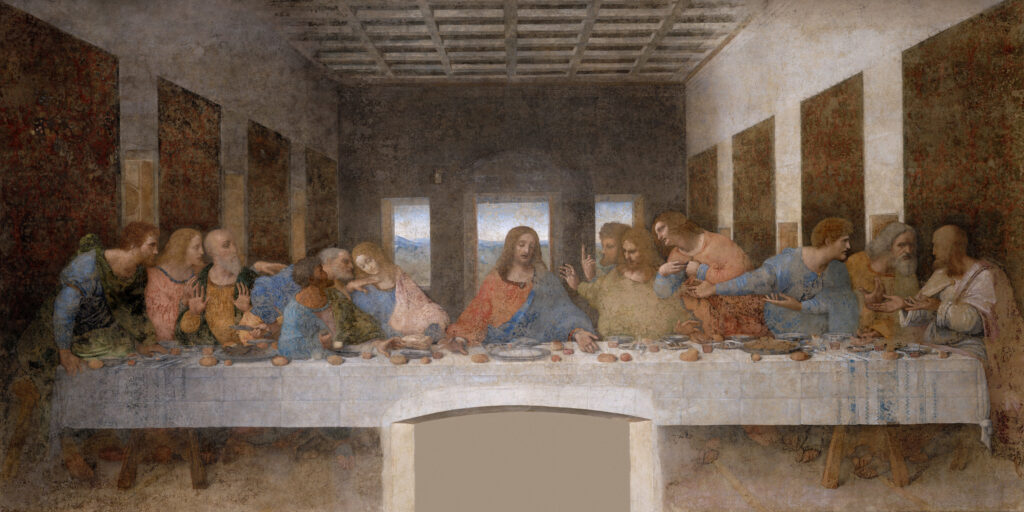
When evening came, Jesus was reclining with the twelve disciples. And while they were eating, He said to them, “Truly I tell you, one of you will betray Me.”
They were deeply grieved and began to ask Him one after another, “Surely not I, Lord?”
Jesus answered, “The one who has dipped his hand into the bowl with Me will betray Me. The Son of Man will go just as it is written about Him, but woe to that man by whom He is betrayed. It would be better for him if he had not been born.”
Then Judas, who would betray Him, said, “Surely not I, Rabbi?”
Jesus answered, “You have said it yourself.”
Commentary
There’s a big difference between head knowledge and the heart. We know that Judas believed in Jesus because he devoted three years of his life to traveling with Him and the other disciples. Yet despite that, Judas’s heart was never truly devoted to Jesus. Judas was already embezzling the disciples’ money. After Jesus publicly corrected him twice for his greed, Judas decided to get the money he wanted by turning Jesus over to the authorities.
Many Christians today possess intellectual knowledge, but lack genuine faith. The moment things become difficult; logic tells them to quit. This is true of almost anything in life: when the difficulty of pursuing something outweighs its perceived value, people walk away. It is a simple concept. Everyone who leaves the faith does so because their belief was only intellectual. Judas is the quintessential example of someone following Christ out of head knowledge rather than faith.
Then they will deliver you over to be persecuted and killed, and you will be hated by all nations because of My name. At that time many will fall away and will betray and hate one another, (Matthew 24:9-10)
Faith is something far deeper than merely a mental acknowledgment of facts. True faith comes from the heart; it’s a deep love for Christ. When a person genuinely loves Jesus, no hardship in this world is so great as to cause them to stop loving Him.
Verses 26-30
While they were eating, Jesus took bread, spoke a blessing and broke it, and gave it to the disciples, saying, “Take and eat; this is My body.”
Then He took the cup, gave thanks, and gave it to them, saying, “Drink from it, all of you. This is My blood of the covenant, which is poured out for many for the forgiveness of sins. I tell you, I will not drink of this fruit of the vine from now on until that day when I drink it anew with you in My Father’s kingdom.”
And when they had sung a hymn, they went out to the Mount of Olives.
Commentary
Consider what Jesus meant when He said, “Take and eat, this is My body” and “Drink from it, all of you; this is My blood”. Let’s examine their meanings in light of John 6:26–58.
Jesus replied, “Truly, truly, I tell you, it is not because you saw these signs that you are looking for Me, but because you ate the loaves and had your fill. Do not work for food that perishes, but for food that endures to eternal life, which the Son of Man will give you. For on Him God the Father has placed His seal of approval.”
Then they inquired, “What must we do to perform the works of God?”
Jesus replied, “The work of God is this: to believe in the One He has sent.”
So they asked Him, “What sign then will You perform, so that we may see it and believe You? What will You do? Our fathers ate the manna in the wilderness, as it is written: ‘He gave them bread from heaven to eat.’”
Jesus said to them, “Truly, truly, I tell you, it was not Moses who gave you the bread from heaven, but it is My Father who gives you the true bread from heaven. For the bread of God is He who comes down from heaven and gives life to the world.”
“Sir,” they said, “give us this bread at all times.”
Jesus answered, “I am the bread of life. Whoever comes to Me will never hunger, and whoever believes in Me will never thirst. But as I stated, you have seen Me and still you do not believe.
Everyone the Father gives Me will come to Me, and the one who comes to Me I will never drive away. For I have come down from heaven, not to do My own will, but to do the will of Him who sent Me.
And this is the will of Him who sent Me, that I shall lose none of those He has given Me, but raise them up at the last day. For it is My Father’s will that everyone who looks to the Son and believes in Him shall have eternal life, and I will raise him up at the last day.”
At this, the Jews began to grumble about Jesus because He had said, “I am the bread that came down from heaven.” They were asking, “Is this not Jesus, the son of Joseph, whose father and mother we know? How then can He say, ‘I have come down from heaven’?”
“Stop grumbling among yourselves,” Jesus replied. “No one can come to Me unless the Father who sent Me draws him, and I will raise him up at the last day. It is written in the Prophets: ‘And they will all be taught by God.’ Everyone who has heard the Father and learned from Him comes to Me—not that anyone has seen the Father except the One who is from God; only He has seen the Father.
Truly, truly, I tell you, he who believes has eternal life. I am the bread of life. Your fathers ate the manna in the wilderness, yet they died. This is the bread that comes down from heaven, so that anyone may eat of it and not die. I am the living bread that came down from heaven. If anyone eats of this bread, he will live forever. And this bread, which I will give for the life of the world, is My flesh.”
At this, the Jews began to argue among themselves, “How can this man give us His flesh to eat?”
So Jesus said to them, “Truly, truly, I tell you, unless you eat the flesh and drink the blood of the Son of Man, you have no life in you. Whoever eats My flesh and drinks My blood has eternal life, and I will raise him up at the last day. For My flesh is real food, and My blood is real drink.
Whoever eats My flesh and drinks My blood remains in Me, and I in him. Just as the living Father sent Me and I live because of the Father, so also the one who feeds on Me will live because of Me. This is the bread that came down from heaven. Unlike your fathers, who ate the manna and died, the one who eats this bread will live forever.” (John 6:26-58)
This entire conversation began because the crowd following Jesus, the same people He had miraculously fed with bread and fish, came back looking for more food. They valued Jesus much like people today might value a discount grocery store.
My family was recently invited to a graduation party for a student my wife knew, but whom I barely knew at all. I initially told my wife I would stay home while she went. But when she mentioned there would be free barbecue, I changed my mind and decided to go. This is exactly how the crowds viewed Jesus. They had no interest in following the Son of God, but they were more than willing to follow Him for a free meal.
As Jesus so often did, he spoke to the crowd in a deliberately enigmatic way so that;
‘Though seeing, they do not see; though hearing, they do not hear or understand.’ (Matthew 13:13b)
The point Jesus makes in John 6, and continues at the Passover table in Matthew 26, is that while God sent manna from heaven in Moses’s day to save the Israelites from physical starvation, Jesus is the true “bread from heaven” who gives eternal life. This language is figurative; Jesus is not calling us to become cannibals. Rather, receiving Jesus as Savior through faith grants eternal life. Just as food saves a starving person from physical death, Jesus saves us from spiritual death.
So we return to the Passover table in Matthew 26, where Jesus took bread, blessed and broke it, and gave it to the disciples, saying, “Take and eat; this is My body.” The breaking of the bread represents Jesus’s body, broken and willingly given up for the sins of the world.
“Then He took the cup, gave thanks, and gave it to them, saying, “Drink from it, all of you. This is My blood of the covenant, which is poured out for many for the forgiveness of sins.” Jesus died on the cross for our sins. He poured out His blood to pay the penalty of death for you and me. Again, as it is stated;
For the wages of sin is death (Romans 6:23a)
“For God so loved the world that He gave His one and only Son, that everyone who believes in Him shall not perish but have eternal life. For God did not send His Son into the world to condemn the world, but to save the world through Him. Whoever believes in Him is not condemned, but whoever does not believe has already been condemned, because he has not believed in the name of God’s one and only Son.” (John 3:16-18)
Further still, when we examine verse 28, the New King James version puts it this way;
For this is My blood of the new covenant, which is shed for many for the remission of sins. (Matthew 26:28 NKJV)
The New Covenant is faith in Christ. The Old Covenant was the Law. Remember that “No one sews a patch of unshrunk cloth on an old garment” (Matthew 9:16a) and “Neither do men pour new wine into old wineskins” (Matthew 9:17a)
The new covenant of faith in Christ is the patch of unshrunk cloth, while the old garment represents the Law of Moses. Likewise, the new covenant is the new wine, and the old wineskins represent the Law of Moses. What this means is that faith in Christ is entirely incompatible with salvation by works.
Verse 30 states they sang a hymn before leaving for the Mount of Olives. This was most likely Psalms 113–118, which were traditionally sung during the Passover meal. Although the original melodies for these psalms have been lost to time, several modern Christian worship songs incorporate these verses, allowing us to sing those same praises to God today, [Examples are Rising by Paul Baloche, Forever by Chris Tomlin and Who Is Like the Lord (Psalm 113) by Sovereign Grace Music.]
Verses 31-32
Then Jesus said to them, “This very night you will all fall away on account of Me. For it is written:
‘I will strike the Shepherd, and the sheep of the flock will be scattered.’ But after I have risen, I will go ahead of you into Galilee.”
Commentary
The scattering of the sheep was necessary. It was God’s will, because if the disciples had rallied around Jesus and fought the armed mob, Christianity would have ended before it began; Jesus and every one of His disciples would have died that night. God scattered the flock to save them so that, in time, they could be gathered back together.
When the day of Pentecost came, they were all together in one place. Suddenly a sound like a mighty rushing wind came from heaven and filled the whole house where they were sitting. They saw tongues like flames of fire that separated and came to rest on each of them. And they were all filled with the Holy Spirit and began to speak in other tongues as the Spirit enabled them. (Acts 2:1-4)
Awake, O sword, against My Shepherd, against the man who is My Companion,
declares the LORD of Hosts. Strike the Shepherd, and the sheep will be scattered (Zechariah 7:13)
“But after I have risen, I will go ahead of you into Galilee.”
After the disciples were scattered, Jesus, their Shepherd, went ahead of them to gather them back together. In the same way, it is God’s work alone; not our own effort or willpower; that draws us to Christ.
No one can come to Me unless the Father who sent Me draws him, and I will raise him up at the last day. (John 6:44)
Verses 33-35
Peter said to Him, “Even if all fall away on account of You, I never will.”
“Truly I tell you,” Jesus declared, “this very night, before the rooster crows, you will deny Me three times.”
Peter replied, “Even if I have to die with You, I will never deny You.” And all the other disciples said the same thing.
Commentary
Why did Peter deny Jesus three times? His failure serves as a clear example of what happens when we try to follow Jesus through our own strength and willpower. In Christian terminology, this is what we call operating in the flesh rather than in the Spirit. Spiritual matters must be handled spiritually. Peter and the other disciples had not yet received the Holy Spirit, so they were operating entirely in the flesh.
Operating in fear, Peter chose self-preservation over his love for Jesus and denied even knowing Him. This is a clear illustration of what happens when people participate in Christian activities without ever truly surrendering their lives to Christ: when hardship comes, they walk away from both the church and from God.
Such individuals were never filled with the Holy Spirit because they never made Christ the King of their lives. These are the people who often say, “I gave faith a try, but it just didn’t work out for me. I tried my best, but it’s not for me.” Well, no kidding! Of course it didn’t work for them. The phrase “I tried my best” indicates that they tried to be the one in control. They attempted to keep themselves on the throne while refusing to yield to Christ. They never died to self. The moment faith became inconvenient, they fell away. You simply cannot come to Christ while walking in the flesh; it is impossible.
Verses 36-38
Then Jesus went with His disciples to a place called Gethsemane, and He told them, “Sit here while I go over there and pray.”
He took with Him Peter and the two sons of Zebedee and began to be sorrowful and deeply distressed. Then He said to them, “My soul is consumed with sorrow to the point of death. Stay here and keep watch with Me.”
Commentary
Too often we treat Christ’s death flippantly. We say ‘Christ died for our sins’ with the same casualness as asking, ‘Honey, have you seen the TV remote?’
But try to imagine yourself in Jesus’s place. If you knew that tomorrow you were going to be tortured, have nails driven through your hands and feet, and endure a slow, agonizing death, with nothing you could do to stop it, how would you feel? Your soul would surely be consumed with sorrow.
We need to appreciate the true gravity of Jesus’s sacrifice. This is vital when taking communion. When we see the wine, we are meant to remember the blood He shed; when we see the bread, we are meant to remember the beating His body endured on our behalf.
Whoever, therefore, eats the bread or drinks the cup of the Lord in an unworthy manner will be guilty of sinning against the body and blood of the Lord. Each one must examine himself before he eats of the bread and drinks of the cup. For anyone who eats and drinks without recognizing the body eats and drinks judgment on himself. (1 Corinthians 11:27–29)
Verse 39
Going a little farther, He fell facedown and prayed, “My Father, if it is possible, let this cup pass from Me. Yet not as I will, but as You will.”
Commentary
Now that we have taken time to imagine ourselves in Jesus’s place, knowing that tomorrow we’re going to be tortured and will die a slow agonizing death, it becomes easy to understand why He asked the Father if there was any way His crucifixion could be avoided. Yet the most critical part of His prayer is when He adds, “Yet not as I will, but as you will” (or as the NLT renders it, “Yet I want your will to be done, not mine”).
And being found in appearance as a man, He humbled Himself and became obedient to death—even death on a cross. (Philippians 2:8)
God wants everyone to be saved and to come to the knowledge of the truth, (see 1 Timothy 2:3–4).
God’s desire is to save you from an eternity of pain and suffering in hell. For human beings, change always comes from a position of discomfort. Therefore, God is willing to allow you to endure temporary hardships if that is what it takes to save your soul. And sometimes “temporary” is 50 or 60 years, because compared to eternity, 60 years is temporary.
This is why the prosperity gospel is false. It teaches that God’s will is for you to enjoy financial success, physical healing, and material abundance in this life, all so you can live in self-indulgent comfort. But consider this: If God was willing to let His Son die for your salvation, isn’t it highly likely that He might also allow discomfort or even disaster into your life if that’s what it takes to bring you to Him?
Is God willing to make a rich man poor if that’s what it takes to save him? Is He willing to take away a person’s health and material possessions if that’s what it takes for them to finally turn to Jesus? The answer to all of these is yes.
Each of us is an individual and God works with us individually. For one person to be saved, perhaps God makes him rich, yet for another person to be saved, God makes him poor. For one person, God heals him, and for another God allows him to become sick.
I knew a man who finally came to Jesus while hanging upside down from his seatbelt, after flipping his car three times on the highway. What will it take for you to finally turn to Jesus? This author’s personal opinion is, ‘why wait and see?’ Turn to Jesus now!
Verses 40-43
Then Jesus returned to the disciples and found them sleeping. “Were you not able to keep watch with Me for one hour?” He asked Peter. “Watch and pray so that you will not enter into temptation. For the spirit is willing, but the body is weak.”
A second time He went away and prayed, “My Father, if this cup cannot pass unless I drink it, may Your will be done.” And again Jesus returned and found them sleeping, for their eyes were heavy.
Commentary
It’s fascinating that in Matthew chapter 8, the disciples found Jesus sleeping in the boat when they believed they were in great peril. Yet now, when Jesus is the one in genuine peril, He finds the disciples sleeping.
In Matthew chapter 8, there was no real danger because Jesus had already told the disciples He would die in Jerusalem, not drown in the Sea of Galilee. That’s why Jesus called them “you of little faith”, they didn’t believe that what he said about himself was true. Now their roles are reversed, and the disciples still don’t believe what Jesus said about Himself (or they don’t understand it). He told them, “I’m going to be crucified,” and “One of you is going to betray me.” The storm is right on top of them, yet the disciples are sleeping in the proverbial boat.
What does this tell us about faith and the flesh? It shows that when we rely on the flesh, our concerns and priorities get completely turned upside down. The disciples panicked when they should have been calm, and they slept when they should have been deeply concerned. They were completely out of sync with Jesus.
In verse 41 Jesus says “Watch and pray so that you will not enter into temptation. For the spirit is willing, but the body is weak.”
“The spirit is willing, but the body is weak” summarizes the entirety of what it means to rely upon Jesus. We can not perform spiritual tasks in the flesh. All spiritual tasks require the assistance of the Holy Spirit. We can not understand the Bible without asking the Holy Spirit for help. We can not share the gospel or perform ministry without asking the Holy Spirit for help. We can’t even fully appreciate the Sunday sermon without asking the Holy Spirit for help. We can not raise our children or have a successful marriage without asking for the Holy Spirit’s help.
When we rely on ourselves, we are 100% out of sync with Jesus, panicking when we should be calm, and sleeping when we should be alert. A real danger for Christians comes when they’ve performed a task dozens, hundreds, or even thousands of times and slip into relying on their experience (that is, relying on the flesh). A pastor who’s written 100 sermons falls into temptation when, relying on his own writing experience, he sits down to write another sermon without asking the Holy Spirit for help, assuming that because he’s done it 100 times before, he can just sit down and pound out next week’s message. Likewise, the dad of a 7-year-old has been a father for 2,555 days (7 years x 365 days). He may be tempted to rely on his own experience and fail to start the day asking the Holy Spirit for help.
This is also true of the church worship leader. The man or woman who has spent years practicing their instruement, such as guitar or piano will fall into the temptation of relying on their own talent, rather than the Holy Spirit, to lead the congregation to Christ.
“I can not perform spiritual tasks in the flesh.” Write that down and hang it on your wall! Do not rely on yourself, no matter how much experience you have or how many times you’ve done a certain thing before. This morning, before sitting down to write these words, this author asked the Holy Spirit for help. At the start of everything you do, ask the Holy Spirit for help! And at the end of everything you do, give thanks to the Holy Spirit for the help you received.
“Thank you Holy Spirit, for helping me to put these words onto this paper. In Jesus’ name. Amen.”
Verses 44-47
So He left them and went away once more and prayed a third time, saying the same thing. Then He returned to the disciples and said, “Are you still sleeping and resting? Look, the hour is near, and the Son of Man is betrayed into the hands of sinners. Rise, let us go! See, My betrayer is approaching!”
While Jesus was still speaking, Judas, one of the Twelve, arrived, accompanied by a large crowd armed with swords and clubs, sent from the chief priests and elders of the people.
Commentary
What is the significance of Jesus praying three times that the cup might pass from Him?
In Luke chapter 11, after being asked to teach the disciples how to pray, Jesus tells the story of a man going to his friend’s house at midnight to ask for loaves of bread.
the one inside answers, ‘Do not bother me. My door is already shut, and my children and I are in bed. I cannot get up to give you anything.’
Jesus tells the disciples, “Even though he will not get up to provide for him because of his friendship, yet because of the man’s persistence, he will get up and give him as much as he needs.”
Here in Matthew 26, we see Jesus praying with persistence. Why is it God’s will that we do this? This author concludes it’s to encourage an ongoing relationship with the Lord. If prayer were always an ask-once-and-instantly-receive process, our self-centered and sinful flesh would seek to turn God into a vending machine. If I were to give my 3-year-old daughter every single thing she asked for, the moment she asked, she would turn into a spoiled brat.
Whatever it is you want from God, ask for it multiple times in prayer over the course of days, weeks, months, or perhaps even years. I further recommend that you keep a prayer journal because it’s very easy to forget that you prayed for something a year or more ago. When it’s finally received you may not even remember that you ever prayed for it at all. It’s a terrible thing to be unaware of the magnificent things God is doing for you, merely because you failed to keep a prayer journal. The man who grumbles, “God never answers my prayers,” is the same man who failed to recognize each time his prayers were in fact answered.
[Returning to Matthew 26:45]
As the crowd approaches, Jesus announces that He is “betrayed into the hands of sinners.” So who is Jesus labeling as sinners? I do not interpret this as necessarily being the crowd, because they are being sent. This crowd wouldn’t be committing the sin of capturing Jesus if they hadn’t been instructed to do so by the chief priests and elders. Thus, “betrayed into the hands of sinners” refers to Judas Iscariot as the betrayer, and the chief priests and elders as the sinners into whose hands Jesus is being delivered.
This is something worth contemplating: the chief priests and elders, the highest-ranking individuals within that religious group, were the sinners who made themselves not only enemies of God, but the Messiah’s murderers. They demonstrated that religious office and outward piety do not reflect a right relationship with God.
So then, what does reflect a right relationship with God? Faith! But what does that mean? It means that you not only believe what is said about Jesus is true (mental acknowledgment), but you also trust that what Jesus said is true. This trust determines your actions. When a father in the swimming pool says to his child on the diving board, “Jump and I’ll catch you,” it is trust that leads the child to action. Faith, therefore, is not merely a mental acknowledgment, which is what Satan and the demons have.
But someone will say, “You have faith and I have deeds.” Show me your faith without deeds, and I will show you my faith by my deeds. You believe that God is one. Good for you! Even the demons believe that—and shudder. (James 2:18-19)
Faith is the belief and trust you have in God, that what He said is true, and that trust leads to action, which is seen in the deeds we perform. Do obedience and good deeds earn our salvation? No, we can not push a rope. Obedience and good deeds are the expression of our faith in God.
Verses 48-50a
Now the betrayer had arranged a signal with them: “The One I kiss is the man; arrest Him.” Going directly to Jesus, he said, “Greetings, Rabbi!” and kissed Him.
“Friend,” Jesus replied, “do what you came for.”
Commentary
“Greetings, Rabbi!” and Judas kissed Him on the cheek. What a disingenuous, two-faced fraud! But Jesus isn’t falling for it. “Do what you came for,” Jesus says, letting Judas know He’s fully aware of Judas’s betrayal and treachery.
There is no pretense before God. No forgery can evade His detection. You and I can put on a good show for others and perhaps fool many, but God looks at the heart. God knows you before you know yourself. Therefore, it’s perfectly acceptable to present all your sins to the Lord. He will not be surprised. Some people incorrectly assume that because they have sinned, they need to hide from God, no different than what Adam did in the garden. Perhaps they feel they can no longer talk to God until they get their life cleaned up. But such a task can not be performed without God’s help. Sin should not prompt you to try to hide from God; rather, sin should cause you to run to God. It is this author’s opinion that sin can be used as a measuring tool. The reason you backslide into the temptation of old habits you thought long gone is most likely because you’ve drifted away from the Lord. Get up and get back to the Lord!
Verses 50b-56
Then the men stepped forward, seized Jesus, and arrested Him. At this, one of Jesus’ companions drew his sword and struck the servant of the high priest, cutting off his ear.
“Put your sword back in its place,” Jesus said to him. “For all who draw the sword will die by the sword. Are you not aware that I can call on My Father, and He will at once put at My disposal more than twelve legions of angels? But how then would the Scriptures be fulfilled that say it must happen this way?”
At that time Jesus said to the crowd, “Have you come out with swords and clubs to arrest Me as you would an outlaw? Every day I sat teaching in the temple courts, and you did not arrest Me. But this has all happened so that the writings of the prophets would be fulfilled.”
Then all the disciples deserted Him and fled.
Commentary
It is this author’s opinion that in this particular passage, Peter is the quintessential representation of every man. He just told Jesus only a few hours earlier that he was willing to die with Him. Now, men with swords and clubs are forcefully seizing his friend. Every man would leap into the fight to protect his friend. Peter pulls out his sword and starts swinging.
“Put your sword back in its place,” Jesus said to him. “For all who draw the sword will die by the sword.”
What in the world does this mean? It was only a few hours earlier that Jesus told his disciples, “the one with a purse should take it, and likewise a bag; and the one without a sword should sell his cloak and buy one” (See Luke 22:36).
So what does it mean that all who draw the sword will die by the sword, and those who don’t have a sword should buy one?
Remember that any “perceived contradiction” in the Bible is not the result of a faulty gospel, but the result of our faulty understanding of God’s word.
All Scripture is God-breathed and is useful for instruction, for conviction, for correction, and for training in righteousness, (2 Timothy 3:16)
God said “For as the heavens are higher than the earth, so My ways are higher than your ways and My thoughts than your thoughts. For just as rain and snow fall from heaven and do not return without watering the earth, making it bud and sprout, and providing seed to sow and food to eat, so My word that proceeds from My mouth will not return to Me empty, but it will accomplish what I please, and it will prosper where I send it.” (Isaiah 55:9-11)
It’s possible that Jesus may be referencing Genesis in which it says, “Whoever sheds the blood of man, by man his blood will be shed; for in His own image God has made mankind” (Genesis 9:6). However, I tend to think the statements are not related. I interpret the present statement as being specific to the disciples rather than a generalized statement about anyone who uses a sword. Within the statement “all who draw the sword,” the word “all” could be referring to the 11 remaining disciples. Jesus could be saying that if the disciples attempt to fight for Him, they’ll all get killed, which would effectively end Christianity before it even starts. The interpretation that Jesus’s comments are limited to this particular event and these particular people is also evidenced by the statement which follows: “Are you not aware that I can call on My Father, and He will at once put at My disposal more than twelve legions of angels?” Therefore, I conclude Jesus’s statements are limited in scope to that of His defense at that moment.
Regarding the twelve legions of angels, recall in 2 Kings chapter 19, that a single angel killed 185,000 men in one night. Imagine then what 12 legions of angels (60,000) could do!
Jesus continues, “But how then would the Scriptures be fulfilled that say it must happen this way?” This speaks to the humility of Christ. By means of the angels at His disposal, He literally has the most powerful army on earth, and yet He never once uses said army, even when He is being beaten, tortured, and crucified.
And regarding the fulfillment of Scriptures, there is no other book besides the Bible that predicts the future with 100% accuracy. Consider further the fact that while the Bible accurately predicted 2,000 future events that came to pass, it still has several that are yet to be fulfilled. We can view these unfulfilled prophecies through the lens of this 100% track record and know with great confidence that they are going to happen.
“Then all the disciples deserted Him and fled.” Again, I interpret this as God making a way for their lives to be saved. If the disciples had remained and fought, they all would have been killed by those carrying clubs and swords. Christianity would have never even had a chance to begin.
Verses 57 – 60a
Those who had arrested Jesus led Him away to the house of Caiaphas the high priest, where the scribes and elders had gathered. But Peter followed Him at a distance, right up to the courtyard of the high priest. And he went in and sat down with the guards to see the outcome.
Now the chief priests and the whole Sanhedrin were seeking false testimony against Jesus in order to put Him to death. But they did not find any, though many false witnesses came forward.
Commentary
It’s astonishing that the chief priests were seeking false testimonies. They were not seeking actual testimonies against Jesus. They weren’t searching for factual evidence. They were specifically seeking false testimonies. Not only so, but their goal in searching for false testimony was to put Jesus to death.
Their search for false testimonies highlights the sinlessness of Christ. Had He actually committed crimes worthy of death, there would have been no need to manufacture evidence.
Skeptics and unbelievers often ask, “How can an all-loving God send people to hell?” The fact that God loves everyone equally is but one-half the equation. We can all recognize that one plus one equals two, but what is the outcome of one plus negative one? The answer is zero. God loves everyone equally. But many people hate God.
But this is to fulfill what is written in their Law: ‘They hated Me without reason.’ (John 15:25)
Everyone who does evil hates the Light, and does not come into the Light for fear that his deeds will be exposed.” (John 3:20)
But his subjects hated him and sent a delegation after him to say, ‘We do not want this man to be our king.’ (Luke 19:14)
Verses 60b – 61
Finally two came forward and declared, “This man said, ‘I am able to destroy the temple of God and rebuild it in three days.’”
Commentary
Jesus made those statements immediately after clearing the temple (see John 2:12–25). He saw that His Father’s house had been turned into a marketplace and called it a den of thieves. Jesus made a whip and drove out the vendors, flipping over their tables as He went. When asked by what authority He was doing those things, Jesus said, “Destroy this temple, and in three days I will raise it up again.” This, of course, was referring to His body. The authority to raise Himself from the dead means that He is God. The two witnesses now making accusations were likely some of the vendors Jesus had angered that day when He flipped their tables.
Verses 62 – 64
So the high priest stood up and asked Him, “Have You no answer? What are these men testifying against You?” But Jesus remained silent.
Then the high priest said to Him, “I charge You under oath by the living God: Tell us if You are the Christ, the Son of God.”
“You have said it yourself,” Jesus answered. “But I say to all of you, from now on you will see the Son of Man sitting at the right hand of Power and coming on the clouds of heaven.”
Commentary
Why did Jesus remain silent? First, He has no reason to defend Himself. He knows the Father’s will is for Him to go to the cross for the forgiveness of sin, so there is no reason to defend Himself against that outcome. Second, we’ve already established that they were seeking false testimony; regardless of what a defendant might say at this point, the outcome of the trial was already decided before it began; that He should be put to death.
Jesus is asked very directly if he is the Messiah, to which he says yes. However, Jesus then says to the high priest, “from now on you will see the Son of Man sitting at the right hand of Power and coming on the clouds of heaven.”
Recall the story of the Rich Man and Lazarus (see Luke 16:19–31). In it, the rich man dies and goes to hell. While there in hell, he is able to look up and see Lazarus in heaven. Well, that’s exactly what Jesus describes is going to happen to this high priest. When he goes to hell (which he did), he will forever be able to look up and see the Man he murdered, sitting at the right hand of Power. He will know without a doubt that he himself murdered the Messiah.
Verses 65-67
At this, the high priest tore his clothes and declared, “He has blasphemed! Why do we need any more witnesses? Look, now you have heard the blasphemy. What do you think?”
“He deserves to die,” they answered. Then they spit in His face and struck Him. Others slapped Him and said, “Prophesy to us, Christ! Who hit You?”
Commentary
They had previously decided they wanted to kill Him; now they only needed an excuse to make it happen. The first time the Pharisees plotted to kill Jesus was about a year earlier. In Matthew chapter 12, they were searching for something to accuse Him of when Jesus healed a man with a withered hand on the Sabbath. By exposing their hypocrisy in public, Jesus made the Pharisees look like fools, and Scripture says “the Pharisees went out and plotted how they might kill Jesus.” This all boils down to pride, the ultimate barrier to a relationship with God.
Verses 69-75
Meanwhile, Peter was sitting out in the courtyard, and a servant girl came up to him. “You also were with Jesus the Galilean,” she said.
But he denied it before them all: “I do not know what you are talking about.”
When Peter had gone out to the gateway, another servant girl saw him and said to the people there, “This man was with Jesus of Nazareth.”
And again he denied it with an oath: “I do not know the man!”
After a little while, those standing nearby came up to Peter. “Surely you are one of them,” they said, “for your accent gives you away.”
At that he began to curse and swear to them, “I do not know the man!” And immediately a rooster crowed.
Then Peter remembered the word that Jesus had spoken: “Before the rooster crows, you will deny Me three times.” And he went outside and wept bitterly.
Commentary
It was only a few hours earlier that Jesus told Peter, “Watch and pray so that you will not enter into temptation. For the spirit is willing, but the body is weak” (Matthew 26:41)
Without the infilling and help of the Holy Spirit, it isn’t possible to serve God. Sin is bound in the flesh, if we attempt to serve God by means of our flesh, we will fail.
What is the issue here? Why is denying Christ to save one’s self so bad? George Washington once said “Let us retreat so that we may fight another day”, which itself was the variation of a quote from Oliver Goldsmith who wrote “He who fights and runs away, may live to fight another day.” Seems like good advice, right?
But when it comes to denying Jesus for the sake of saving your flesh, the issue is this:
Those controlled by the flesh cannot please God. (Romans 8:8)
So I say, walk by the Spirit, and you will not gratify the desires of the flesh. For the flesh craves what is contrary to the Spirit, and the Spirit what is contrary to the flesh. They are opposed to each other, so that you do not do what you want. But if you are led by the Spirit, you are not under the law.
The acts of the flesh are obvious: sexual immorality, impurity, and debauchery; idolatry and sorcery; hatred, discord, jealousy, and rage; rivalries, divisions, factions, and envy; drunkenness, orgies, and the like. I warn you, as I did before, that those who practice such things will not inherit the kingdom of God. (Galatians 5:16-21)
The flesh leads to death. Denying Christ in the midst of danger and persecution is an act of clinging to death while rejecting life. Rejecting Christ to spare yourself from trouble is the same as saying, “Jesus is not my Savior; rather, I am my savior.” This is completely backwards.
After the rooster crowed and Peter remembered Jesus’s words, he went outside and wept bitterly. Remember that in hell there will be weeping and gnashing of teeth. That weeping refers to those who, in hell, suffer such great regret that they bitterly weep for all eternity. Such people are those who, during their lives, participated in Christian activities but never surrendered their lives to Christ. They were never filled with the Holy Spirit.
Fortunately for Peter, there was still time in his life to repent, turn again to Jesus and be filled with the Holy Spirit, which we will see happen in the books of John and Acts, (see John chapter 21 & Acts chapter 2). As long as you are living, you can repent and come to Christ.


 In our modern American culture, there are many people who question the merits of God’s Word. They might say this or that is not a sin and there’s nothing wrong with it. They appeal to cultural norms, attempt to reinterpret the plain language of the Bible or come up with exceptions. They point to long-held Christian traditions as outdated and antiquated all in an effort to dismiss God’s word.


 A Christian is someone who puts their faith in Jesus Christ. Faith, then, is having complete trust in someone or something. As Christians, we believe in the existence of God and in the historical accounts of Jesus Christ. This level of belief might be described as head knowledge. “…anyone who approaches Him must believe that He exists…” (Hebrews 11:6b)
 Do you serve in church? Statistics suggest that about 80% of Christians who read this will likely answer, “No.”