Author Archives: GaryHowell

Why I Don’t Debate

Debate

Debate

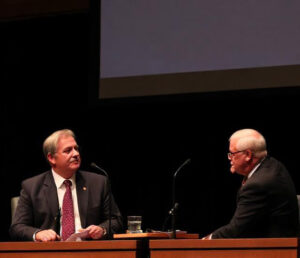
Today, in 2025, it seems very popular for Christians to participate in debates on the Internet about the Bible, the existence of God, the authority of Jesus Christ, and other matters of faith. But I propose that such debates can be contrary to biblical teaching. Jesus said, “Do not give dogs what is holy; do not throw your pearls before swine” (Matthew 7:6a).

This is a clear warning from Jesus about giving sacred truths, like the gospel, to people who will despise or abuse them. We ought to have discernment about who is and who isn’t open to hearing the good news. Jesus also said “if anyone will not welcome you or heed your words, shake the dust off your feet when you leave that home or town” (Matthew 10:14).

This instruction to the disciples emphasizes not lingering where the message is rejected, but moving on to those whose hearts may be ready to receive it. In my opinion, there is a significant opportunity cost associated with debating someone who has already made up their mind in opposition to God. Every minute spent arguing with a hardened atheist is a minute not spent sharing the gospel with someone genuinely searching for God.
Continue reading

Editing the Editor

editing the editor

Did you know it’s very difficult to proofread your own writing? That’s because you already know what you meant to say, so your brain fills in the gaps automatically. As a result, it tends to overlook the actual words and letters written on the page.

Every writer has experienced the frustration of proofreading a piece multiple times, only for someone else to immediately spot a glaring mistake.

I once paid $80 for a box of business cards. I must have proofread the card a dozen times before sending them to print. When they arrived, I eagerly showed them to my wife. But as soon as I handed her the first card, she glanced at it and gasped; I had spelled the name of my business wrong. No matter how many times I checked, my mind kept seeing what it expected to see, completely missing that two letters in the first word had been reversed. In the end, that entire $80 box of business cards went straight into the garbage can. Continue reading

Commentary Matthew 23

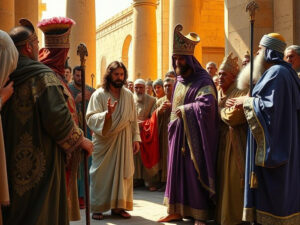
Jesus Rebukes the Pharisees

Jesus Rebukes the Pharisees

Gary Eugene Howell uses the Berean Standard Bible. The Holy Bible, Berean Standard Bible, BSB is produced in cooperation with Bible Hub, Discovery Bible, OpenBible.com, and the Berean Bible Translation Committee. The Text of the Berean Standard Bible was dedicated to the public domain as of April 30, 2023.

Verses 1-3

Then Jesus spoke to the crowds and to His disciples: “The scribes and Pharisees sit in Moses’ seat. So practice and observe everything they tell you. But do not do what they do, for they do not practice what they preach.

Commentary

Why? Why should they practice and observe everything the scribes and Pharisees tell them if the scribes and Pharisees are hypocrites? Jesus has just finished thoroughly rebuking them throughout the last half of the previous chapter. It would seem more logical for Him to now instruct the crowds not to follow them. After reading chapter 22, we might expect Matthew 23:1 to say, “Ignore the Scribes and Pharisees.” Why then does Jesus tell the crowd to do everything they say?

The Israelites depend upon the scribes and Pharisees to tell them what the law of Moses says. Therefore, any Israelite who wants to pursue God has little choice but to receive instruction from them. This is why they sit in Moses’s seat. God spoke to Moses, and Moses instructed the Israelites. The scribes and Pharisees study the scriptures and tell Israel what they say. Anyone who wanted to follow God and obey the scriptures had to rely upon the scribes and Pharisees to instruct them.

But Jesus warns the people: “Do not do what they do, for they do not practice what they preach.” He then goes on to explain exactly what he means. Let’s look at the next few verses.

Verses 4-7

They tie up heavy, burdensome loads and lay them on men’s shoulders, but they themselves are not willing to lift a finger to move them.

All their deeds are done for men to see. They broaden their phylacteries and lengthen their tassels. They love the places of honor at banquets, the chief seats in the synagogues, the greetings in the marketplaces, and the title of ‘Rabbi’ by which they are addressed.

Commentary

Everything Jesus describes about the Pharisees ultimately comes down to their pride. Pride says, “I’m important.” “I deserve recognition.” “Look at what I’ve accomplished.” “I don’t need God.” “My will be done.”

“God opposes the proud, but gives grace to the humble” (James 4:6b).

Pride Is Not Just a Pharisee Problem

We tend to view the Pharisees as the villains of the New Testament, and understandably so given how Jesus addresses them. But people today do the exact same things they did.

Consider this hypothetical: a police officer pulls over a car for speeding, and behind the wheel is a city council member. The first thing out of the man’s mouth is, “Do you know who I am?” That’s pride. Being a member of the city council does not give him permission to speed. He believes his elevated position in the community makes him better than everyone else.

Humility, on the other hand, is very often an intentional choice; one that sometimes requires planning ahead. When someone knows they are about to be promoted, they might say to themselves, “I’m not going to let this go to my head.” Pride, on the other hand, can be the natural default. It requires no effort at all.

When you are promoted, I encourage you to rely daily on Jesus Christ rather than on yourself. Even if you’ve been doing something for years and have become an expert in your field, continue to ask Jesus Christ to help you. The goal is humbleness.

Verse 8

But you are not to be called ‘Rabbi,’ for you have one Teacher, and you are all brothers.

Commentary

In the previous verses Jesus said that the Pharisees love the places of honor, the greetings, and the titles. Jesus continues, “But you are not to be called ‘Rabbi’…” Jesus is not saying that the word Rabbi is somehow bad. Rather, he is making a comparison to the attitudes and behaviors of the Pharisees.

To obey this teaching, we don’t shed titles. If no one had a title, how would we know who’s responsible for what? Instead, Jesus is saying that the Pharisees loved to be called Rabbi. They craved honor and special places to sit at banquets. You and I, on the other hand, are not to let our titles inflate our egos. Don’t allow yourself to crave attention and glory.

Don’t get to the point where, after being pulled over for speeding, you say to the officer, “Don’t you know who I am?” The officer doesn’t know, and he doesn’t care. Your job is not to be self-important. Your job is to treat others as more important than yourself.

in humility consider others more important than yourselves. (Philippians 2:3b)

Verses 9-10

And do not call anyone on earth your father, for you have one Father, who is in heaven. Nor are you to be called instructors, for you have one Instructor, the Christ.

Commentary

Jesus had just told his followers not to become prideful when given positions of authority and honor. Now He tells them not to elevate others because of their elevated positions. We are not to revere or idolize people. Instead, we are to revere God.

Consider this: if, in your mind’s eye, you view a person in authority as infallible, you’ll be inclined to accept everything they say without question. This is how people end up being led astray by false teachers. They assume he is right and never take the time to examine what he is actually saying.

Don’t put people on pedestals.

Verse ten has the same message: do not exalt yourself because of your title. I once disagreed with someone over how a certain Bible verse was being interpreted. When I expressed my disagreement, he immediately informed me that he had been teaching a weekly Bible study for ten years. He didn’t want to discuss the merits of my disagreement. Instead, he wanted to shut me down by exalting himself and his credentials as a Bible instructor. That’s pride.

If he interprets a Bible passage incorrectly, and no one ever points out his error, he will likely continue to interpret it that way indefinitely. It doesn’t matter that he’s been teaching Bible studies for ten years. He may have been teaching them wrong for ten years.

Don’t think of yourself as a know-it-all just because you’re the one teaching the Bible study, and don’t get offended when someone wants to disagree with your interpretation. Be humble and carefully consider what they say.

When leading a Bible study, always seek God’s help, even if you’ve been doing it for ten years.

Verse 11

The greatest among you shall be your servant.

Commentary

This is the application of Jesus’s teaching. In every position you hold, and in every responsibility you’re given, think about who you are serving.

If you own a business, your job is to serve your customers. You also serve your employees in the sense that it’s your responsibility to teach them how to serve your customers. If you’re placed in charge of anything at church, your job is to serve the congregation in those roles and tasks. If you’re elected to an office of government, your job is to serve your constituents. If you are writing a New Testament Bible commentary, your job is to serve those who will read it.

But if in any pursuit, the work you’re doing serves only to exalt yourself, elevate yourself above others, show off, feed your pride, or enrich yourself; you’re doing it wrong!

Verse 12

For whoever exalts himself will be humbled, and whoever humbles himself will be exalted.

Commentary

Clothe yourselves with humility toward one another, because, “God opposes the proud, but gives grace to the humble.” Humble yourselves, therefore, under God’s mighty hand, so that in due time He may exalt you. (1 Peter 5:5b-6)

Verse 13

Woe to you, scribes and Pharisees, you hypocrites! You shut the kingdom of heaven in men’s faces. You yourselves do not enter, nor will you let in those who wish to enter.

Commentary

The Scribes and Pharisees were supposed to serve the people of Israel and lead them into the knowledge and understanding of God. They should have been feeding the hungry, caring for widows and orphans, and tending to the needs of the people. Instead, they became prideful in their important roles; even to the point of shutting the kingdom of heaven in men’s faces. The pursuit of God became their exclusive club, and they didn’t want the “riff raff” to join them.

Jesus is telling them that they themselves will not enter the kingdom of heaven, and they attempt to block others from entering as well.

Verse 14

The oldest manuscripts do not contain verse 14, so I am not including it here. However, it is included in the Gospels of Mark and Luke, and I will comment on it in those sections.

Verse 15

Woe to you, scribes and Pharisees, you hypocrites! You traverse land and sea to win a single convert, and when he becomes one, you make him twice as much a son of hell as you are.

Commentary

On the occasions when the Pharisees did attempt to convert someone, what they brought that person into was a religion of dead works, pride, and self-righteousness; which did not lead to salvation.

Verse 16-33

Woe to you, blind guides! You say, ‘If anyone swears by the temple, it means nothing; but if anyone swears by the gold of the temple, he is bound by his oath.’ You blind fools! Which is greater: the gold, or the temple that makes it sacred? And you say, ‘If anyone swears by the altar, it means nothing; but if anyone swears by the gift on it, he is bound by his oath.’ You blind men! Which is greater: the gift, or the altar that makes it sacred? So then, he who swears by the altar swears by it and by everything on it. And he who swears by the temple swears by it and by the One who dwells in it. And he who swears by heaven swears by God’s throne and by the One who sits on it.

Woe to you, scribes and Pharisees, you hypocrites! You pay tithes of mint, dill, and cumin. But you have disregarded the weightier matters of the law: justice, mercy, and faithfulness. You should have practiced the latter, without neglecting the former. You blind guides! You strain out a gnat but swallow a camel.

Woe to you, scribes and Pharisees, you hypocrites! You clean the outside of the cup and dish, but inside they are full of greed and self-indulgence. Blind Pharisee! First clean the inside of the cup and dish, so that the outside may become clean as well.

Woe to you, scribes and Pharisees, you hypocrites! You are like whitewashed tombs, which look beautiful on the outside but on the inside are full of dead men’s bones and every kind of impurity. In the same way, on the outside you appear to be righteous, but on the inside you are full of hypocrisy and wickedness.

Woe to you, scribes and Pharisees, you hypocrites! You build tombs for the prophets and decorate the monuments of the righteous. And you say, ‘If we had lived in the days of our fathers, we would not have been partners with them in shedding the blood of the prophets.’ So you testify against yourselves that you are the sons of those who murdered the prophets. Fill up, then, the measure of the sin of your fathers. You snakes! You brood of vipers! How will you escape the sentence of hell?

Commentary

“Woe to you, blind guides!” We are in the midst of Jesus listing seven woes against the Pharisees.

1. You will not let in those who are seeking the kingdom of heaven.
2. Your converts become sons of hell.
3. You’re blind and can’t see the errors of your own ways.
4. You disregard the weightier matters of the law: justice, mercy, and faithfulness.
5. Your righteousness is only for show; you don’t bother to cleanse your heart.
6. You are whitewashed tombs.
7. You are the sons of those who murdered the prophets.

This is quite a list of accusations. It’s no wonder they didn’t like Jesus. Yet all of these charges were true. Remember, these were the religious leaders of His time. The same danger can exist today. Watch out. Be ever seeing and ever perceiving.

By saying, “If we had lived in the days of our fathers,” the Pharisees were admitting that they were the sons of those who murdered the prophets.

Jesus said, “Fill up, then, the measure of the sin of your fathers.” The Pharisees were about to crucify the Messiah. Of all the prophets who were ever killed, these Pharisees speaking to Jesus were about to do worse than all of their ancestors combined. This is truly the highest example of dead religion.

All religions that are devoid of the Holy Spirit make decisions and perform actions based entirely on a heart that is absent of God. This can happen within the Christian religion as well; There are some Christian denominations, churches, pastors, elders, and laypeople who do not have the Holy Spirit.

For example, when a pastor retires and the board of elders is tasked with hiring a new pastor, if those elders do not have the Holy Spirit, by what standard will they make their selection? They will choose their next pastor based on the standard of their own sinful hearts.

For out of the heart come evil thoughts, murder, adultery, sexual immorality, theft, false testimony, and slander. These are what defile a man…(Matthew 15:19-20a)

Be ever seeing and ever perceiving. Don’t just trust people blindly.

Verse 34

Because of this, I am sending you prophets and wise men and teachers. Some of them you will kill and crucify, and others you will flog in your synagogues and persecute from town to town.

Commentary

Throughout the ages, God sent prophets and wise men, but like the Bible study teacher I mentioned earlier, pride blinded the religious leaders of Israel. The scribes and Pharisees were unwilling to be corrected.

Verse 35-36

And so upon you will come all the righteous blood shed on earth, from the blood of righteous Abel to the blood of Zechariah son of Berechiah, whom you murdered between the temple and the altar. Truly I tell you, all these things will come upon this generation.

Commentary

It’s interesting to note the last words of Zechariah as he was being murdered.

Then the Spirit of God came upon Zechariah son of Jehoiada the priest (Berechiah was likely his grandfather or great-grandfather), who stood up before the people and said to them, “This is what God says: ‘Why do you transgress the commandments of the LORD so that you cannot prosper? Because you have forsaken the LORD, He has forsaken you.’”

But they conspired against Zechariah, and by order of the king, they stoned him in the courtyard of the house of the LORD. Thus King Joash failed to remember the kindness that Zechariah’s father Jehoiada had extended to him. Instead, Joash killed Jehoiada’s son. As he lay dying, Zechariah said, “May the LORD see this and call you to account.” (2 Chronicles 24:20–22)

Some translations say ‘May the Lord see and avenge.’ That is exactly what is about to happen. Jesus said, ‘All these things will come upon this generation’; and just 33 years after this moment, the first Jewish-Roman War would begin.”

Israel had been ruled by Rome in a way that allowed it to retain much of its independence and way of life. However, within a few years of Jesus’s crucifixion, and the events of the book of Acts and the letters of Paul, Israel came under the direct rule of Rome, and was severely oppressed, its religious freedoms were taken away.

But I want to consider another possible way of viewing these two verses. Jesus says, “Upon you will come all the righteous blood shed on earth.” What makes a person righteous in God’s eyes? It is the blood of Jesus Christ. That blood would soon be shed, and it would be these very religious leaders who would be responsible for handing Him over to be crucified.

On the cross, Jesus took all our sins upon Himself. His blood paid for our sins. In that sense, the statement is true: “upon you will come all the righteous blood shed on earth.” Jesus bore our sins, yet these Pharisees were the very ones who would be held responsible for delivering the Son of God to death.

Verses 37-39

O Jerusalem, Jerusalem, who kills the prophets and stones those sent to her, how often I have longed to gather your children together, as a hen gathers her chicks under her wings, but you were unwilling! Look, your house is left to you desolate. For I tell you that you will not see Me again until you say, ‘Blessed is He who comes in the name of the Lord.’”

Commentary

Jesus says “how often I have longed to gather your children together, as a hen gathers her chicks under her wings”. Jesus is God; and long before he was born through Mary into the physical world, he had, from heaven, longed to gather Israel’s children together.

“I am the Alpha and the Omega, the First and the Last, the Beginning and the End.” (Revelation 22:13)

Jesus is God.

He continues, “but you were unwilling.” Salvation is not forced upon anyone. The very fact that salvation is by faith means that a person must be willing to be saved. Antagonists often ask, “How can an all-loving God send anyone to hell?” The answer, of course, is that God doesn’t send people to hell; rather, it is these people who are unwilling to go to heaven. In reality, their arguments are rarely presented so simplistically, yet at the core, it always comes down to this: whether or not a person is willing to love God and place their faith in Him. If they are not, they are choosing to forfeit salvation.

Jesus concludes His statement by saying, “For I tell you that you will not see Me again until you say, ‘Blessed is He who comes in the name of the Lord.’” This is a prophecy concerning the end times. The next time Jesus sets foot in Jerusalem will be at His second coming. The battle of Armageddon will look as though it will bring an end to the Jewish people. At that time, Jesus will come to their rescue, and they will shout, “Blessed is He who comes in the name of the Lord.” (See Revelation 1:7 and Revelation 19:11-16 and Revelation 20)

Commentary Matthew 22

Commentary Matthew 22

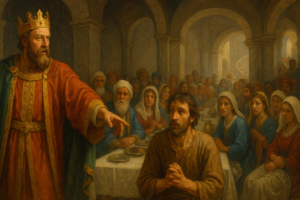
The Wedding Banquet Guest

The Wedding Banquet Guest

Gary Eugene Howell uses the Berean Standard Bible. The Holy Bible, Berean Standard Bible, BSB is produced in cooperation with Bible Hub, Discovery Bible, OpenBible.com, and the Berean Bible Translation Committee. The Text of the Berean Standard Bible was dedicated to the public domain as of April 30, 2023.

Verses 1-7

Once again, Jesus spoke to them in parables: “The kingdom of heaven is like a king who prepared a wedding banquet for his son. He sent his servants to call those he had invited to the banquet, but they refused to come.

Again, he sent other servants and said, ‘Tell those who have been invited that I have prepared my dinner. My oxen and fattened cattle have been killed, and everything is ready. Come to the wedding banquet.’

But they paid no attention and went away, one to his field, another to his business. The rest seized his servants, mistreated them, and killed them.

The king was enraged, and he sent his troops to destroy those murderers and burn their city.

Commentary

The king represents God, and the wedding banquet is between Jesus and the church. The servants are the prophets, and those who were invited but refused to come represent Israel; particularly Israel’s religious leaders

Verse 7 was, at the time, a future prophecy referring to the siege of Jerusalem in AD 70. When it says the king sent his troops, understand that God has the ability to direct any military force on earth and use it to accomplish His purpose.

And the LORD sent Chaldean, Aramean, Moabite, and Ammonite raiders against Jehoiakim in order to destroy Judah, according to the word that the LORD had spoken through His servants the prophets. (2 Kings 24:2)

Therefore this is what the LORD of Hosts says: ‘Because you have not obeyed My words, behold, I will summon all the families of the north, declares the LORD, and I will send for My servant Nebuchadnezzar king of Babylon, whom I will bring against this land, against its residents, and against all the surrounding nations. So I will devote them to destruction and make them an object of horror and contempt, an everlasting desolation. (Jeremiah 25:8-9)

Verses 8-10

Then he said to his servants, ‘The wedding banquet is ready, but those I invited were not worthy. Go therefore to the crossroads and invite to the banquet as many as you can find.’ So the servants went out into the streets and gathered everyone they could find, both evil and good, and the wedding hall was filled with guests.

Commentary

Make note of the fact that God instructed them to invite as many as they could find. The servants then gathered everyone they could find. The phrases “as many as you can find” and “gathered everyone they could find” shows us that God is calling everyone. God is telling his servants to invite everyone. Anyone they find, they should invite. Every human being today is invited to the wedding banquet of Jesus and the Church (i.e. everyone is invited to be saved).

But why does verse 10 say both evil and good? We are going to see in these next verses that there are some Christians who come to the banquet, but end up getting thrown out….Let’s take a look now.

Verses 11-12

But when the king came in to see the guests, he spotted a man who was not dressed in wedding clothes. ‘Friend,’ he asked, ‘how did you get in here without wedding clothes?’ But the man was speechless.

Commentary

Salvation is by faith. Those who put their faith in Jesus are filled with the Holy Spirit (i.e. they are dressed in wedding clothes).

A person can know about Jesus and yet make the mistake of trusting in themselves, incorrectly believing they’ll earn their salvation through good works and moral living. It’s entirely possible for a layperson, a church member, a deacon, an elder, and even a pastor or priest to be deeply involved in church activities, ministries, helping the poor, feeding the hungry, and so on, yet not have put their faith in Jesus Christ. This is the individual who shows up to the wedding banquet without wedding clothes (i.e. the Holy Spirit). They are the person who claimed to be a Christian, yet never put their faith in Christ.

Being Involved and Active While Missing the Opportunity Entirely: A Personal Anecdote

My first job was mowing grass at PGA National Resort in Palm Beach Gardens Florida. The employee handbook stated that employees could have one free round of golf per day. Every day I got up at 5:00am. By 6:00am, I was on the mower, going from one green to another. When I finished mowing all the greens, I had to go back and move the holes on each green. I also maintained the mowers and worked on the sprinklers. Our job was to keep the entire golf course running. At the end of the day, I was tired and wanted only to go home and sit down. As a result, I never once took advantage of the daily free round of golf.

Later, when I was about 40 years old and reflecting on my life, it occurred to me just how big of an opportunity I had missed. The golf course had a pro shop, and in the pro shop was a full-time professional golf instructor. That golf instructor was my coworker. He and I were both employees of the golf course. It never once occurred to me while working there, that I could have befriended him and asked him to go golfing with me each day, and during that time I could have gleaned valuable advice about my swing and technique.

Now consider this: a young man, just 18 years old, playing a full round of golf every day in the company of a professional golf instructor. Who knows? Perhaps I could have become a professional golfer myself. Perhaps I could have one day joined the PGA Tour. When I look back on my life in hindsight, I consider this to be a big opportunity missed. I worked at the golf course and took part in every activity required to keep the golf course running, yet I never played golf.

Likewise, there are many Christians who attend church, volunteer at church, or are even employed by a church. They perform activities to keep the church running, yet have not put their faith in Christ.

It doesn’t matter the denomination; every church in America has someone in the congregation or parish who has not yet placed their faith in Christ, even though they outwardly appear to be devout.

God judges the heart. We, however, cannot see into people’s hearts. All we can do is observe their actions and speech. On the day of judgment, each of us may be surprised to see who ends up being kicked out of the wedding banquet.

How can you know if you are such a person? Ask Jesus! One of the most essential aspects of putting our faith in Christ is relying on Him rather than on ourselves. Right now: ask Jesus Christ to help you put your faith in Him and to fill you with the Holy Spirit.

Here is a simple prayer you can pray: “Lord Jesus, help me to put my faith in You. Please fill me with the Holy Spirit.”

Ask, and it will be given to you; seek, and you will find; knock, and the door will be opened to you. For everyone who asks receives; he who seeks finds; and to him who knocks, the door will be opened. (Matthew 7:7-8)

Verse 13

Then the king told the servants, ‘Tie him hand and foot, and throw him into the outer darkness, where there will be weeping and gnashing of teeth.’

Commentary

This, of course, refers to hell. Anyone who has not been filled with the Holy Spirit at the time of their earthly death will not enter the kingdom of Heaven.

Verse 14

For many are called, but few are chosen.”

Commentary

God sent His servants to invite everyone they could find. “Many are called.” This is the Great Commission. God wants every Christian to go into the world and share the gospel (to invite everyone) so that every person on earth has the opportunity to hear what Jesus has done for them. All are invited; everyone.

“Few are chosen.” Those who are chosen are the ones who put their faith in Christ. “to those who believed in His name, He gave the right to become children of God” (John 1:12b)

Verses 15-16

Then the Pharisees went out and conspired to trap Jesus in His words. They sent their disciples to Him along with the Herodians. “Teacher,” they said, “we know that You are honest and that You teach the way of God in accordance with the truth. You seek favor from no one, because You pay no attention to external appearance.

Commentary

Ah ha! So they admit that Jesus is honest and teaches the way of God in accordance with the truth! By making this statement while actively conspiring to trap Jesus in His words, they are confessing that they are guilty of conspiring against God! Woe to them on the day of judgment!

Verses 17-18

So tell us what You think: Is it lawful to pay taxes to Caesar or not?” But Jesus knew their evil intent and said, “You hypocrites, why are you testing Me?

Commentary

Do not test the LORD your God as you tested Him at Massah (Deuteronomy 6:16)

He named the place Massah and Meribah because the Israelites quarreled, and because they tested the LORD, saying, “Is the LORD among us or not?” (Exodus 17:7)

What a coincidence; here are the spiritual leaders of Israel, asking the very same question again: “Is the Lord among us or not?” Their Messiah is standing right in front of them, yet all they want is to argue with Him.

Verses 19-22

Show Me the coin used for the tax.” And they brought Him a denarius. “Whose image is this,” He asked, “and whose inscription?”

“Caesar’s,” they answered.

So Jesus told them, “Give to Caesar what is Caesar’s, and to God what is God’s.” And when they heard this, they were amazed. So they left Him and went away.

Commentary

This passage shows Jesus’s unmatched wisdom. The Pharisees tried to corner Him: if He said pay the tax, He’d anger the people; if He said don’t pay the tax, He’d anger Rome. But Jesus completely sidesteps the trap, leaving them speechless and amazed.

Verses 23-29

That same day the Sadducees, who say there is no resurrection, came to Jesus and questioned Him. “Teacher,” they said, “Moses declared that if a man dies without having children, his brother is to marry the widow and raise up offspring for him. Now there were seven brothers among us. The first one married and died without having children. So he left his wife to his brother. The same thing happened to the second and third brothers, down to the seventh. And last of all, the woman died. In the resurrection, then, whose wife will she be of the seven? For all of them were married to her.”

Jesus answered, “You are mistaken because you do not know the Scriptures or the power of God.

The World Tolerates Religion but Rejects Jesus

“The Sadducees, who say there is no resurrection…” It’s interesting that the Pharisees and Sadducees appear to have been colleagues, perhaps even friends, even though they held vastly different spiritual beliefs. Meanwhile, Jesus arrives with teachings that are clearly different from both of them, and yet the Pharisees and the Sadducees hate Him, even to the point of wanting to kill Him. Why were the Pharisees and Sadducees able to tolerate one another’s differing beliefs, yet neither could tolerate Jesus?

Today in America, corporations, universities, and organizations often strive for diversity, equity, inclusion and tolerance for all religions except Christianity. At times, Christians are treated with disdain and intolerance. This phenomenon serves to illustrate that, among all world religions, Christianity stands apart. This author views this as evidence to the truth of God’s Word. The world hates Jesus; and this is expressed as a hatred of Christians.

If the world hates you, understand that it hated Me first. (John 15:18)

How Knowing Scripture Protects You from being Spiritually Deceived

The Sadducees come to Jesus with a hypothetical scenario in order to question Him about the resurrection, which they don’t even believe in. Their question involves seven brothers and one wife, and it culminates with them asking whose wife will she be in the resurrection. But here is what I want you, the reader, to focus on: Jesus responds, “You are mistaken because you do not know the Scriptures or the power of God.”

Every error that you and I might have in our understanding of who God is can be traced back to our not knowing the Scriptures. Remember when Jesus was in the desert being tempted by Satan (Matthew chapter 4)? Every rebuttal that Jesus gave to Satan began with, “It is written.” The way we avoid deception and false doctrine is by knowing the Scriptures well. The only way we can accomplish that is by faithfully and consistently reading the Bible.

[If you have never read the Bible before, I encourage you to start with the New Testament, because it contains all the core principles of the Christian faith. Most people who attempt, for the first time, to read the entire Bible, begin with the Old Testament and quit somewhere in or around the Book of Numbers, which is largely made up of census data and architectural measurements.]

It has become apparent in recent years that many Christians, perhaps most, do not read the Bible. Instead, they form their beliefs based on what others have told them, or through a self-invented spirituality shaped by personal experience, inner feelings, and preferences.

I have encountered Christians, both in person and online, whose stated beliefs are so far removed from Biblical truth that I am left genuinely bewildered at how anyone claiming to be a Christian could have arrived at such conclusions.

27% of Americans do not read books at all, and another 20% read only reluctantly. Given that the Bible has over 1,000 pages, it represents a serious undertaking, particularly for those unaccustomed to reading books. We can all agree that reading the entire Bible is a significant commitment; not to mention studying it in depth and reading it multiple times over the course of a lifetime.

For comparison, here are a few famous novels that each contain over 1,000 pages:

• Les Misérables by Victor Hugo (~1,400 pages)
• War and Peace by Leo Tolstoy (~1,200 pages)
• The Count of Monte Cristo by Alexandre Dumas (~1,200 pages)
• The Lord of the Rings (as a single volume) by J.R.R. Tolkien (~1,100 pages)
• Gone with the Wind by Margaret Mitchell (~1,000 pages)

So how do you read a 1,000 pages when you’d rather do almost anything else? Start by asking Jesus to give you a love for his Word. Then begin with the New Testament. That is where the bulk of Christian theology is concentrated, and reading it first gives you the hindsight needed to better understand the Old Testament when you get there.

Second, begin by reading for just five minutes a day. Five minutes is a good place to start building your reading endurance. If you love the Lord, you will make the time.

I also encourage you to listen to the Bible; not as an alternative to reading, but in addition to it. By listening to a recording of someone else reading the Scriptures, you can go through large portions of the Bible in a relatively short period of time.

Verses 30-33

In the resurrection, people will neither marry nor be given in marriage. Instead, they will be like the angels in heaven. But concerning the resurrection of the dead, have you not read what God said to you: ‘I am the God of Abraham, the God of Isaac, and the God of Jacob’? He is not the God of the dead, but of the living.” When the crowds heard this, they were astonished at His teaching.

Commentary

Even though our bodies stop functioning and are laid in the grave, those who are saved are not dead. Eternal life means being alive forever.

Verses 34-40

And when the Pharisees heard that Jesus had silenced the Sadducees, they themselves gathered together. One of them, an expert in the law, tested Him with a question: “Teacher, which commandment is the greatest in the Law?”

Jesus declared, “‘Love the Lord your God with all your heart and with all your soul and with all your mind.’ This is the first and greatest commandment. And the second is like it: ‘Love your neighbor as yourself.’ All the Law and the Prophets hang on these two commandments.”

Commentary

“Love the Lord your God with all your heart and with all your soul and with all your mind and love your neighbor as yourself”, this summarizes the entire law. Take careful notice that we are to love God with ALL our heart, soul and mind. But what exactly does that mean?

HEART – I would define this as being the same kind of love which we experience for our spouse, and/or our children. It is an affection. A longing desire to spend time with God.

SOUL – I interpret this as finding your identity in Christ. It means that your self-worth, the sense of who you are and your purpose are found in Christ. This is as opposed to those who find their self-worth in their own achievements, carrier advancements, material possessions, fame, or the recognition of other people.

MIND – I interpret this as your desire to study and learn about God’s and His will for your life. When Jesus says “all your mind”, he is referring to someone who desires to actively pursue God through study and the gaining of knowledge and wisdom.

Verses 41-46

While the Pharisees were assembled, Jesus questioned them: “What do you think about the Christ? Whose son is He?”

“David’s,” they answered.

Jesus said to them, “How then does David in the Spirit call Him ‘Lord’? For he says:

‘The Lord said to my Lord, “Sit at My right hand until I put Your enemies under Your feet.”’

So if David calls Him ‘Lord,’ how can He be David’s son?”

No one was able to answer a word, and from that day on no one dared to question Him any further.

Commentary

“What do you think about the Christ?” Remember that “Christ” is not Jesus’s last name; rather, it is a title meaning “Messiah.”

“Whose son is He?” And they answered correctly: “David’s”. Jesus is a descendant of King David.

Jesus said to them, “How then does David in the Spirit call Him ‘Lord’?”

Jesus then quotes the Psalms:

The LORD said to my Lord: “Sit at My right hand until I make Your enemies a footstool for Your feet.” (Psalm 110:1)

The identity of Christ is an extremely important question. “His worshipers must worship Him in truth” (John 4:24, paraphrased). Who exactly is Jesus?

The Pharisees answered correctly when they said that the Christ is descended from David. Thus, the Messiah (Jesus) is fully man. He is made of flesh and bone. He has a beating heart. He breathes air in and out of his lungs, no different than you and I.

A person would not normally call a son “Lord.” And yet David does call the Christ Lord. What this reveals is that Jesus is both fully man (a descendant of David) and fully divine. Jesus Christ is God.

Commentary Matthew 21

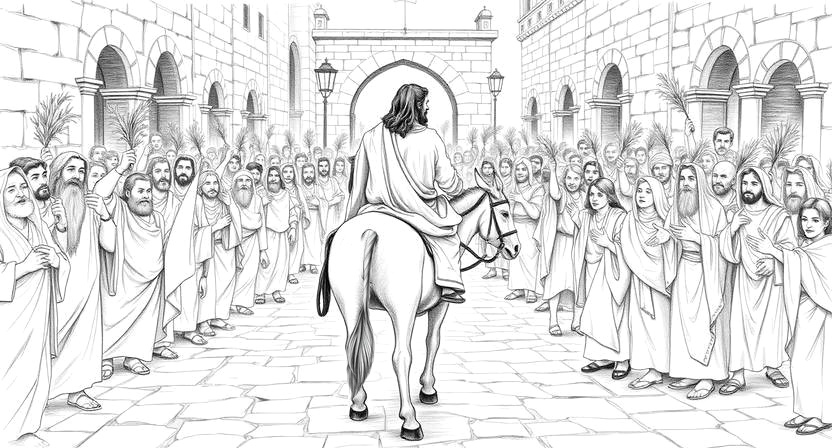
The Triumphal Entry

The Triumphal Entry

Gary Eugene Howell uses the Berean Standard Bible. The Holy Bible, Berean Standard Bible, BSB is produced in cooperation with Bible Hub, Discovery Bible, OpenBible.com, and the Berean Bible Translation Committee. The Text of the Berean Standard Bible was dedicated to the public domain as of April 30, 2023.

Verses 1-2

As they approached Jerusalem and came to Bethphage on the Mount of Olives, Jesus sent out two disciples, saying to them, “Go into the village ahead of you, and at once you will find a donkey tied there, with her colt beside her. Untie them and bring them to Me.”

Commentary

The triumphant entry of Jesus into Jerusalem is recorded in Zechariah 9:9–13, Matthew 21:1–11, Mark 11:1–11, Luke 19:28–44 and John 12:12–19.

Once again, Jesus demonstrates His omniscience. Clearly, He is not an ordinary man. He predicts future events with 100% accuracy.

Is this theft? Is Jesus telling the disciples to steal the donkey? No. He is borrowing it. Mark chapter 11 states that the animal’s owner was told his donkey would be returned to him shortly.

Verse 3

“If anyone questions you, tell him that the Lord needs them, and he will send them right away.”

Commentary

This can be viewed in a couple of different ways. The first is that Jesus is calling Himself Lord (i.e. Jesus is God). The second possible interpretation is that the Romans, as rulers over Israel, claimed the right to commandeer private property as needed for carrying out their duties. When the disciples said, “The Lord needs them,” the owner may have assumed the disciples had been sent by a Roman official. Whichever interpretation you lean toward, one thing is clear: Jesus knew ahead of time that the owner would agree to the borrowing of the animals.

Verses 4-5

This took place to fulfill what was spoken through the prophet:

“Say to the Daughter of Zion, ‘See, your King comes to you, gentle and riding on a donkey, on a colt, the foal of a donkey.’”

Commentary

Five hundred years earlier, God spoke through the prophet Zechariah, saying, “Your King comes to you, gentle and riding on a donkey …”

But did you know that this same prophecy given by Zechariah also includes references to Jesus’s second coming?

“Then He will proclaim peace to the nations. His dominion will extend from sea to sea, and from the Euphrates to the ends of the earth.” (Zechariah 9:10b)

This is speaking of Jesus’s millennial reign after the tribulation. This prediction is 100% accurate. It is going to happen. Faith is believing that what God has said is true.

Jesus’s first coming was marked by humility and servanthood. It’s why He was born in a manger and why He rode on a donkey. However, His second coming will be all about His authority as the King of kings, and He will be riding on a white horse.

Then I saw heaven standing open, and there before me was a white horse. And its rider is called Faithful and True. With righteousness He judges and wages war. He has eyes like blazing fire, and many royal crowns on His head. He has a name written on Him that only He Himself knows. He is dressed in a robe dipped in blood, and His name is The Word of God. (Revelation 19:11-13)

Today, in political and cultural discussions, Jesus is often presented as a figure who would align Himself with certain modern groups or causes assumed to represent compassion, justice, or love. The problem is that this version of Jesus is shaped entirely by His humble and lowly character as revealed in His first coming 2,000 years ago. At His second coming, however, Jesus will not be acting as a suffering servant but as a conquering King. Scripture teaches that He will judge and destroy all who oppose Him and will call the birds to come and eat their corpses, (See Revelation 19:17-18)

Verses 6-11

So the disciples went and did as Jesus had directed them. They brought the donkey and the colt and laid their cloaks on them, and Jesus sat on them. A massive crowd spread their cloaks on the road, while others cut branches from the trees and spread them on the road. The crowds that went ahead of Him and those that followed were shouting:

“Hosanna to the Son of David!”

“Blessed is He who comes in the name of the Lord!”

“Hosanna in the highest!”

When Jesus had entered Jerusalem, the whole city was stirred and asked, “Who is this?” The crowds replied, “This is Jesus, the prophet from Nazareth in Galilee.”

Commentary

The word Hosanna is a type of plea for salvation. When the people cried, “Hosanna in the highest,” they were essentially acknowledging Jesus as the Savior. Some may have realized that what they were witnessing fulfilled prophecy. Filled with excitement, they shouted Hosanna and praised Jesus.

Verses 12-13

Then Jesus entered the temple courts and drove out all who were buying and selling there. He overturned the tables of the money changers and the seats of those selling doves. And He declared to them, “It is written: ‘My house will be called a house of prayer.’ But you are making it ‘a den of robbers.’”

Commentary

When I read these two verses, the one thing that stands out to me the most is the phrase “den of robbers.” When the objective was to maximize profit rather than to perform a service for those coming to worship at the temple, the sellers and vendors made themselves robbers.

Gouging People for Profit & The Selling of Items at Church:

During World War II, German Luger pistols were highly sought after by U.S. soldiers. They were considered the pinnacle of war prizes. My father had two of them, and each was in near mint condition. He had gone to great effort over several decades to keep them in immaculate condition. After my father passed away, I inherited these two historical pieces. However, I did not have the same affinity for them that my father had, nor was it my intention to spend so much time caring for them, so I decided to sell them.

I took them to a public show where historical items are bought and sold. I visited one vendor who had many similar pieces on display. He examined the two pistols carefully and then offered me $250 for each. I had a strong feeling this man was trying to rob me. I declined his offer and walked away. A short while later, I found another vendor who had several historical German World War II relics similar to the ones I wanted to part with. I showed this second vendor what I had, and after examining them closely, he offered me $1,000 for each.

When people in Jesus’s time traveled to Jerusalem, they didn’t bring their temple sacrifice with them. They needed to purchase it upon arrival. The vendors who sold these sacrifices were gouging people, trying to make excessive profits rather than providing a service at a reasonable price to allow people to worship. These vendors were robbing people who simply wanted to worship God.

Today, if a church holds a Saturday morning flea market, there will often be someone who accuses them of wrongdoing, claiming that Jesus would flip over their tables. The issue in these verses, however, is not merely that money was being exchanged or that a service was being provided. It’s that the vendors were trying to rip people off. A church that holds a Saturday morning flea market may be attempting to raise money for a missionary, or perhaps they are raising funds to pay for a needed repair on the church building.

If, however, a church charged $10 for parking on Sunday mornings the same way a theme park or a professional sports stadium does, it would suggest that their desire for profit had begun overshadowing their invitation to worship.

Jesus was driving out of the temple those who were prioritizing profit at the expense of people being able to worship.

Verses 14-15

The blind and the lame came to Him at the temple, and He healed them. But the chief priests and scribes were indignant when they saw the wonders He performed and the children shouting in the temple courts, “Hosanna to the Son of David!”

Commentary

The priests and scribes in these verses hold the opinion that Jesus is not the Messiah. No matter what He does, they remain indignant toward Him. Even when He tells them plainly that He is the Messiah, they will declare it blasphemy (See Matthew 26:63–65).

This same pattern can be seen today. Some people begin with a fixed belief and then work backward into the Scriptures, twisting the Word of God to make it conform to their opinion. The proper approach, however, is the opposite. We must come to the Bible with humility, allowing it to shape and correct our beliefs rather than forcing it to support a pre-existing conclusion.

Verse 16

“Do You hear what these children are saying?” they asked. “Yes,” Jesus answered. “Have you never read: ‘From the mouths of children and infants You have ordained praise’?”

Commentary

It was only two chapters ago that Jesus said we all need to be like children (Matthew 19:13-15). Now, the children are praising Him and shouting, “Hosanna to the Son of David,” while the scribes and Pharisees are grumbling and complaining.

Furthermore, Jesus is quoting Psalm 8, which clearly speaks about God:

O LORD, our Lord, how majestic is Your name in all the earth! You have set Your glory above the heavens. From the mouths of children and infants You have ordained praise on account of Your adversaries, to silence the enemy and avenger. When I behold Your heavens, the work of Your fingers, the moon and the stars, which You have set in place—what is man that You are mindful of him, or the son of man that You care for him?

You made him a little lower than the angels; You crowned him with glory and honor. You made him ruler of the works of Your hands; You have placed everything under his feet: all sheep and oxen, and even the beasts of the field, the birds of the air and the fish of the sea, all that swim the paths of the seas. O LORD, our Lord, how majestic is Your name in all the earth! (Psalm 8:1-9)

By accepting the children’s praises and responding, “Have you never read: ‘From the mouths of children and infants You have ordained praise’?”, Jesus is identifying Himself as the subject of Psalm 8; the one crowned with glory and honor. In doing so, He is implicitly claiming to be God, the one worthy of praise from all creation.

Verse 17

Then He left them and went out of the city to Bethany, where He spent the night.

Commentary

This verse is largely self-explanatory, recording Jesus’s return to Bethany for the night after His actions in the temple. It marks the conclusion of His day teaching, healing, cleansing, and confrontation with the religious leaders.

Verses 18-19

In the morning, as Jesus was returning to the city, He was hungry. Seeing a fig tree by the road, He went up to it but found nothing on it except leaves. “May you never bear fruit again!” He said. And immediately the tree withered.

Commentary

This event is also recorded in Mark chapter 11, where it is described as occurring the following day, when the disciples see the fig tree withered. This, however, is not a contradiction, because a tree that withers completely overnight can still be described as having withered “immediately.” For example, when a pine tree is struck by lightning, it is typically killed instantly by electrocution, but it may take one to two weeks for its needles to dry and turn brown. Similarly, a tree that withers overnight can reasonably be described as having withered immediately.

But why did Jesus curse the tree?

Recall the parable of the sower, when Jesus describes the seed sown among thorns as unfruitful because “the worries of this life and the deceitfulness of wealth choke the word.” Then He explains that the seed sown on good soil represents those who hear the word and understand it. They bear fruit and produce a crop—a hundredfold, sixtyfold, or thirtyfold (Matthew 13:22–23).

Recall also when Jesus compared false teachers to bad trees bearing bad fruit (Matthew 7:15–20).

And when John the Baptist warned the Pharisees:

“You brood of vipers, who warned you to flee from the coming wrath? Produce fruit, then, in keeping with repentance. And do not presume to say to yourselves, ‘We have Abraham as our father.’ For I tell you that out of these stones God can raise up children for Abraham. The axe lies ready at the root of the trees, and every tree that does not produce good fruit will be cut down and thrown into the fire. (Matthew 3:7-10)

In Luke 13 we find the parable of the barren fig tree:

Then Jesus told this parable: “A man had a fig tree that was planted in his vineyard. He went to look for fruit on it but did not find any. So he said to the keeper of the vineyard, ‘Look, for the past three years I have come to search for fruit on this fig tree and haven’t found any. Therefore cut it down! Why should it use up the soil?’

‘Sir,’ the man replied, ‘leave it alone again this year, until I dig around it and fertilize it. If it bears fruit next year, fine. But if not, you can cut it down.’” (Luke 13:6-9)

Jesus is providing the disciples, and us, as Bible readers, a real-world example of what God’s judgment looks like. Those who bear no fruit (i.e. the fruit of faith) will be “withered”, cut down, and thrown into the fire.

Salvation is by faith. When we put our faith in Jesus Christ, we are filled with the Holy Spirit. This, in turn, begins to transform our lives so that slowly, over time, we become more like Christ. Our desires turn away from worldliness and toward God’s will for our present path and future. All of this can be compared to bearing fruit.

Figs on a tree

The person who “claims” the name of Christ yet has only green leaves and no fruit is someone who is merely playing Christianity but has not put their faith in Christ. There is no fooling God. As easily as you and I could walk up to a fig tree and see that it has no figs, God can just as easily look into our hearts and see whether or not we have faith.

These people honor Me with their lips, but their hearts are far from Me. (Matthew 15:8)

What Jesus is showing us in the example of the withered fig tree is that without the fruit of faith, you have no value to God. The fact that He planted you is evidence that He loves you, and the fact that you’re still alive is evidence that you remain under His grace and mercy. But if you don’t bear any fruit (i.e. if you have no faith), the love He has for you will not prevent Him from digging you up and throwing you away. He may love you, but do you love Him?

“Not everyone who says to Me, ‘Lord, Lord,’ will enter the kingdom of heaven, but only he who does the will of My Father in heaven. Many will say to Me on that day, ‘Lord, Lord, did we not prophesy in Your name, and in Your name drive out demons and perform many miracles?’ Then I will tell them plainly, ‘I never knew you; depart from Me, you workers of lawlessness!’” (Matthew 7:21-23)

What is the will of the Father in heaven? That we put our faith in Jesus Christ. Why does Jesus say He never knew them? Because they never put their faith in Him. The fact that they say, “Lord, Lord, did we not prophesy in Your name, and in Your name drive out demons and perform many miracles?” shows that they believed they could earn salvation through good works.

…without faith it is impossible to please God (Hebrews 11:6a)

Verses 20-22

When the disciples saw this, they marveled and asked, “How did the fig tree wither so quickly?”

“Truly I tell you,” Jesus replied, “if you have faith and do not doubt, not only will you do what was done to the fig tree, but even if you say to this mountain, ‘Be lifted up and thrown into the sea,’ it will happen. If you believe, you will receive whatever you ask for in prayer.”

Commentary

Does this mean we can all pray for a million dollars and expect to win the lottery next week? No. Absolutely not. Notice that Jesus said, “If you have faith.” Faith is believing that God exists, that Jesus Christ lived, died, and rose from the dead, and that what we read in the Word of God is true and trustworthy. Always remember: the Word was with God, and the Word was God (John 1:1).

If we have faith, we don’t pray to win the lottery because, by the Word of God, we understand that such a request would be contrary to God’s will. We don’t put our hope in money; we put our hope in Jesus.

To receive whatever you ask for in prayer, you must believe that the Word of God (the Bible) is true. Thus, the prayers you offer will begin to align with God’s will. We don’t ask for a million dollars, nor do we ask for the vain things of this world. Lust, fame, fortune, pride, and other worldly desires are all outside of God’s will. If we truly have faith, if we fully trust the Lord, we will not pray for such things.

Here’s an alternative: Pray for the salvation of every person you meet. Pray for every missionary you encounter, asking God to provide for them as they share the gospel around the world. Pray for the widows you meet, asking God to meet their needs, and that God might use you to provide those needs. Pray for Godly wisdom. Pray to be filled with the Holy Spirit. Pray for deeper understanding of God’s Word. Pray that you can raise your children to know and trust Jesus.

A Testimony of Doing What was Done to the Fig Tree

In Florida, there is an invasive species of tree called the Brazilian pepper. It’s native to Brazil. The rapid, widespread growth of its dense canopy threatens native Florida plant and animal species.

When my wife and I bought our first home, there was a Brazilian pepper tree in the backyard. We had only been in the house a couple of days when I stood at the back window, looking out at the tree. My wife commented that she disliked Brazilian pepper trees because of the way they make life more difficult for Florida’s endangered species.

Still looking out the window at the tree, I raised my hand, pointed at it, and said, “I curse that tree in the name of Jesus.” The comment was mean to get a laugh out of my wife. Afterward, I thought no more of it.

However, the next afternoon, when we returned home, I looked out the back window and, to my shock, the tree was gone. Someone had cut it down and completely removed it. Apparently, my neighbor had taken it upon himself to put a chainsaw to it and remove it. We had never spoken to our neighbor about the tree; he simply decided on his own to come over and cut it down.

I had spoken a curse on that tree in the name of Jesus, and the very next day, the tree was gone. It never ceases to amaze me how Jesus works and the ways He makes Himself known through the ordinary activities of our lives.

Does this mean I believe we can go around cursing every tree we don’t like? No. I don’t think what happened was about the tree; and it certainly wasn’t about me. I believe it was about Jesus making Himself known and receiving praise and glory.

Verse 23

When Jesus returned to the temple courts and began to teach, the chief priests and elders of the people came up to Him. “By what authority are You doing these things?” they asked. “And who gave You this authority?”

Commentary

“These things” likely refers to the previous day’s Triumphal Entry and the overturning of the tables, as well as His return to the temple that day to teach.

Let’s be honest, this is one occasion where we can sympathize with the chief priests and elders. Imagine you’re a pastor, and one Sunday morning a random person, who isn’t a member of your congregation, walks up to the pulpit, takes the microphone, and begins preaching to your congregation, and you don’t even know who the person is. You would likely be waving to the sound booth, signaling them to cut off his microphone. You would probably then call security to have the man escorted off the property.

But Jesus knows He has the authority to walk into the temple courts uninvited and begin teaching those who are there. What gives Him this authority?

So behold, I plan to build a house for the Name of the LORD my God, according to what the LORD said to my father David: ‘I will put your son on your throne in your place, and he will build the house for My Name.’ (1 Kings 5:5)

Solomon built the temple to be God’s dwelling place; Herod made it even grander. When Jesus enters the temple courts to teach, He is walking into the house that was built for Him. It is His house.

Furthermore, Jesus is the King of Kings. Does a King have authority? Absolutely.

Do you allow Jesus to have authority over your life? If not, why not?

Do you not know that your body is a temple of the Holy Spirit who is in you, whom you have received from God? You are not your own; you were bought at a price. Therefore glorify God with your body. (1 Corinthians 6:19-20)

Verses 24-27

“I will also ask you one question,” Jesus replied, “and if you answer Me, I will tell you by what authority I am doing these things. What was the source of John’s baptism? Was it from heaven or from men?”

They deliberated among themselves and said, “If we say, ‘From heaven,’ He will ask, ‘Why then did you not believe him?’ But if we say, ‘From men,’ we are afraid of the people, for they all regard John as a prophet.” So they answered, “We do not know.”

And Jesus replied, “Neither will I tell you by what authority I am doing these things.

Commentary

It’s interesting to note that Jesus gives an implicit answer. He doesn’t state it outright, but the answer to their question is fully contained in the question He asks.

As soon as Jesus was baptized, He went up out of the water. Suddenly the heavens were opened, and He saw the Spirit of God descending like a dove and resting on Him. And a voice from heaven said, “This is My beloved Son, in whom I am well pleased!” (Matthew 3:16-17)

Thus, by referring to John’s baptism, Jesus is telling the chief priests that His authority comes from God. However, Jesus knows that whatever answer He gives to their questions, they’re not going to accept it. So rather than answering them directly, He responds with a question of His own that exposes their hypocrisy and silences them.

Verses 28-32

But what do you think? There was a man who had two sons. He went to the first one and said, ‘Son, go and work today in the vineyard.’

‘I will not,’ he replied. But later he changed his mind and went. Then the man went to the second son and told him the same thing.

‘I will, sir,’ he said. But he did not go. Which of the two did the will of his father?”

“The first,” they answered.

Jesus said to them, “Truly I tell you, the tax collectors and prostitutes are entering the kingdom of God before you. For John came to you in the way of righteousness, and you did not believe him, but the tax collectors and prostitutes did. And even after you saw this, you did not repent and believe him.

Commentary

Jesus then tells a story with the intent of illustrating his point about the disbelief of the scribes and Pharisees.

The first son who refused to work in the vineyard but later changed his mind represents every sinner who, at first, lived in rebellion against God but later came to faith and repentance. Meanwhile the other son represents the pharisees and Sadducees and to a greater extent Israel as a whole. For they said after leaving Egypt that they would follow God, but then they didn’t.

Moses went back and summoned the elders of the people and set before them all these words that the LORD had commanded him. And all the people answered together, “We will do everything that the LORD has spoken.” (Exodus 19:7-8)

But they never did.

Verses 33-41

Listen to another parable: There was a landowner who planted a vineyard. He put a wall around it, dug a winepress in it, and built a tower. Then he rented it out to some tenants and went away on a journey.

When the harvest time drew near, he sent his servants to the tenants to collect his share of the fruit. But the tenants seized his servants. They beat one, killed another, and stoned a third.

Again, he sent other servants, more than the first group. But the tenants did the same to them.

Finally, he sent his son to them. ‘They will respect my son,’ he said. But when the tenants saw the son, they said to one another, ‘This is the heir. Come, let us kill him and take his inheritance.’ So they seized him and threw him out of the vineyard and killed him.

Therefore, when the owner of the vineyard returns, what will he do to those tenants?”

“He will bring those wretches to a wretched end,” they replied, “and will rent out the vineyard to other tenants who will give him his share of the fruit at harvest time.”

Commentary

In this parable, the landowner is God, the vineyard is the people of Israel (and, to a larger extent, the people of the world), the tenants are the Pharisees and Sadducees (or more broadly, the religious leaders of Israel), the servants are the Old Testament prophets, the son is Jesus Christ, and the other tenants are the Gentiles.

The landowner (God) has a vineyard (the people of Israel, and ultimately the people of the whole world). God desires that all people be saved.

This is good and pleasing in the sight of God our Savior, 4who wants everyone to be saved and to come to the knowledge of the truth. (1 Timothy 2:3)

So He set apart a particular group of people to represent Him and to present His will to the nations.

Now if you will indeed obey My voice and keep My covenant, you will be My treasured possession out of all the nations—for the whole earth is Mine. And unto Me you shall be a kingdom of priests and a holy nation.’ These are the words that you are to speak to the Israelites.” (Exodus 19:5-6)

God sent prophet after prophet, yet they were rejected and killed. Finally, God sent His Son, Jesus Christ; and as we are about to see in the final chapters of Matthew, they will kill Him as well.

This is reminiscent of the time when the prophet Nathan told King David a story about a rich man who took a poor man’s only lamb. Nathan described how the rich man, instead of taking from his own flock, took and slaughtered the beloved lamb of a poor man to feed a traveler. David became outraged at the injustice of the story, until Nathan revealed that the narrative was about David himself. “You are the man!” Nathan declared. (See 2 Samuel 12:1-7).

Jesus is telling this parable of the vineyard to the chief priests and elders of the people. They are the villains of the story. When asked what the owner of the vineyard should do, they declare that those wretches should be brought to a wretched end.

Verse 42

Jesus said to them, “Have you never read in the Scriptures: ‘The stone the builders rejected has become the cornerstone. This is from the Lord, and it is marvelous in our eyes’?

Commentary

Jesus is quoting Psalm 118:22–23. The stone is Jesus, and the builders are the chief priests. Jesus Christ has become the cornerstone of our salvation.

Jesus said, “Have you never read in the Scriptures?” Reading from your Bible on a daily basis should be the most important thing you do each day. Familiarity with the Word of God is the strategy by which you can avoid sin and its terrible consequences.

Imagine this scenario: you are drafted into a war. At some point, you must cross a minefield. You’re getting ready to take your first steps into the minefield when suddenly, someone discovers a map showing the exact location of every mine. They hand the map to you. What would you do? You would study that map very carefully.

This is precisely the situation you face with your Bible study. Satan is seeking to kill you, and the Bible tells you exactly how to avoid his schemes. If you are not reading it daily, that is a sign you have not yet grasped the seriousness of the situation.

Clarification: The Bible is not a self-help book for successful living, nor was it written primarily as a manual for how to avoid sin. Rather, it is a book about Jesus Christ, the author and perfecter of our faith. He is the one who makes right living possible. We don’t read the Bible daily to seek out health, wealth and success. We read it to know and have a relationship with the God we love.

For the word of God is living and active. Sharper than any double-edged sword, it pierces even to dividing soul and spirit, joints and marrow. It judges the thoughts and intentions of the heart. Nothing in all creation is hidden from God’s sight; everything is uncovered and exposed before the eyes of Him to whom we must give account. (Hebrews 4:12-13)

Verses 43-46

Therefore I tell you that the kingdom of God will be taken away from you and given to a people who will produce its fruit. He who falls on this stone will be broken to pieces, but he on whom it falls will be crushed.”

When the chief priests and Pharisees heard His parables, they knew that Jesus was speaking about them. Although they wanted to arrest Him, they were afraid of the crowds, because the people regarded Him as a prophet.

Commentary

Jesus is telling the chief priests and elders that the Kingdom of God will be taken from them and given to the Gentiles and they will produce its fruit.

“He who falls on this stone will be broken to pieces, but he on whom it falls will be crushed” means that those who reject and oppose Jesus bring destruction upon themselves. Without repentance, their fate is hell.

Commentary Matthew 20

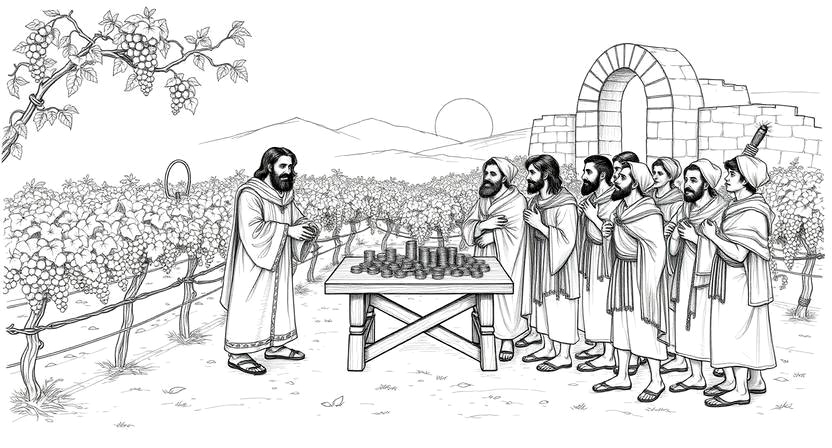
The Parable of the Workers in the Vineyard

The Parable of the Workers in the Vineyard

Gary Eugene Howell uses the Berean Standard Bible. The Holy Bible, Berean Standard Bible, BSB is produced in cooperation with Bible Hub, Discovery Bible, OpenBible.com, and the Berean Bible Translation Committee. The Text of the Berean Standard Bible was dedicated to the public domain as of April 30, 2023.

Verses 1-2

“For the kingdom of heaven is like a landowner who went out early in the morning to hire workers for his vineyard. He agreed to pay them a denarius for the day and sent them into his vineyard.

Commentary

The first word, “For,” denotes that this is a continuation of the narrative from the end of chapter 19, during which the disciples asked Jesus who can be saved and what there would be for them in the Kingdom of Heaven.

In this parable, the landowner represents God, the day represents a lifetime, and the workers he found early in the morning represent Christian who came to faith early in life. The work being done in the vineyard represents the Great Commission; the sharing of the gospel and inviting others to come to faith. These workers agreed to what they would receive from the landowner, and they went to work.

Verses 3-5a

About the third hour he went out and saw others standing in the marketplace doing nothing. ‘You also go into my vineyard,’ he said, ‘and I will pay you whatever is right.’ So they went.

Commentary

The third hour represents the Lord bringing to faith individuals who are a bit older. Since the third hour is still early in the day, these workers represent Christians who may have come to faith in their mid to late twenties or early thirties. Like the first workers, they agreed to what they would receive from God and went to work.

Verse 5b

He went out again about the sixth hour and the ninth hour and did the same thing.

Commentary

By the ninth hour, the day is getting late. These workers might represent people coming to faith in their 50’s or 60’s, likely gray-haired individuals, perhaps even grandparents.

Verses 6-7

About the eleventh hour he went out and found still others standing around. ‘Why have you been standing here all day long doing nothing?’ he asked.

‘Because no one has hired us,’ they answered. So he told them, ‘You also go into my vineyard.’

Commentary

It’s the eleventh hour and the day is essentially over. These workers represent people who come to faith in their 70’s, 80’s, perhaps even in their 90’s. The eleventh hour represents the waning years of someone’s life. Like the others, these people also go to the vineyard.

Verse 8-16

When evening came, the owner of the vineyard said to his foreman, ‘Call the workers and pay them their wages, starting with the last ones hired and moving on to the first.’

The workers who were hired about the eleventh hour came and each received a denarius. So when the original workers came, they assumed they would receive more. But each of them also received a denarius.

On receiving their pay, they began to grumble against the landowner. ‘These men who were hired last worked only one hour,’ they said, ‘and you have made them equal to us who have borne the burden and the scorching heat of the day.’

But he answered one of them, ‘Friend, I am not being unfair to you. Did you not agree with me on one denarius? Take your pay and go. I want to give this last man the same as I gave you. Do I not have the right to do as I please with what is mine? Or are you envious because I am generous?’

So the last will be first, and the first will be last.”

Commentary

The day is over, representing the natural end of these Christians’ lives. They have all died. God then says to His angels, “Call the workers.”

The key to these verses is that the landowner instructed his foreman to line them up with those hired last at the front of the line and those hired first at the back. Had this not been done; if those hired first had received their pay and left; they would never have seen that those hired after them received the same as they did. In other words, they would have assumed they had earned what they were given and that those behind them earned less.

Instead, the landowner deliberately arranged the situation so that those hired first would see that those hired last received exactly the same reward. In doing so, he forced their awareness of the fact that what they were receiving was the result of his generosity, not something they had earned through hard work. God’s rewards are based on His grace, not human effort.

Verses 17-19

As Jesus was going up to Jerusalem, He took the twelve disciples aside and said, “Look, we are going up to Jerusalem, and the Son of Man will be delivered over to the chief priests and scribes. They will condemn Him to death and will deliver Him over to the Gentiles to be mocked and flogged and crucified. And on the third day He will be raised to life.”

Commentary

Let’s look at what Jesus accurately predicted: 1) He would be delivered to the chief priests, 2) they would condemn Him to death, 3) they would deliver Him over to the Gentiles to be mocked, flogged, and crucified, and 4) on the third day, He would be raised to life. That was four events in Jesus’s future that He predicted with 100% accuracy.

There are many people today who think Jesus was just an ordinary man. But the reality is that Jesus is obviously not an average person. We’ve seen Him heal the sick, give sight to the blind, and raise the dead. We’ve seen Him transfigured on a mountain, and now we see that Jesus is omniscient, (a quality belonging to God).

Verses 20-28

Then the mother of Zebedee’s sons came to Jesus with her sons and knelt down to make a request of Him.

“What do you want?” He inquired. She answered, “Declare that in Your kingdom one of these two sons of mine may sit at Your right hand, and the other at Your left.”

“You do not know what you are asking,” Jesus replied. “Can you drink the cup I am going to drink?”

“We can,” the brothers answered.

“You will indeed drink My cup,” Jesus said. “But to sit at My right or left is not Mine to grant. These seats belong to those for whom My Father has prepared them.”

When the ten heard about this, they were indignant with the two brothers. But Jesus called them aside and said, “You know that the rulers of the Gentiles lord it over them, and their superiors exercise authority over them. It shall not be this way among you. Instead, whoever wants to become great among you must be your servant, and whoever wants to be first among you must be your slave— just as the Son of Man did not come to be served, but to serve, and to give His life as a ransom for many.”

Commentary

Jesus is on His way to Jerusalem. Given the timing, it is reasonable to think that the mother of James and John assumes Jesus is going there to establish His reign as King of Israel. On that assumption, she asks for her sons to be placed in positions of honor and authority in His kingdom. What she is actually doing, however, is causing division among the disciples.

Jesus responds, “You do not know what you are asking. Can you drink the cup I am going to drink?” He is referring to the flogging, beating, and crucifixion He is about to endure. Still not understanding, James and John answer, “Yes.”

Then Jesus says something ominous; something that goes over their heads, just as everything else has so far. He says, “You will indeed drink My cup.” By this, Jesus is telling James and John that if they follow Him, they too will one day be beaten, tortured, and killed.

If their mother had understood what Jesus was saying, she likely would have told her sons to leave Jesus at once and come home immediately.

Recall that earlier Jesus accurately predicted His own death. Now, He is accurately predicting the deaths of these two men. Once again, this demonstrates that Jesus is no ordinary man; He is omniscient.

I am God, and there is no other; I am God, and there is none like Me. I declare the end from the beginning, and from ancient times what is still to come. I say, ‘My purpose will stand, and all My good pleasure I will accomplish.’ (Isaiah 46:9b-10)

When the other ten disciples heard about this mother’s request, they were indignant with the two brothers. In this instance, James and John’s mother caused division within the church. I’ve heard many stories of people who, like her, attempt to make requests or demands of their pastor and elders in order to advance themselves. Some treat their church membership like a perks program at a hotel, treating their tithes as payment for services rendered. They believe that generous giving entitles them to authority in the church.

Here’s a word of advice: God values humility and hates pride. When you find a good church with leaders who are filled with the Holy Spirit, I encourage you to go in with a humble heart; ready to sit, listen, and learn.

Jesus called the disciples aside and said, “You know that the rulers of the Gentiles lord it over them, and their superiors exercise authority over them. It shall not be this way among you. Instead, whoever wants to become great among you must be your servant, and whoever wants to be first among you must be your slave— just as the Son of Man did not come to be served, but to serve, and to give His life as a ransom for many.”

There it is, ladies and gentlemen: You must serve others. If you’ve been a Christian for many years, you may find that Sunday sermons sometimes offer you little, especially when the pastor teaches on the fundamentals of Christianity, such as repentance from dead works, faith in God, baptism, the laying on of hands, the resurrection of the dead, and eternal judgment. Your time in church may not always be for your benefit; often it is meant to serve those who are hearing these truths for the first time.

There are dozens of tasks that make a church service possible, and the pastor cannot do them all himself. From shoveling snow at the entrance to changing microphone batteries or pouring coffee for guests, every job is important. The Son of Man did not come to be served, but to serve; and we are called to do the same.

Verses 29-34

As they were leaving Jericho, a large crowd followed Him. And there were two blind men sitting beside the road. When they heard that Jesus was passing by, they cried out, “Lord, Son of David, have mercy on us!” The crowd admonished them to be silent, but they cried out all the louder, “Lord, Son of David, have mercy on us!”

Jesus stopped and called them. “What do you want Me to do for you?” He asked.

“Lord,” they answered, “let our eyes be opened.” Moved with compassion, Jesus touched their eyes, and at once they received their sight and followed Him.

Commentary

This event is recorded in Matthew 20, as well as in Mark 10 and Luke 18. Mark and Luke mention only one blind man, while Matthew mentions two. This, however, is not a contradiction, because one is a subset of two. For example, imagine I walk out of a store and see a quarter and a penny on the ground. I pick them both up and put them in my pocket. Then I turn to my wife and say, “I just found a quarter.” Is my statement true? Yes, I did find a quarter. I also found a penny, but I didn’t feel it was worth mentioning. This is exactly what is happening here. Mark even gives us the name of one of the blind men: Bartimaeus. This suggests that Bartimaeus was someone worth noting; perhaps a well-known person in the community, or perhaps he later became close friends with the disciples, and his friendship merited the mention of his name.