Author Archives: GaryHowell

Commentary Matthew 11

John the Baptist in Prison

Gary Eugene Howell uses the Berean Standard Bible. The Holy Bible, Berean Standard Bible, BSB is produced in cooperation with Bible Hub, Discovery Bible, OpenBible.com, and the Berean Bible Translation Committee. The Text of the Berean Standard Bible was dedicated to the public domain as of April 30, 2023.

Verse 1

After Jesus had finished instructing His twelve disciples, He went on from there to teach and preach in their cities.

Commentary

Jesus was teaching and preaching in various cities, primarily throughout Israel.

Verses 2-6

Meanwhile John heard in prison about the works of Christ, and he sent his disciples to ask Him, “Are You the One who was to come, or should we look for someone else?”

Jesus replied, “Go back and report to John what you hear and see: The blind receive sight, the lame walk, the lepers are cleansed, the deaf hear, the dead are raised, and the good news is preached to the poor. Blessed is the one who does not fall away on account of Me.

Commentary

It seems that from his prison cell, John the Baptist began having some doubts. I can imagine that in his miserable state behind bars, he started questioning both himself and his God. So John sent some friends outside the prison walls to speak with Jesus, asking, ‘Are You the One who was to come, or should we expect someone else?’

The way Jesus responds to John’s question is very interesting. He doesn’t simply confirm that he’s the one. Instead, Jesus instructs John’s friends to return and tell John about the miracles he is performing. This serves to reassure John that Jesus is indeed the one who was to come, the Messiah.

Notice, however, that the Pharisees, who have likely studied the Scriptures even more than John, have also witnessed the miracles Jesus has performed, and yet they refuse to believe.

Recall from a previous chapter when Jesus said that whoever denies him before men, he will also deny before his Father in heaven. The Pharisees are an example of those who deny Jesus before men. They know the scriptures and very likely are aware that Jesus aligns with everything the scriptures say about the Messiah, yet they still denounce him.

Verses 7-15

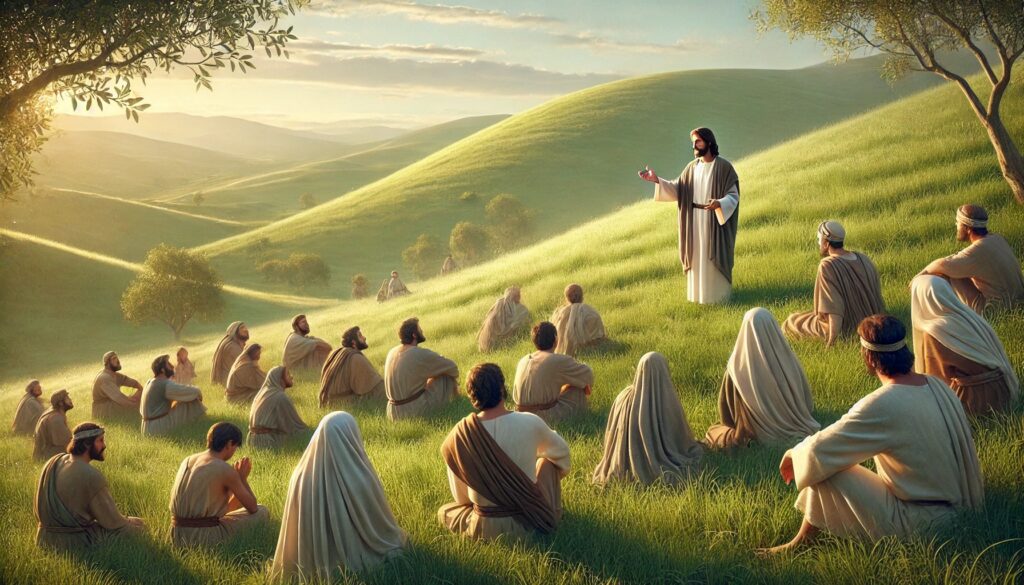
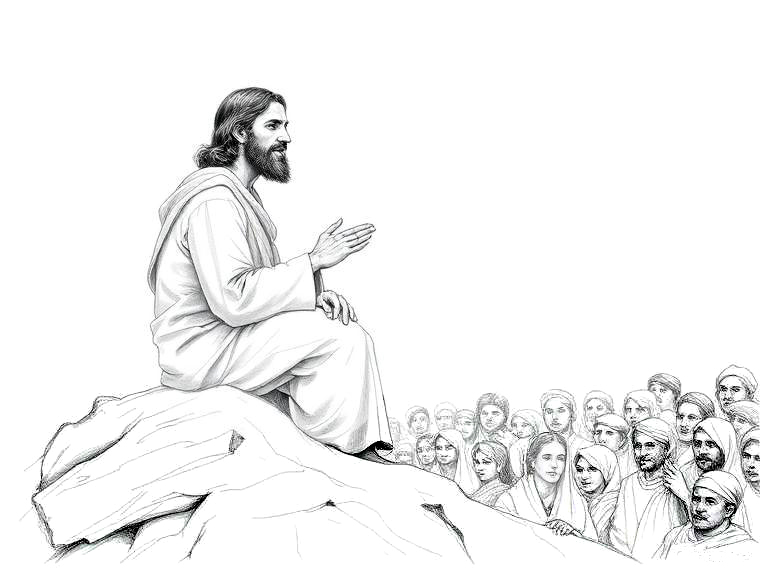
As John’s disciples were leaving, Jesus began to speak to the crowds about John: “What did you go out into the wilderness to see? A reed swaying in the wind? Otherwise, what did you go out to see? A man dressed in fine clothes? Look, those who wear fine clothing are found in kings’ palaces. What then did you go out to see? A prophet? Yes, I tell you, and more than a prophet. This is the one about whom it is written:

‘Behold, I will send My messenger ahead of You, who will prepare Your way before You.’

Truly I tell you, among those born of women there has risen no one greater than John the Baptist. Yet even the least in the kingdom of heaven is greater than he. From the days of John the Baptist until now, the kingdom of heaven has been subject to violence, and the violent lay claim to it. For all the Prophets and the Law prophesied until John. And if you are willing to accept it, he is the Elijah who was to come. He who has ears, let him hear.

Commentary

Jesus describes John the Baptist as more than a prophet and declares that no one is greater than John. However, John’s greatness does not stem from personal holiness or spiritual superiority, but from the unique role he was appointed to fulfill.

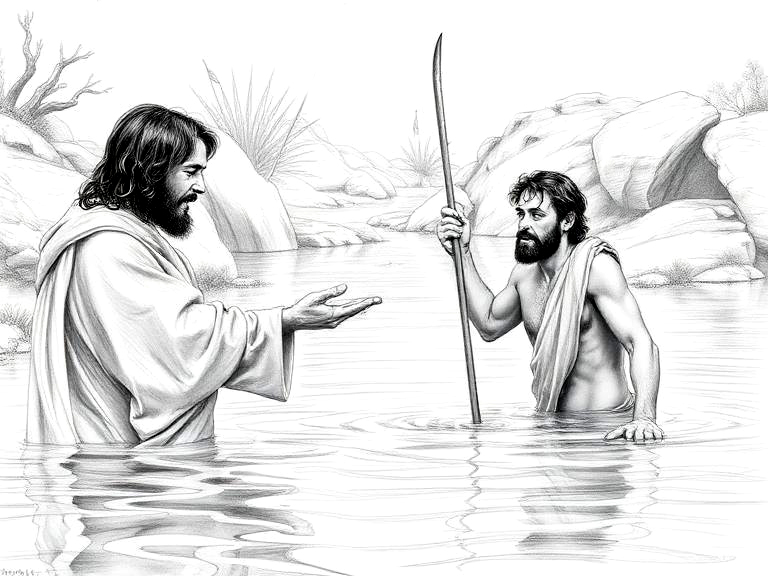
All the other prophets spoke of a Messiah who would come in the future. John, however, proclaimed, “Look, the Lamb of God, who takes away the sins of the world!” John’s purpose was to prepare the way for Jesus. While the prophets before him looked forward to the coming Messiah but never being given the opportunity to see him, John was granted the unique privilege not only of seeing the Messiah but also of baptizing Him.

John saw Jesus coming toward him and said, “Look, the Lamb of God, who takes away the sin of the world! This is He of whom I said, ‘A man who comes after me has surpassed me because He was before me.’ I myself did not know Him, but the reason I came baptizing with water was that He might be revealed to Israel.” (John 1:29-31)

Jesus continues, “Yet even the least in the kingdom of heaven is greater than he.” John is the greatest prophet because he was the one appointed to announce Jesus’s arrival. But consider those who are already in heaven, who are able to behold with their own eyes the Almighty God seated on His throne.

Verse twelve states, “From the days of John the Baptist until now, the kingdom of heaven has been subject to violence, and the violent lay claim to it. For all the Prophets and the Law prophesied until John. And if you are willing to accept it, he is the Elijah who was to come.”

Huh? What does Jesus mean when He says that the kingdom of heaven has been subject to violence?

First, let’s examine this passage phrase by phrase. The statement, “From the days of John the Baptist until now,” refers to the entire span of Jesus’s earthly ministry up to that point.

Likewise, “For all the Prophets and the Law prophesied until John” means that the Law of Moses and every prophet who came before John merely foretold the coming of the Messiah. Now, however, the Messiah Himself is standing before the crowd and speaking to them.

Just as Andrew declared to his brother Peter “We have found the Messiah” (John 1:41b)

Therefore, whatever is meant by the word “violence”, it must relate to Jesus’s earthly ministry.

We know that large numbers of people were coming from every town in Israel in search of Jesus. The crowds were big. People pressed in around Him, climbed trees just to catch a glimpse as He passed by, cried out to Him, pleaded with Him, and even pushed through the crowd simply to touch the hem of His garment.

I believe this is the sense in which Jesus uses the word “violence.” It refers to the forceful determination with which people were striving to draw near to Him.

Then Jesus refers to John the Baptist as being the Elijah who was to come.

In John 1:21, John the Baptist denies being Elijah when questioned by the Jewish priests and Levites. John is not a reincarnated Elijah, as there is no such thing as reincarnation. Therefore, John is speaking accurately and truthfully when he says that he is not Elijah. However, Luke chapter 1 states,

And he will go on before the Lord in the spirit and power of Elijah, to turn the hearts of the fathers to their children and the disobedient to the wisdom of the righteous—to make ready a people prepared for the Lord.” (Luke 1:17)

When Jesus says, “He who has ears, let him hear,” it signals that He is speaking something requiring discernment. John the Baptist is not literally Elijah, but figuratively, he comes in the spirit and power of Elijah.

Verses 16-19

To what can I compare this generation? They are like children sitting in the marketplaces and calling out to others:

‘We played the flute for you, and you did not dance; we sang a dirge, and you did not mourn.’

For John came neither eating nor drinking, and they say, ‘He has a demon!’ The Son of Man came eating and drinking, and they say, ‘Look at this glutton and drunkard, a friend of tax collectors and sinners!’ But wisdom is vindicated by her actions.”

Commentary

The Jewish leaders of Jesus’s time were inconsistent and hypocritical in their judgments. When John the Baptist came, fasting and abstaining from wine, they accused him of being demon-possessed. When Jesus came, eating and drinking with others, they called Him a glutton and a drunkard. This demonstrates that nothing would ever satisfy them; regardless of what anyone did, the Jewish leaders were determined to find fault and make accusations.

Verses 20-24

Then Jesus began to denounce the cities in which most of His miracles had been performed, because they did not repent. “Woe to you, Chorazin! Woe to you, Bethsaida! For if the miracles that were performed in you had been performed in Tyre and Sidon, they would have repented long ago in sackcloth and ashes. But I tell you, it will be more bearable for Tyre and Sidon on the day of judgment than for you.

And you, Capernaum, will you be lifted up to heaven? No, you will be brought down to Hades! For if the miracles that were performed in you had been performed in Sodom, it would have remained to this day. But I tell you that it will be more bearable for Sodom on the day of judgment than for you.”

Commentary

First of all, cities themselves do not go to hell; people do. So when Jesus says, “It will be more bearable for Tyre and Sidon on the day of judgment than for you,” He is referring to the people of Tyre and Sidon, not the buildings or the land.

Jesus is saying that if the people of Tyre, Sidon, and even Sodom had witnessed the miracles He performed, they would have repented. Yet the inhabitants of Chorazin, Bethsaida, and Capernaum did not.

It is also noteworthy that, according to this passage, there appear to be varying degrees of judgment. Jesus states that it will be more bearable for Tyre and Sidon on the day of judgment than for the cities He is addressing.

So what does this mean? The Biblical timeline is as follows: upon death, the unsaved go to hell until the day of judgment. At that time, they will be resurrected from hell to stand before God and give an account for what they did during their lives. The unsaved will then be judged and ultimately cast into the lake of fire, along with Satan and his demons.

I have heard, and am willing to accept, that there may be different levels of hell, with varying degrees of severity. However, I do not believe the same is true of the lake of fire. I am inclined to assume that the lake of fire represents a uniform punishment for Satan, his demons, and all who have rejected Jesus Christ as their Savior.

Therefore, what is described as more or less bearable on the day of judgment must refer to the act of being judged by God; not the punishment itself, but the experience of standing before the Almighty to give an account and receive His reprimand. It might be similar to the difference between going to your earthly dad and telling him you spilled some milk versus confessing that you burned down the house after being warned not to play with matches.

Verses 25-26

At that time Jesus declared, “I praise You, Father, Lord of heaven and earth, because You have hidden these things from the wise and learned, and revealed them to little children. Yes, Father, for this was well-pleasing in Your sight.

Commentary

Immediately after condemning these cities, Jesus praises the Father for having hidden these truths from the wise and learned. Pride is the antithesis of worshiping God; it is what caused Satan to be cast out of heaven. Simply put, pride declares, “I can handle this myself; I don’t need God.”

The wise, well-educated, and the wealthy face obstacles that hinder them from fully relying on God. In this way, those who choose to turn from God and depend on themselves are, in a sense, assisted in their rebellion, for God allows them to remain unaware of simple spiritual truths.

To offer an earthly comparison, I once worked for a company with a high level of security. To get from the parking lot to the building, every person had to pass through one of several turnstiles, each designed for only one person at a time. Each turnstile required a badge swipe to operate. One day, I forgot my badge, and the turnstile would not turn for me. No matter my wisdom, knowledge, or financial resources, the turnstile would not let me through without my badge. To make matters worse, I had carpooled with a coworker who had already passed through the turnstile and was unaware of my predicament. I then had to walk along the outside of the fence for approximately half a mile to reach the administration building where I obtained a temporary badge.

In this example, the badge represents humility and a genuine desire to seek God. Those who are wise, well-educated, or wealthy may be tempted to try to get to heaven without humility. In response, God places a turnstile between Himself and such individuals. The turnstile symbolizes God withholding simple spiritual truths from them; truths they are then unable to grasp on their own.

If you are reading this commentary and consider yourself well-educated or wealthy, what should you do? I once took a PhD-level scientist fishing and was surprised to discover that he did not know how to tie a knot. He was unable to attach his fishing hook to his line, so I had to teach him how to do it.

If you have a high level of education, be humble enough to recognize that your expertise is generally confined to the specific area of your degree. In all other matters, you are as ordinary as someone who never attended college. For example, holding a PhD in thermodynamics does not mean you know how to tie fishing knots or which knot is appropriate for the type of fishing you are doing and the tackle you’re using.

When you read the Bible, do not approach it as if it were a college textbook, assuming you can understand it through your intellect alone. Instead, be willing to acknowledge that without the Spirit, you cannot grasp what is spiritually discerned. Get rid of your pride.

And what do little children have to do with it? Little children depend on their parents for everything. That same dependent attitude is what we should have toward God.

Verse 27

All things have been entrusted to Me by My Father. No one knows the Son except the Father, and no one knows the Father except the Son and those to whom the Son chooses to reveal Him.

Commentary

All things have been entrusted to Jesus. This is a broad statement for a reason. When Jesus says “all things,” He literally means everything. In Matthew 28:18, He declares, “All authority in heaven and on earth has been given to Me.” Jesus is the King of kings, and whatever He commands, and by extension, whatever the Bible teaches, represents the ultimate authority.

Therefore, when someone claims that the Bible is obsolete or no longer relevant to modern society, they are in error. Regardless of its age, the Bible embodies the authority of Jesus Christ.

Jesus continues, “No one knows the Son except the Father, and no one knows the Father except the Son and those to whom the Son chooses to reveal Him.” Here, He makes clear that He is the only path to salvation. Without Jesus, there is no hope of reaching the Father; none at all.

Verses 28-30

Come to Me, all you who are weary and burdened, and I will give you rest. Take My yoke upon you and learn from Me, for I am gentle and humble in heart, and you will find rest for your souls. For My yoke is easy and My burden is light.”

Commentary

This verse has always perplexed me. Jesus repeatedly warns that those who follow Him will face persecution, perhaps even death. And yet now He says that His burden is light. How can being persecuted or even martyred be considered a light burden?

However, let’s consider the statement from a different perspective. Just moments earlier, Jesus declared that He is the only path to salvation. Throughout the New Testament, we see that salvation by faith brings freedom from the Law. In this sense, the burden is light; not because following Christ eliminates trials or persecution, but because there is no requirement to earn salvation through hard work. Salvation is instead by God’s grace through faith; a very light burden.

Commentary Matthew 10

Walking Wolves by Angell Williams – Flickr Creative Commons

Gary Eugene Howell uses the Berean Standard Bible. The Holy Bible, Berean Standard Bible, BSB is produced in cooperation with Bible Hub, Discovery Bible, OpenBible.com, and the Berean Bible Translation Committee. The Text of the Berean Standard Bible was dedicated to the public domain as of April 30, 2023.

Verse 1

And calling His twelve disciples to Him, Jesus gave them authority over unclean spirits, so that they could drive them out and heal every disease and sickness.

Commentary

Whenever a sentence in the Bible begins with And, Therefore, But, Or, Thus, etc….it is a continuation of what was being said previously. I had a pastor who would often say “Whenever you see the word Therefore, ask yourself, what is it there for?”

Jesus, having just finished stating at the end of chapter nine that more workers were needed, then gives authority to his twelve disciples. He gave them authority over unclean spirits, enabling them to drive them out and to heal every disease and sickness.

The author of this commentary holds the opinion that Jesus giving the disciples authority over demons and illnesses was a special circumstance for that particular moment. Today, if you or I cast out a demon, it is not we who do the casting, nor is it by our own authority; rather, it is by the power of the Holy Spirit. Likewise, if we lay hands on someone and pray for healing, and that person is healed, it is not by our authority that the healing occurs, but by the power of the Holy Spirit.

After the resurrection Jesus appeared to his disciples and said, “All authority in heaven and on earth has been given to Me. (Matthew 28:18)

Do not lend yourself to pride by believing that you possess the authority to heal the sick and cast out demons. Remember what Jesus says in Matthew chapter seven: “Many will say to Me on that day, ‘Lord, Lord, did we not prophesy in Your name, and in Your name drive out demons and perform many miracles?’ Then I will tell them plainly, ‘I never knew you.’”

I have no doubt that demons may, at times, be willing to leave voluntarily in order to allow a person to delude themselves into believing they have been given special powers and spiritual authority. Do not become prideful.

likewise, also recall what it says in Acts chapter nineteen,

Now there were some itinerant Jewish exorcists who tried to invoke the name of the Lord Jesus over those with evil spirits. They would say, “I command you by Jesus, whom Paul proclaims.” Seven sons of Sceva, a Jewish chief priest, were doing this. But one day the evil spirit responded, “Jesus I know, and I know about Paul, but who are you?” Then the man with the evil spirit jumped on them and overpowered them all. The attack was so violent that they ran out of the house naked and wounded. This became known to all the Jews and Greeks living in Ephesus, and fear came over all of them. So the name of the Lord Jesus was held in high honor. (Acts 19:13-17)

I once attended a small-group Bible study at a pastor’s home. We were discussing the topic of miracles being performed by people. The pastor pointed out the window toward the swimming pool on his back patio (in Florida, almost everyone has a pool in their backyard) and said, “I could have all the faith in the world to walk on water across the surface of that pool, but I would never be able to do it unless God first told me to do it.

Thus, it is not we who perform miracles, as though we are someone special; it is God who performs miracles through us. God gets the glory, not us. We do nothing more than follow the prompting of the Holy Spirit in obedience.

Do not believe the pastor who claims that he possesses miracle-working powers. Miracles are real, and they do occur, but God is the one who makes them happen. He sends us only to deliver the miracle.

Verses 2-4

These are the names of the twelve apostles: first Simon, called Peter, and his brother Andrew; James son of Zebedee, and his brother John; Philip and Bartholomew; Thomas and Matthew the tax collector; James son of Alphaeus, and Thaddaeus; Simon the Zealot, and Judas Iscariot, who betrayed Jesus.

Commentary

The names of the twelve disciples are listed, and notably, Judas is among them. He too was given authority to cast out demons and heal the sick. Judas was given every opportunity to put his faith in Jesus Christ; yet, even after being an eyewitness to all of Jesus’s miracles, and after being granted authority to perform such miracles himself, he remained unwilling to put his faith in Jesus.

The author of this commentary firmly believes that on Judgement Day, some of us will be shocked to see who doesn’t get into heaven. There will be some pastors, elders, deacons, Christian music artists, Christian book authors, and people of all types whom we once regarded as outstanding examples of Christianity, yet who never truly placed their faith in Jesus Christ.

Likewise, there will also be some of the most vile human beings you and I have ever heard of who will be ushered into the kingdom of God, followed by the words, “Well done.” The reason is that, at some point before the end of their earthly lives, they placed their faith in Jesus Christ. In some cases, it may have occurred even in their final minutes as they lay dying.

Salvation is not earned by good behavior, nor is damnation determined by bad behavior. Salvation comes through faith, and damnation results from a failure to put one’s faith in Christ.

What is faith? It is not only believing in the existence of God and Jesus Christ, but of greater importance is the act of trusting that what God has said is true.

Verses 5-15

These twelve Jesus sent out with the following instructions: “Do not go onto the road of the Gentiles or enter any town of the Samaritans. Go rather to the lost sheep of Israel. As you go, preach this message: ‘The kingdom of heaven is near.’ Heal the sick, raise the dead, cleanse the lepers, drive out demons. Freely you have received; freely give.

Do not take along any gold or silver or copper in your belts. Take no bag for the road, or second tunic, or sandals, or staff; for the worker is worthy of his provisions. Whatever town or village you enter, find out who is worthy there and stay at his housed until you move on. As you enter the home, greet its occupants. If the home is worthy, let your peace rest on it, but if it is not, let your peace return to you.

And if anyone will not welcome you or heed your words, shake the dust off your feet when you leave that home or town. Truly I tell you, it will be more bearable for Sodom and Gomorrah on the day of judgment than for that town.

Commentary

I recall that at a previous church, before anyone was allowed to go on a mission trip, each person on the team was required to take a class called Missions 101. The class provided instructions on how to share the gospel and how to conduct oneself while on the mission trip.

When reading verses five through fifteen, I feel as though Jesus is teaching Missions 101.

As part of the Missions 101 class, students were instructed to go out into the community near the church and share the gospel with people. Many Christians have never shared their faith with anyone, so rather than traveling to a foreign country and only then trying to learn how to share the gospel, our church wanted us to gain that experience in our own hometown first. That way, when we arrived at our foreign destination, we already knew what we were doing. We were not attempting something new for the first time thousands of miles from home.

Much like Missions 101, Jesus, in these verses, is instructing His disciples to go out and share the good news only within Israel. In other words, He is sending them out locally first, so that they may learn in their own hometowns what to do before He later sends them out to make disciples of all nations.

Verse 16

Behold, I am sending you out like sheep among wolves; therefore be as shrewd as snakes and as innocent as doves.

Commentary

This verse has stayed with me throughout my entire adult life. When I was in my mid-twenties, my spiritual mentor told me, “Be as shrewd as a snake but as innocent as a dove.” Those without the Holy Spirit can be manipulators, liars, tricksters, and hucksters; wolves who are able to present themselves as the most innocent, kind, and sincere people, like a wolf in sheep’s clothing.

Being as shrewd as a snake means being street-smart; aware of the schemes of men and able to recognize when someone is attempting to deceive you. Meanwhile, being as innocent as a dove means that although you are street-smart, you do not engage in those same deceptive practices yourself.

Off the top of my head, I can immediately think of two scenarios in which a Christian today needs these two qualities. The first involves deciding who will be your spiritual leader (i.e. your pastor). Many churches today have been corrupted by pastors who embrace the culture at the expense of the gospel. When you become a member of a church, you are, in effect, making that pastor your spiritual leader, so you must be as shrewd as a snake.

My parents taught me not to take candy from strangers. In the same way, do not take spiritual guidance from strangers; myself included. Please verify in the Bible that what I say is true. Before committing yourself to a church, be sure that the pastor is faithfully preaching the truth of God’s Word.

The second scenario is a warning to single people in the church who are looking for a spouse. For single women, be aware that some men attend church because they believe Christian women are naïve and easily taken advantage of. These men are often easy to identify because they boast about their own righteousness, believing that such bragging will impress Christian women.

For single men, be aware that some women have spent their twenties and early thirties living wildly and promiscuously. As age begins to show and attention from worldly men vanishes, she may believe she can simply walk into a church, find a good Christian man to marry, and rely on him to provide for her. She isn’t seeking Jesus; she’s seeking financial security.

Know this: A quality man or woman will display spiritual wisdom. Be as shrewd as a snake. When discussing matters of faith, look for someone who knows God’s Word and can articulate spiritual understanding. Anyone who possesses little spiritual insight is likely not yet marriage material. Ask the Lord for wisdom, and He will guide you.

Verses 17-20

But beware of men, for they will hand you over to their councils and flog you in their synagogues. On My account you will be brought before governors and kings as witnesses to them and to the Gentiles. But when they hand you over, do not worry about how to respond or what to say. In that hour you will be given what to say. For it will not be you speaking, but the Spirit of your Father speaking through you.

Commentary

The world hates Jesus. Throughout history; and in many places today; Christianity has been, and in some cases still is, completely illegal. I have read several books and testimonies from individuals who were imprisoned because of their faith in Jesus Christ. In such situations, what should one do? Rely on the Holy Spirit.

“When they hand you over, do not worry about what to say, for it will not be you speaking, but the Spirit of your Father speaking through you.”

I have experienced; and seen it happen to others; that when the Lord speaks through you, you’re aware that you said something, yet you have no idea what it was. Those around you may be enraged by your words. They may be ready to punch you, yet you haven’t the slightest clue what it was you said. That is the Spirit of your Father speaking through you. I cannot say for certain, but I suspect that the Lord speaks to them about their personal, hidden sins; something you could not have known. The Lord calls them to repentance, but for those who refuse, it only fuels their rage.

Verses 21-22

Brother will betray brother to death, and a father his child; children will rise against their parents and have them put to death. You will be hated by everyone because of My name, but the one who perseveres to the end will be saved.

Commentary

When Jesus talks about a brother betraying a brother to death, or a father his child, He is highlighting that, for some, pressure from immediate family members can be especially intense. When I read this verse, I immediately think of instances in the Islamic faith where, if a Muslim converts to Christianity, their own family members might threaten or even kill them. Jesus is emphasizing that those who persevere to the end will be saved.

Let me remind the reader that salvation equals life. Recall what Jesus said to the Sadducees in Matthew 22: “But concerning the resurrection of the dead, have you not read what God said to you: ‘I am the God of Abraham, the God of Isaac, and the God of Jacob’? He is not the God of the dead, but of the living.”

Thus, a person who is killed in this mortal life for the sake of their faith in Christ does not truly die but continues to live spiritually. At the second coming of Jesus Christ, they will be reunited with their body (then glorified) and will rule and reign with Christ on this earth for 1,000 years (Revelation 20). The takeaway is that there is still a great deal of life to be lived for those who die for Christ.

Verse 23

When they persecute you in one town, flee to the next. Truly I tell you, you will not reach all the towns of Israel before the Son of Man comes.

Commentary

Many scholars have offered a variety of interpretations of verse 23. As for me, when I see the phrase “Son of Man comes,” I immediately associate it with the second coming of Jesus Christ. However, that interpretation makes little sense because, following the outpouring of the Holy Spirit in the upper room (Acts 2), the gospel has been carried far beyond the towns of Israel.

Whenever you encounter something in the Bible that seems wrong or contradictory, you must conclude that the error lies in your own limited understanding. God knows everything. Compared to God’s intelligence, our own is like that of a goldfish compared to a person with a PhD.

Therefore, it’s perfectly okay to live your life in faith, pursuing Jesus Christ, even while not having all the answers to every nuance of God’s Word.

So what does this verse mean? I lean toward the interpretation that Jesus is not referring to His second coming at the start of the future Millennial reign, but rather to God’s wrath being poured out on Israel, particularly during the events of 70 AD. However, what I can say with absolute certainty is that the second coming of Christ did not occur in 70 AD. I have met some people who cling to that interpretation.

There is no possible way that the second coming of Christ has already occurred, or that the Millennial reign has already happened or is currently taking place. I can say this with confidence because, as a kid, my friends and I would go out into the fields to catch garter snakes and corn snakes; they would always try to bite us, and sometimes they did actually bite us.

The wolf will live with the lamb, and the leopard will lie down with the goat; the calf and young lion and fatling will be together, and a little child will lead them. The cow will graze with the bear, their young will lie down together, and the lion will eat straw like the ox. The infant will play by the cobra’s den, and the toddler will reach into the viper’s nest. They will neither harm nor destroy on all My holy mountain, for the earth will be full of the knowledge of the LORD as the sea is full of water. (Isaiah 11:6-9)

Verses 24-25

A disciple is not above his teacher, nor a servant above his master. It is enough for a disciple to be like his teacher, and a servant like his master. If the head of the house has been called Beelzebul, how much more the members of his household!

Commentary

Jesus is again emphasizing that if they persecuted Him, they will also persecute His followers.

Verses 26-31

So do not be afraid of them. For there is nothing concealed that will not be disclosed, and nothing hidden that will not be made known. What I tell you in the dark, speak in the daylight; what is whispered in your ear, proclaim from the housetops.

Do not be afraid of those who kill the body but cannot kill the soul. Instead, fear the One who can destroy both soul and body in hell.

Are not two sparrows sold for a penny? Yet not one of them will fall to the ground apart from the will of your Father. And even the very hairs of your head are all numbered. So do not be afraid; you are worth more than many sparrows.

Commentary

Continuing His teaching on persecution, Jesus instructs His followers not to fear those who will persecute them. He is telling the disciples not to hide the gospel, but to speak it openly and proclaim it boldly; even from the rooftops.

The phrase “there is nothing concealed that will not be disclosed, and nothing hidden that will not be made known” likely refers to the mysteries of the kingdom of heaven mentioned in Matthew 13.

Then the disciples came to Jesus and asked, “Why do You speak to the people in parables?” He replied, “The knowledge of the mysteries of the kingdom of heaven has been given to you, but not to them. Whoever has will be given more, and he will have an abundance. Whoever does not have, even what he has will be taken away from him. This is why I speak to them in parables:

‘Though seeing, they do not see; though hearing, they do not hear or understand.’ In them the prophecy of Isaiah is fulfilled:

‘You will be ever hearing but never understanding; you will be ever seeing but never perceiving. For this people’s heart has grown callous; they hardly hear with their ears, and they have closed their eyes. Otherwise they might see with their eyes, hear with their ears, understand with their hearts, and turn, and I would heal them.’

But blessed are your eyes because they see, and your ears because they hear. For truly I tell you, many prophets and righteous men longed to see what you see but did not see it, and to hear what you hear but did not hear it. (Matthew 13:10-17)

For all of human history, up to and including the life of Jesus Christ, many aspects of God, heaven, and salvation remained a mystery to mankind. After Christ rose from the grave and ascended into heaven, it became the responsibility of all Christians to reveal these mysteries; to make them plain and clear to everyone on earth, to disclose them and make them known. We are instructed to be so bold in this task that Jesus compares it to shouting from the rooftops.

He goes on to say that persecutors may be able to kill the body, but afterward they can do no more; they cannot touch the soul. “Instead,” Jesus says, “fear the One who can destroy both soul and body in hell,” namely God.

But then Jesus offers reassurance: “Are not two sparrows sold for a penny? Yet not one of them will fall to the ground apart from your Father’s will. And even the very hairs of your head are all numbered. So do not be afraid; you are worth more than many sparrows.”

Jesus is saying that God values you greatly and that nothing will happen to you apart from His will. This, however, does not mean health, wealth, or prosperity. Rather, it means that if you are killed for boldly proclaiming the name of Christ, it will be God’s will to glorify you in the kingdom of heaven.

Verses 32-33

Therefore everyone who confesses Me before men, I will also confess him before My Father in heaven. But whoever denies Me before men, I will also deny him before My Father in heaven.

Commentary

The interpretation of this verse is straightforward: if you deny Christ, you will not be saved. However, always remember that as long as you are alive, you remain under grace and have the opportunity to repent and turn to Jesus for the forgiveness of your sins. A person who denied Christ in their youth but accepted Him as Savior later in life does not need to worry about being denied before the Father, for their sins are forgiven.

For every person, however, there comes a point at which it is too late to change your spiritual destination. That point is physical death. When your soul departs your body, you either ascend to heaven or descend to hell, and nothing further can be done to alter that course.

“Today, if you hear His voice, do not harden your hearts.” (Hebrews 4:7b)

Verses 34-36

Do not assume that I have come to bring peace to the earth; I have not come to bring peace, but a sword. For I have come to turn

‘a man against his father, a daughter against her mother, a daughter-in-law against her mother-in-law. A man’s enemies will be the members of his own household.’

Commentary

This verse refutes the prosperity gospel. Jesus did not come to make every individual rich, posh, or comfortable. Rather, His desire is for every person to be saved. Simply put, Jesus is divisive; and rightly so. God is seeking those who love Him, but most people hate Him because:

The Light has come into the world, but men loved the darkness rather than the Light because their deeds were evil. Everyone who does evil hates the Light, and does not come into the Light for fear that his deeds will be exposed. (John 3:19-20)

It has become a common Hollywood trope; so much so that it is almost cliché; that a villain, trying to hide his evil deeds, will seek to silence the person attempting to expose him. The analogy is more or less true of Christianity. We are tasked with telling people that they are sinners in need of a Savior. Some will strongly resist facing their own sins, while others will oppose the very idea that they need a Savior. In this light, it makes sense that Jesus did not come to bring peace, but rather a sword.

Verses 37-38

Anyone who loves his father or mother more than Me is not worthy of Me; anyone who loves his son or daughter more than Me is not worthy of Me; and anyone who does not take up his cross and follow Me is not worthy of Me.

Commentary

Remember, Jesus is speaking to a group of Israelites. Imagine, even today, if a young Jewish man or woman were to go home and announce that they had accepted Jesus Christ as their Savior. It could cause division within their household. A young person who denies Christ simply to maintain peace at home is acting in a way unworthy of being a follower of Jesus Christ.

Verse 39

Whoever finds his life will lose it, and whoever loses his life for My sake will find it.

Commentary

I have heard this verse applied in various ways. In its proper context, however, Jesus is still speaking about persecution. A person who denies Christ in order to save his own life will ultimately lose his soul in hell (that is, eternal spiritual death). But the one who is killed for the sake of Jesus Christ will find eternal life.

Another way I have heard this verse applied is in the context of what a person devotes their life to and whether they are willing to make personal sacrifices for the sake of following Jesus Christ.

One might say, “I am going to find my life by pursuing wealth and abundance,” and then devote his life to becoming rich. In the end, without Christ, he will lose his life when he dies and faces eternal separation from God.

By contrast, another man who was on the same path of pursuing wealth and abundance encounters Jesus and makes the conscious decision to give up that pursuit (to lose his life) in order to follow Jesus. In doing so, he finds the true purpose and meaning of his life.

The example above is not a condemnation of wealth, but of dedicating one’s life to the pursuit of something other than Christ. I encourage you to manage your money wisely so that it grows, but do not devote your life to the pursuit of wealth. Devote your life to Jesus Christ.

Verses 40-42

He who receives you receives Me, and he who receives Me receives the One who sent Me. Whoever receives a prophet because he is a prophet will receive a prophet’s reward, and whoever receives a righteous man because he is a righteous man will receive a righteous man’s reward. And if anyone gives even a cup of cold water to one of these little ones because he is My disciple, truly I tell you, he will never lose his reward.”

Commentary

Logically, if you or I bring the message of Jesus Christ to someone and they receive us, then by receiving that message they are receiving Jesus. In verse 41, Jesus builds upon verse 40 by offering examples that illustrate this simple truth: if you receive a prophet, you receive a prophet’s reward; if you receive a righteous person, you receive a righteous reward. Likewise, anyone who receives Jesus, receives Jesus’s reward; eternal life. Furthermore, verse 42 indicates that this reward can never be taken away or lost.

Commentary Matthew 9

Ask the Lord of the Harvest to send out more workers
Gary Eugene Howell uses the Berean Standard Bible. The Holy Bible, Berean Standard Bible, BSB is produced in cooperation with Bible Hub, Discovery Bible, OpenBible.com, and the Berean Bible Translation Committee. The Text of the Berean Standard Bible was dedicated to the public domain as of April 30, 2023.

Verse 1

Jesus got into a boat, crossed over, and came to His own town.

Commentary

Rather than walking all the way around the Sea of Galilee, which would take about a day, Jesus crossed it by boat. The verse says he came to his own town; however, this is not referring to Bethlehem where he was born, nor is it referring to Nazareth where he grew up. Instead, it’s referring to Capernaum which became his home-base during his ministry years. While in Capernaum he would stay at the home of Peter and his brother Andrew, or at the home of Mary, Martha, and Lazarus. He may have stayed in other people’s home’s as well, but Jesus himself did not own or rent any dwelling.

Verse 2

Just then some men brought to Him a paralytic lying on a mat. When Jesus saw their faith, He said to the paralytic, “Take courage, son; your sins are forgiven.”

Commentary

Notice that Jesus saw their faith. Whose faith? The faith of the men who were carrying the paralyzed man. This gives indication to the idea that we can carry the burdens of others and through our own faith, bring to Jesus a request for their healing or for their needs. This is called intercessory prayer. We are bringing to Jesus, the concerns of others.

Jesus then says to the paralyzed man “Take courage, son; your sins are forgiven.” Jesus has the authority to forgive sins. This is huge, because without the forgiveness of sins we are all damned.

Therefore, let it be known to you, brothers, that through Jesus the forgiveness of sins is proclaimed to you. Through Him, everyone who believes is justified from everything you could not be justified from by the law of Moses. (Acts 13:38-39)

Verse 3

On seeing this, some of the scribes said to themselves, “This man is blaspheming!”

Commentary

Isn’t it curious that Jesus didn’t immediately heal the man? That is what He normally did. I believe His statement, “Take courage, your sins are forgiven,” was a deliberate attempt to provoke the scribes. In other words, He said it knowing this would upset them.

The Jewish people rightly understood that only God could forgive sins. What the scribes and Pharisees failed to grasp; and what Jesus was then implying; is that He is God and therefore possesses the authority to forgive sins.

However, I want to clarify something. We are instructed by Jesus to forgive those who sin against us; but there is a difference between sins that separate us from God, and that of our letting go of bitterness. We have the ability to “forgive” in the sense that we can choose to no longer hold a grudge. But our guilt before God can only be forgiven by God.

So when Jesus says to the man “Your sins are forgiven”, Jesus is demonstrating that he has the authority to forgive sins, and is indirectly revealing that he is God, in the flesh.

Critics will state that Jesus never claimed to be God. Well, he just did, and just like the Scribes and Pharisees, it goes right over the heads of modern-day critics.

Verses 4-8

But Jesus knew what they were thinking and said, “Why do you harbor evil in your hearts? Which is easier: to say, ‘Your sins are forgiven,’ or to say, ‘Get up and walk’? But so that you may know that the Son of Man has authority on earth to forgive sins…” Then He said to the paralytic, “Get up, pick up your mat, and go home.” And the man got up and went home. When the crowds saw this, they were filled with awe and glorified God, who had given such authority to men.

Commentary

When Jesus responds, “Which is easier: to say, ‘Your sins are forgiven,’ or to say, ‘Get up and walk?” He is demonstrating, through the healing of the paralyzed man, that he has the authority to forgive sins (i.e. Jesus is God). He is the Messiah.

However, the crowds think God gave authority to a man, and in some sense, they are correct because Jesus is both fully man and fully God, which is what we’re going to see at the transfiguration when we get to Matthew chapter 17.

Verse 9

As Jesus went on from there, He saw a man named Matthew sitting at the tax booth. “Follow Me,” He told him, and Matthew got up and followed Him.

Commentary

Jesus finds Matthew. Let’s make note of the fact that tax collectors were generally viewed as dishonest people (sinners). In those days tax collectors would frequently charge more than was necessary and would keep the difference for themselves.

Therefore, what we are seeing is that Jesus is calling sinners to follow him. Now in reality, everyone is a sinner, but to call a tax collector to follow him, he is calling a person who is publicly viewed as a sinner. As a matter of fact, let’s look at what happens in the next two verses.

Verses 10-11

Later, as Jesus was dining at Matthew’s house, many tax collectors and sinners came and ate with Him and His disciples. When the Pharisees saw this, they asked His disciples, “Why does your teacher eat with tax collectors and sinners?”

Commentary

Jesus tends to gather to himself the humble and lowly. The Pharisees are sinners just like everyone else, but they tend to be prideful and arrogant about their position in society and about their self-perceived position with God. As a result, Jesus not only dismisses them, but often scolds and rebukes them.

Pride says, “I’m good enough, my actions make me right with God” or even “I don’t need God”. Humility says, “I can not get there on my own, I need help”. If you want to get to heaven, look to Jesus for help.

Just as Moses lifted up the snake in the wilderness, so the Son of Man must be lifted up, that everyone who believes in Him may have eternal life. (John 3:14-15)

Then the LORD said to Moses, “Make a fiery serpent and mount it on a pole. When anyone who is bitten looks at it, he will live.” So Moses made a bronze snake and mounted it on a pole. If anyone who was bitten looked at the bronze snake, he would live. (Numbers 21:8-9)

Again, we must look to Jesus for our salvation.

Verses 12-13

On hearing this, Jesus said, “It is not the healthy who need a doctor, but the sick. But go and learn what this means: ‘I desire mercy, not sacrifice.’ For I have not come to call the righteous, but sinners.”

Commentary

Jesus came to heal the sick and save the lost, so logically where does Jesus need to perform his ministry? With those who are sick and lost. The pharisees believe that sinners are beneath them. However, the Pharisees are supposed to be the spiritual leaders of Israel, yet, they’re very condescending and judgmental toward the people they’re supposed to be leading. Jesus, however, is right there with the sinners, pointing them to God.

Jesus then insults and challenges the Pharisees. He says to them, “go and learn what this means”. Think about this, Jesus is talking to the foremost experts in the law. They’ve spent their whole lives studying scripture and now Jesus is shooing them away saying “why don’t you go learn something.”

Jesus is quoting the book of Hosea. “I desire mercy, not sacrifice”. What does this mean? In Matthew chapter 23, Jesus says it again,

Woe to you, scribes and Pharisees, you hypocrites! You pay tithes of mint, dill, and cumin. But you have disregarded the weightier matters of the law: justice, mercy, and faithfulness. You should have practiced the latter, without neglecting the former. You blind guides! You strain out a gnat but swallow a camel. (Matthew 23:23-24)

The scribes and Pharisees made a habit of neglecting the more important things of the law like having mercy toward others. “I desire mercy, not sacrifice” means that to make a sacrifice for sins committed is much less desirable to God than to have done what was right in the first place. To show mercy to people in need, to the poor, to sinners, to one’s enemies, etc…. By showing mercy to people, we have the opportunity to point them to God. And that’s what the Pharisees were not doing.

Verses 14-15

Then John’s disciples came to Jesus and asked, “Why is it that we and the Pharisees fast so often, but Your disciples do not fast?” Jesus replied, “How can the guests of the bridegroom mourn while He is with them? But the time will come when the bridegroom will be taken from them; then they will fast.

Commentary

It seems odd that John still has disciples. The bible says that John’s purpose was to declare Jesus’s arrival. Therefore, one would assume that all of John’s disciples would have become Jesus’s disciples, but it appears that is not the case.

John’s disciples tell Jesus that they often fast and Jesus relates fasting to mourning. Remember that at this time, John is in prison so John’s disciples have reason to mourn.

Meanwhile Jesus describes himself as a bridegroom, and indeed Matthew 25, Ephesians 5:25-27, Revelation 19, and Revelation 21 refer to the church as being Jesus’s bride. The wedding of which is an event still to come.

Jesus states that while he is with his disciples, they are not fasting, but a time will come when he is taken away from them. This of course is referring to the crucifixion and later his ascension into heaven.

Jesus equates fasting with mourning and he intended for us to fast after his departure.

Verses 16-17

No one sews a patch of unshrunk cloth on an old garment. For the patch will pull away from the garment, and a worse tear will result.

Neither do men pour new wine into old wineskins. If they do, the skins will burst, the wine will spill, and the wineskins will be ruined. Instead, they pour new wine into new wineskins, and both are preserved.”

Commentary

For those who don’t know what a wineskin is, this is what they look like. You can still buy these today. They sell them on Amazon.

Jesus is specifically talking about the soon-to-come new covenant. When Jesus is taken away, the Holy Spirit will be given to believers. That in turn, will introduce the new covenant spoken about in great detail in the book of Hebrews.

By speaking of a new covenant, He has made the first one obsolete; and what is obsolete and aging will soon disappear. (Hebrews 8:13)

Therefore, in verse 16 the unshrunk cloth represents this new covenant of salvation by faith through Jesus Christ, while the old garment represents the Mosaic Law. Likewise, New wine represents faith in Jesus Christ, while the old wineskin represents the Law.

No one sews a patch of “faith in Jesus Christ” onto the law of Moses. And no one pours “Faith in Jesus Christ” into the law. In other words, salvation by faith in Christ is not something being added to the law.

Salvation by faith is incompatible with salvation by works (i.e. the Law). You can not combine the two.

Remember: The Law is meant to show us that we are sinners. Faith in Christ is meant to save us from our sins. The Law and faith serve two different functions. Therefore, when Jesus said in Matthew 5, “Do not think that I have come to abolish the Law,” His words were entirely accurate, because the Law still serves its intended purpose; to reveal sin. For example, “You shall not steal” identifies theft as sin. If you have ever stolen anything, the Law declares you a sinner.

But faith in Christ brings about the forgiveness of sins. The Law and faith are not compatible because they serve two different functions. This is why you cannot sew a patch of faith onto the Law. Salvation is not accomplished through the Law. The Law is meant only to inform us that we have sinned, and having recognized our sin, we then see our need for a Savior.

Verses 18-19 & 23-25

While Jesus was saying these things, a synagogue leader came and knelt before Him. “My daughter has just died,” he said. “But come and place Your hand on her, and she will live.” So Jesus got up and went with him, along with His disciples.

When Jesus entered the house of the synagogue leader, He saw the flute players and the noisy crowd. “Go away,” He told them. “The girl is not dead, but asleep.” And they laughed at Him. After the crowd had been put outside, Jesus went in and took the girl by the hand, and she got up.

Commentary

First of all, let’s acknowledge the faith of this synagogue leader. “My daughter has just died,” he said. “But come and place Your hand on her, and she will live.” That’s an amount of faith that is worthy of pointing out as a good example.

Jesus then goes to his home and raises her from the dead. Why? Let’s look at verse 26 to find out.

Verse 26

And the news about this spread throughout that region.

Commentary

It’s my opinion that the miracles Jesus performed were mainly for the purpose of establishing that he is the Messiah. Recall when John the Baptist began doubting himself. He sent people to ask Jesus “Are You the One who was to come, or should we look for someone else?”

Jesus replied, “Go back and report to John what you hear and see: The blind receive sight, the lame walk, the lepers are cleansed, the deaf hear, the dead are raised, and the good news is preached to the poor. Blessed is the one who does not fall away on account of Me.” (Matthew 11:3-6)

When John asks, “are you the messiah?” Jesus replies, “look at my miracles”.
Today, if a man’s daughter dies, should he pray for her to be raised from the dead? Yes, because nothing is impossible for God. If she is raised from the dead, give praise to the Lord Jesus Christ. But, if she is not raised, understand that Christ has already done the work of establishing that he is the Messiah. Should that man then curse God because of his daughter’s death? No! We praise God in both good times and bad. Don’t be to God a fair-weather friend.

Verses 20-22

Suddenly a woman who had suffered from bleeding for twelve years came up behind Him and touched the fringe of His cloak. She said to herself, “If only I touch His cloak, I will be healed.”

Jesus turned and saw her. “Take courage, daughter,” He said, “your faith has healed you.” And the woman was healed from that very hour.

Commentary

In the midst of the synagogue leader’s plea for Jesus to raise his daughter from death to life, a woman who had suffered from bleeding for twelve years came up behind Him and touched the fringe of His cloak.

Consider the impossibility of bringing a dead person back to life, and yet Jesus was able to take a person’s departed soul and put it back into their body. How much easier is it, therefore, for Jesus to heal a living person who merely has some bleeding?

Always remember this: whatever ailment you may have, it is a simple thing for Jesus to heal you. You should pray often and repeatedly, while having the attitude that your illness is a simple task for God to heal.

God answers every prayer with either “Yes”, “No” or “Not yet”. Believe that you can be healed. Give praise to the Lord even if you are not.

Give thanks to the LORD, for He is good; His loving devotion endures forever. (Psalm 118:1)

Verses 27-29

As Jesus went on from there, two blind men followed Him, crying out, “Have mercy on us, Son of David!” After Jesus had entered the house, the blind men came to Him. “Do you believe that I am able to do this?” He asked. “Yes, Lord,” they answered. Then He touched their eyes and said, “According to your faith will it be done to you.”

Commentary

Two blind men come to Jesus begging to be healed. Jesus asks them, “Do you believe that I am able to do this?” They answered “Yes”. Jesus then says “According to your faith will it be done to you.”

Hypothetical scenario: A person today has a serious illness; they pray for healing. Healing does not come. Should they conclude that their faith wasn’t strong enough? No, because when you begin down that path, you are moving away from believing that God heals, and into the error of believing that you somehow magically heal yourself through the strength of your own faith.

“If only my faith were stronger, I would be healed.” That in essence would be having faith in your faith. Like having faith in yourself. That is false doctrine. You’re not healing yourself through the strength of your own faith. You’re looking to Jesus because of his strength. We are weak, but He is strong.

So then what is happening in the verses we just read? Jesus asks them if they believe that HE is able, and they said yes. Then according to their faith in Jesus, they were healed.

Jesus is the healer. These two men believed that Jesus could heal them. They didn’t believe that they could heal themselves. They came to Jesus because they whole heartedly believed that he could do it.

Take notice that in verse 28 Jesus directly asks “Do you believe that I am able to do this?” It is the strength of Jesus that is able to heal, not the inner-magnitude of your own belief. Granted, faith is a requirement, we can’t expect to receive anything if we doubt that God exists, but it’s not the strength of our inner will power that heals. If we believe in Jesus, we can ask for healing and it is he who can heal us.

But he must ask in faith, without doubting, because he who doubts is like a wave of the sea, blown and tossed by the wind. That man should not expect to receive anything from the Lord. He is a double-minded man, unstable in all his ways. (James 1:6-8)

Verses 30-31

And their eyes were opened. Jesus warned them sternly, “See that no one finds out about this!” But they went out and spread the news about Him throughout the land.

Commentary

After Jesus heals the blind men, he tells them not to tell anyone. Why did Jesus say that? Why shouldn’t they tell everyone?

This is a difficult verse to interpret. In researching it, I reviewed what four different pastors had to say about this verse and each of them had a different interpretation. And I didn’t care for any of their interpretations.

So, I’m going to tell you what I think these verses might mean. But understand that my interpretation is just one of many.

First, I take notice of the fact that they came calling out to him as “Son of David”. My suspicion is that these two blind men rightly knew that He was the Messiah. The second thing that I notice here is that because these two men did not keep quiet, news about Jesus spread throughout the land.

Remember the last time Jesus told a man not to tell anyone? It was a man with leprosy which Jesus healed. Jesus then told him to go and show himself to the priest, but to not tell anyone else along the way. I had interpreted that as meaning that the leper went out and told many other lepers what had happened, and that contagious lepers began following Jesus everywhere. Therefore, people in cities and towns would likely not want those types of people coming into their living spaces. Thus, Jesus had to remain in solitary places.

In this scenario I believe this is about his timing and timeline. Because his time had not yet come. Jesus appears to consistently control the pace at which His identity was revealed. If His miracles were broadcast too widely, opposition from religious leaders would intensify prematurely and his ministry could be cut short before its intended completion.

Jesus is working a timetable. News that he is the Messiah, spreading throughout the land might disrupt his time line, perhaps forcing him to make adjustments to his coming and goings in order to get himself back on schedule.

Verses 32-33

As they were leaving, a demon-possessed man who was mute was brought to Jesus. And when the demon had been driven out, the man began to speak. The crowds were amazed and said, “Nothing like this has ever been seen in Israel!”

Commentary

I believe that all of these casting out of demons and the healings of various people, and the performing of miracles, serve to demonstrate and prove that Jesus is the Messiah. It may sound like I just contradicted what I said a moment ago about Jesus not wanting the news that he is the Messiah to spread too quickly throughout the land. Now, I’m suggesting that Jesus is seeking to prove that he is the Messiah.

Jesus doesn’t want all of Israel declaring Him the Messiah too soon. He doesn’t want that to happen until the day he enters Jerusalem riding on a donkey.

In the meantime, however, he does want those who put their faith in him to know that He is the Messiah. Remember what happened when John the Baptist was in prison and he began to doubt himself? He sent some friends to Jesus to ask “Are You the One who was to come, or should we look for someone else?” In other words, John is saying, “Hey, I wasn’t expecting to end up in prison. So I just want to double check; “Are you the Messiah?”

And look at how Jesus responds. He doesn’t simply say “Yes I am”. Rather he says,

“Go back and report to John what you hear and see: The blind receive sight, the lame walk, the lepers are cleansed, the deaf hear, the dead are raised, and the good news is preached to the poor. Blessed is the one who does not fall away on account of Me.”

To those that believe in him, Jesus wants to demonstrate that he is the Messiah. That is the reason he is performing all these miracles, so that his disciples and John the Baptist, and everyone that puts their faith in him will believe that he is the Messiah. And guess what, that also includes you and I today. Jesus performed all those miracles back then, knowing that today you and I would read the Bible and conclude that Jesus was the Messiah. So, Him proving that he is the Messiah is as much for our benefit today as it was for the benefit of his disciples and John the Baptist back then. But the same was not true for his adversaries. Remember Jesus said,
“The knowledge of the mysteries of the kingdom of heaven has been given to you, but not to them. Whoever has will be given more, and he will have an abundance. Whoever does not have, even what he has will be taken away from him. This is why I speak to them in parables: ‘Though seeing, they do not see; though hearing, they do not hear or understand.’ (Matthew 13:11-13)

Verses 34

But the Pharisees said, “It is by the prince of demons that He drives out demons.”

Commentary

But no amount of evidence is going to persuade the Pharisees. They have made up their minds that Jesus is their enemy and they intend to stick to that, no matter what they witness or what evidence is presented. Even when people are raised from the dead, it will not change their minds.

This is still true today in many different scenarios. People can decide, before viewing the evidence, what they are and are not going to believe. For example, a scientist who, in his youth, decided in his heart that there is no God, will, throughout his career, dismiss all the obvious evidence that points to creation, no matter how strong that evidence may be. He will instead only consider and accept evidence that points to evolution over millions of years, no matter how flimsy that evidence may be.

Frank Turek will sometimes ask the atheists he speaks with, “If Christianity were true, would you accept it?” and the atheists sometimes respond, “No”. And so we see that still today, there are people who will reject Jesus Christ no matter what is presented to them. They are the pigs before whom pearls are cast.

Verses 35-37

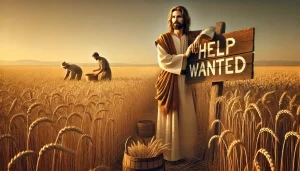
Jesus went through all the towns and villages, teaching in their synagogues, preaching the gospel of the kingdom, and healing every disease and sickness. When He saw the crowds, He was moved with compassion for them, because they were harassed and helpless, like sheep without a shepherd. Then He said to His disciples, “The harvest is plentiful, but the workers are few. Ask the Lord of the harvest, therefore, to send out workers into His harvest.”

Commentary

Jesus knew that this was too much work for one man, let alone twelve men.

Imagine 2,000 years ago what the human population on earth was. Most estimates put it at around 300 million. That’s basically the population of the United States today, except imagine that population spread out across the entire earth.

Today, however, there are 8 billion people on earth. Way more than in Jesus’s time. 68% of the human population today lives in non-Christian countries. Therefore, how much more relevant and applicable is Jesus’s prayer request today for more workers than it was during his own time?
Pray for opportunities to share the good news of Jesus with others in your own community. The whole reason why you live where you do is because God has called you to be a light to that location.

Don’t you think it’s strange how a person ends up living where they do? For example, I have never been to Kenton Oklahoma,

but it has a population of 31 people. It’s in the middle of nowhere. How does a person end up living there?

How does any person end up living where they do? Of all the places where you could live, how did you end up living in the town where you currently live? It’s because God wants you to be a light to that town. The harvest is plentiful, but the workers are few. Pray that God would make you a worker that brings light to your town. Pray for opportunities to share good news with other people. Get plugged into a good church that teaches the truth of God’s word and then, once you have vetted that it is, in fact, a good church, volunteer there so that the worship experience of the other people visiting the church is optimal. Remember that not everyone sitting in the pews at church is saved. Tithe to your church so that they have the resources to maintain the building and to invite more people to attend.

Also, pray for opportunities to financially support those who are actively engaged in spreading the gospel, such as missionaries. Almost every church supports at least one missionary. Go to your church and find out who the missionaries are that your church is supporting and then add to that support.

Commentary Matthew 8

Jesus Calms the Storm

Gary Eugene Howell uses the Berean Standard Bible. The Holy Bible, Berean Standard Bible, BSB is produced in cooperation with Bible Hub, Discovery Bible, OpenBible.com, and the Berean Bible Translation Committee. The Text of the Berean Standard Bible was dedicated to the public domain as of April 30, 2023.

Verses 1-3

When Jesus came down from the mountain, large crowds followed Him. Suddenly a leper came and knelt before Him, saying, “Lord, if You are willing, You can make me clean.”

Jesus reached out His hand and touched the man. “I am willing,” He said. “Be clean!” And immediately his leprosy was cleansed.

Commentary

The man with leprosy asked to be healed. Jesus touched him and immediately the leprosy was gone and he was healed. Think about what this implies at the cellular scale. Leprosy is a skin disease caused by a bacteria. In today’s modern medicine, a person with leprosy would take antibiotics over a period of time, which would kill the bacteria. Then the skin would have to heal itself over time, likely leaving behind scars. But Jesus healed the leper instantly. The implication is that God is able to act outside the laws of our physical world.

Isaac Newton’s first law of motion states that an object at rest will remain at rest unless acted upon by an external force. But when God instantly healed the leper, how were the bacteria removed from the man’s body? How were the cells of his skin instantly made new without the cells having to regrow?

Furthermore, in some cases, untreated leprosy can cause an individual to lose extremities such as fingers, toes or their ears. If this particular person who came to Jesus had, let’s say, missing fingers due to his leprosy, God, in healing him, instantly made matter out of nothing, and then made that matter living tissue and seamlessly reconnected it to his hand so that he had all of his fingers back again.

The point that I want you to come away with, is that nothing is impossible for God. He can even operate outside the laws of physics. He can create anything, out of nothing. He can make life from nothing; at any time he chooses. Knowing this then, can you believe that God is able to help you in your time of need?

But what if God doesn’t help you? Then can you believe that God has a greater plan for you?

Verse 4

Then Jesus instructed him, “See that you don’t tell anyone. But go, show yourself to the priest and offer the gift prescribed by Moses, as a testimony to them.”

Commentary

To understand Matthew 8:4, we need to “properly divide the word of truth” by reading the parallel account in Mark 1:40-45

Then a leper came to Jesus, begging on his knees: “If You are willing, You can make me clean.” Moved with compassion, Jesus reached out His hand and touched the man. “I am willing,” He said. “Be clean!” And immediately the leprosy left him, and the man was cleansed. Jesus promptly sent him away with a stern warning: “See that you don’t tell anyone. But go, show yourself to the priest and present the offering Moses prescribed for your cleansing, as a testimony to them.” But the man went out and openly began to proclaim and spread the news. Consequently, Jesus could no longer enter a town in plain view, but He stayed out in solitary places. Yet people came to Him from every quarter. (Mark 1:40-45)

Why did Jesus say to the man, “See that you don’t tell anyone”? Because after the man went and told everyone, Jesus could no longer enter a town in plain view but had to remain in solitary places. I strongly suspect that this man told other lepers that Jesus had healed his leprosy. As a result, dozens, perhaps hundreds of lepers, along with people suffering from all kinds of diseases were likely desperately pursuing Jesus, hoping to be healed. This may be the reason he could no longer enter a town. Lepers were social outcasts because their disease was contagious and no one wanted a leper in their town.

Verses 5-13

When Jesus had entered Capernaum, a centurion came and pleaded with Him, “Lord, my servant lies at home, paralyzed and in terrible agony.” “I will go and heal him,” Jesus replied.

The centurion answered, “Lord, I am not worthy to have You come under my roof. But just say the word, and my servant will be healed. For I myself am a man under authority, with soldiers under me. I tell one to go, and he goes, and another to come, and he comes. I tell my servant to do something, and he does it.”

When Jesus heard this, He marveled and said to those following Him, “Truly I tell you, I have not found anyone in Israel with such great faith. I say to you that many will come from the east and the west to share the banquet with Abraham, Isaac, and Jacob in the kingdom of heaven. But the sons of the kingdom will be thrown into the outer darkness, where there will be weeping and gnashing of teeth.”

Then Jesus said to the centurion, “Go! As you have believed, so will it be done for you.” And his servant was healed at that very hour.

Commentary

Again, as stated before, this demonstrates that nothing is impossible for God. Jesus didn’t even need to go to the centurion’s house. He didn’t need to see or touch the servant in order to heal him. God is omnipresent.

But I want to focus for a moment on Jesus’s response. He said,

“Truly I tell you, I have not found anyone in Israel with such great faith. I say to you that many will come from the east and the west to share the banquet with Abraham, Isaac, and Jacob in the kingdom of heaven. But the sons of the kingdom will be thrown into the outer darkness, where there will be weeping and gnashing of teeth.”

Who comes from the east and the west? That’s you and I! People who are not from Israel. The sons of the kingdom are the Jewish people. We know that from the time they left Egypt, all the way up to the time of Jesus they have not walked in faith. And after Jesus Christ, all the way until today, 97% of the Jewish people in Israel, reject Jesus as their Messiah.

If you are Jewish, I want you to know that following Jesus Christ does not mean abandoning your Jewish identity. Jesus Himself was Jewish, as were all of His disciples. If you are Jewish, I encourage you to read Isaiah 53 in your own Tanakh and consider carefully whom that passage is describing.

Verses 14-15

When Jesus arrived at Peter’s house, He saw Peter’s mother-in-law sick in bed with a fever. So He touched her hand, and the fever left her, and she got up and began to serve Him.

Commentary

When you and I recover from a fever, we may often feel tired or worn down for hours or even a couple of days after the fever has left. But when Jesus touched Peter’s mother-in-law, she instantly felt fine and was able to get up and serve him. Again, nothing is impossible for God.

When it says she began to serve him, I am picturing in my mind that she served him some food or perhaps something to drink. But in the broader picture, we see that God enables us to serve him.

We don’t earn salvation by doing good deeds. Salvation is by faith. It is then through faith that God enables us to do good deeds. In other words, good deeds do not draw us closer to God. Good deeds are the result of God touching us and enabling us to get up and serve him. Ask Jesus to enable you to serve him.

Verses 16-17

When evening came, many who were demon-possessed were brought to Jesus, and He drove out the spirits with a word and healed all the sick. This was to fulfill what was spoken through the prophet Isaiah: “He took up our infirmities and carried our diseases.”

Commentary

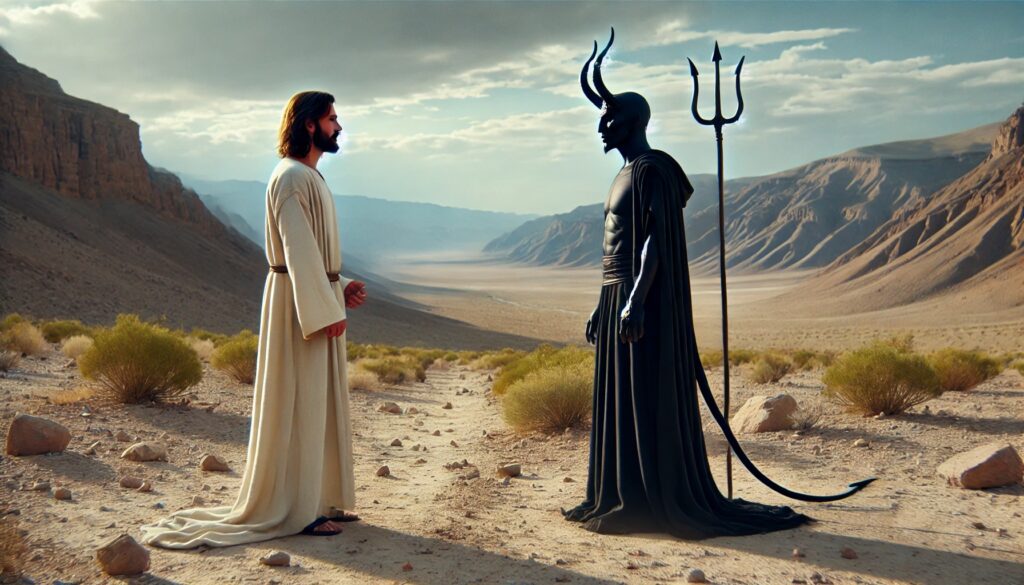
Demon possession. What is that about? Demons are basically evil angels. They are the ones who got kicked out of heaven when Lucifer rebelled. Now, it appears that these demons have the ability to enter into a person and afterward have tremendous demonic influence over that person.

However, light and dark can not exist in the same place, at the same time. It is impossible for a person who is filled with the Holy Spirit, to be demon possessed. When you walk into a dark room and flip on the light, what happens? The darkness fleas. Again, light and darkness can not occupy the same place at the same time, so ask Jesus to give you the Holy Spirit and then you will be filled with light.

We also see in these verses that Jesus has total authority over the demonic world. When Jesus tells a demon to leave, it leaves. Don’t picture Jesus and Satan as being equal opposing forces. Rather, Jesus has all authority. Satan is nothing compared to Jesus.

Jesus was casting out demons and healing the sick in order to fulfill what was spoken through the prophet Isaiah: “He took up our infirmities and carried our diseases.”

That’s from Isaiah chapter 53. That’s what I was just referring to a moment ago. 700 years before Jesus was born, Isaiah talked about the coming Jewish Messiah. Isaiah was referring to Jesus.

Verse 18

When Jesus saw a large crowd around Him, He gave orders to cross to the other side of the sea.

Commentary

Jesus is trying to get away from the crowds, probably to get some rest or to be able to speak privately with his disciples.

Verses 19-20

And one of the scribes came to Him and said, “Teacher, I will follow You wherever You go.” Jesus replied, “Foxes have dens and birds of the air have nests, but the Son of Man has no place to lay His head.

Commentary

First of all, congratulations to this scribe for going out and finding Jesus and telling him he would follow him anywhere. The scribes and the pharisees were notoriously opposed to Jesus. This particular scribe was willing to reject the position of all his colleagues and apparently wasn’t concerned with how it would affect his career. Jesus lets him know that the journey may not be comfortable for him.

And for you and I, the journey of following Jesus Christ into eternal life may not always be comfortable. There may be times that it becomes a rough ride. You may have to make uncomfortable sacrifices. For example, let’s say a young woman makes the decision to follow Jesus. Her unbelieving boyfriend then dumps her and her heart is broken as a result. But I tell you, give praise to the Lord Jesus Christ that you were able to so easily get rid of that dumb schlub. Yes, your heart is broken because you got dumped. But just know that Jesus has someone out there for you who will be to you a gift from God.

Verses 21-22

Another of His disciples requested, “Lord, first let me go and bury my father.” But Jesus told him, “Follow Me, and let the dead bury their own dead.”

Commentary

I recall first reading this verse as a teenager and thinking Jesus was unkind to deny this man the time to attend his father’s funeral. However, somewhere along the way (I think in my early 30’s) I heard a pastor’s sermon in which he concluded that this disciple’s father was not yet dead. That this individual was telling Jesus he would follow him a few years from then, after his elderly father eventually passes away.

I feel this is probably the better interpretation. And Jesus responds by telling the disciple to come follow him now.

Today, if you hear His voice, do not harden your hearts, as you did in the rebellion. (Hebrews 3:15)

Verses 23-27

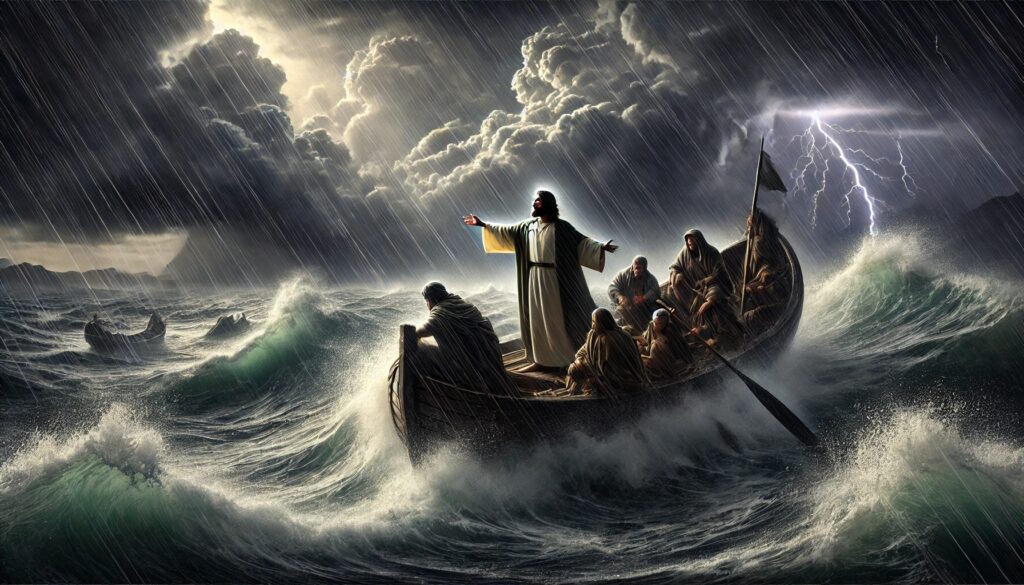
When He got into the boat, His disciples followed Him. Suddenly a violent storm came up on the sea, so that the boat was engulfed by the waves. But Jesus was sleeping. The disciples went and woke Him, saying, “Lord, save us! We are perishing!”

“You of little faith,” Jesus replied, “why are you so afraid?” Then He got up and rebuked the winds and the sea, and it was perfectly calm. The men were amazed and asked, “What kind of man is this? Even the winds and the sea obey Him!”

Commentary

What kind of man is this? He is God! That’s who. The fact that the winds and the seas obey Jesus’s commands, fully demonstrates that Jesus is not just a good teacher, a wonderful prophet, or merely a nice man. Jesus Christ is God.

Skeptics and scoffers will often say that Jesus never claimed to be God; a statement that is blatantly false. However, even if that were true, Jesus did not need to make the claim verbally. His actions demonstrate that he is God. Calming the wind and waves, healing the sick, raising the dead, and His transfiguration are all works far beyond the ability of any mere man. Through these acts, Jesus shows us that He and the Father are one (John 10:30). Jesus is God. Praise the Lord!

Verses 28-34

When Jesus arrived on the other side in the region of the Gadarenes, He was met by two demon-possessed men coming from the tombs. They were so violent that no one could pass that way. “What do You want with us, Son of God?” they shouted. “Have You come here to torture us before the appointed time?”

In the distance a large herd of pigs was feeding. So the demons begged Jesus, “If You drive us out, send us into the herd of pigs.” “Go!” He told them. So they came out and went into the pigs, and the whole herd rushed down the steep bank into the sea and died in the waters.

Those tending the pigs ran off into the town and reported all this, including the account of the demon-possessed men. Then the whole town went out to meet Jesus. And when they saw Him, they begged Him to leave their region.

Commentary

Just taking a cursory read of these verses, several things stand out to me:
1. The demons instantly recognized that Jesus was the Son of God.
2. The demons incorrectly assume Jesus was there to torture them.
3. The demon possessed men were so violent that no one could pass that way, yet when Jesus is passing that way, these ultra-violent demons are seen begging Jesus. Therefore, it would appear that they are totally powerless against Jesus and they are fully aware of their powerlessness before Him.
4. The demons know there is an appointed time for them to be tortured (i.e. cast into the lake of fire).
5. The demons also know that this particular day is “before” the appointed time.
6. The demons had to ask to be sent into the herd of pigs. Is the implication that they couldn’t go into the pigs on their own?
7. Why did they want to go into the pigs?
8. The entire herd of pigs drowned in the water and died. So what then happened to the demons? Did the demons not consider that the pigs might do this? Were the demons unable to control or manipulate the pigs’ behavior? (i.e. were the demons unable to prevent the pigs from drowning themselves?)
9. The town’s people beg Jesus to leave. Why? Are they scared of him? If the pigs were their livelihood, perhaps they feared additional loss if Jesus remained in their town.

The fact that the demons recognize who Jesus is, but wrongly assume he’s there to torture them demonstrates that even demonic forces don’t fully understand the will of God. Probably from the time they got kicked out of heaven, they haven’t understood the will of God and while in heaven, being led by Satan, wanted to exalt themselves above God.

What they do understand, however, is the power that God has and that they are powerless before Him. Probably the lessen they learned after getting themselves kicked out of heaven. This is a valuable lesson for us to understand also. Satan and his demonic forces have zero power over you, if, like Jesus, you are filled with the Holy Spirit. Light and darkness can not abide together in the same place. Light always pushes darkness away. Just this past week, I was at a church building on a weekday. I had not been in this building before. The church secretary told me I needed to go to the end of the hallway and turn left. When I got to the end of that hallway and looked to my left, it was absolutely pitch black. I couldn’t tell if I was about to walk into a wall or hit my face on a closed door. It was pitch black. I felt along the wall and found the light switch. When I flipped the switch, the darkness instantly vanished and I could see every detail of what was before me in the hallway. When you are filled with the Holy Spirit, you are filled with light. The powers of darkness no longer have any hold over you.

The Bible says:

No one knows about that day or hour, not even the angels in heaven, nor the Son, but only the Father (Matthew 24:36).

Yet these demons know that this particular day was “before” the appointed time. How do they know this?

Now learn this lesson from the fig tree: As soon as its branches become tender and sprout leaves, you know that summer is near. So also, when you see all these things, you will know that He is near, right at the door (Matthew 24:32-33)

So we can conclude that the demons, although they don’t know the day or the hour, they do, however, know the signs of the times and they were aware that this particular day was not the day of the Lord.

Why did the demons ask for the pigs and why did they need to ask at all? I suspect that the very reason they were begging was because they knew Jesus had the power to bind them into hell. Elsewhere in the Bible it describes some demons who are prisoners in hell and do not have the freedom to move about the earth.

And the angels who did not stay within their own domain but abandoned their proper dwelling—these He has kept in eternal chains under darkness, bound for judgment on that great day. (Jude 1:6)

I suspect that these demons believed Jesus was going to bind them in hell, so they begged for an alternative. The closest thing to them was the herd of pigs, so they begged for that and Jesus agreed. However, the pigs immediately drowned themselves. By the way, did you know that pigs are excellent swimmers? Why did the pigs drown? I think Jesus intended to bind these demons into hell no matter what. He gave them permission to enter the pigs but then immediately killed the pigs. I am assuming after the pigs died, the demons were then bound in hell until the day of judgement. But then why did God kill all the pigs? My hunch is that there was a greater work which Jesus wanted to do in the people of the Gadarenes. Yes, they came out and asked him to leave, but he’s going to come back to them later.

Commentary Matthew 7

Commentary Matthew 7

House built on Sand

built his house on sand

Gary Eugene Howell uses the Berean Standard Bible. The Holy Bible, Berean Standard Bible, BSB is produced in cooperation with Bible Hub, Discovery Bible, OpenBible.com, and the Berean Bible Translation Committee. The Text of the Berean Standard Bible was dedicated to the public domain as of April 30, 2023.

Click here to access the group bible study resource for Matthew 7.

Verses 1-5

“Do not judge, or you will be judged. For with the same judgment you pronounce, you will be judged, and with the measure you use, it will be measured to you.

Why do you look at the speck in your brother’s eye but fail to notice the beam in your own eye? How can you say to your brother, ‘Let me take the speck out of your eye,’ while there is still a beam in your own eye? You hypocrite! First take the beam out of your own eye, and then you will see clearly to remove the speck from your brother’s eye.

Commentary

These verses are not instructions on how to treat others, but rather a lesson on how to think critically about your own sins.

“Why do you look at the speck in your brother’s eye, but fail to notice the beam in your own eye?”

If you’ve been a Christian for any length of time, you’ve probably heard nonbelievers use the verse “Do not judge” to defend their own sinful lifestyles. They often respond to someone sharing the gospel by saying, “You’re supposed to be a Christian; Jesus said, ‘Do not judge,’ so why are you judging me?”

People who reject Jesus Christ often quote Him when confronted about their sins, saying, “Do not judge.” But you cannot reject Jesus and then use the words of Jesus to justify your rejection of Him; that makes no sense. Either you accept His words or you don’t. If you’re going to use Jesus’s words when defending your sin, then you must also accept what Jesus said about everything else. Don’t be a hypocrite. Either accept Him or reject Him; but you can’t do both. You cannot use Jesus’s words for the purpose of rejecting Jesus’s words.

But as mentioned a moment ago, the statement “Do not judge” is not meant as an instruction on how to treat others. Every Christian knows you cannot take the Bible out of context. Once you remove a verse from its context, you lose its true meaning.

Jesus’s Sermon on the Mount is recorded in Matthew chapters 5, 6, and 7. You can’t simply pull three words out of a 45-minute message and use them as the foundation for your personal theology. You have to consider the entire message; what was Jesus really talking about? What point was He making?

The meaning of these verses is a call to personal introspection; to examine your own sins first. Jesus is urging each of us to look inward, to evaluate our own lives, and to turn away from the wrong things we do.

“First take the beam out of your own eye, and then you will see clearly to remove the speck from your brother’s eye.”

What was the very first thing Jesus preached in his ministry?

From that time on Jesus began to preach, “Repent, for the kingdom of heaven is near.” (Matthew 4:17)

Jesus wants us to turn from our evil ways. Remember, if you truly love Him, you’ll desire to live in alignment with God’s will rather than your own.

Again, when Jesus says, “First take the beam out of your own eye, and then you will see clearly to remove the speck from your brother’s eye,” He is teaching us that we are supposed to judge other people’s sins in order to help them, not to condemn them. But we can only do this after we’ve dealt with the greater sin in our own lives.

My friend may have a speck in his eye (a small sin), but I have a beam in my own eye (a much larger sin). Before I can speak to him about removing his small sin, I must first deal with the bigger sin in my own life.

So before we continue, let’s review how we can remove a particular sin from our lives.
Maybe you’re struggling with a bad habit or a secret sin that you truly want to overcome. How do you do that?

I’ve got good news and bad news for you.

First, the bad news: sin is bound in the flesh. It’s like an ugly tattoo you can’t wash off. You’re stuck with it.

But here’s the good news: Jesus took your sins upon Himself when He died on the cross. Three days later, when He rose from the dead, He defeated both sin and death. And when He ascended into heaven, He poured out the Holy Spirit upon all who put their faith in Him.

The secret to overcoming habitual sin is to place your faith in Jesus Christ. Only He can remove sin from your life. When we follow Christ, He fills us with the Holy Spirit, which brings us into a new and transformed life.

Verse 6

Do not give dogs what is holy; do not throw your pearls before swine. If you do, they may trample them under their feet, and then turn and tear you to pieces.

Commentary

Now Jesus begins offering us advice on how to treat other people. When we point out the speck in someone’s eye; in other words, when we tell others about their sins and their need for Jesus Christ, there will be some who are so vehemently opposed to the gospel that it’s of no value to keep trying to talk to them about God. Jesus said,

“And if anyone will not welcome you or heed your words, shake the dust off your feet when you leave that home or town.” (Matthew 10:14)

Verses 7-11

Ask, and it will be given to you; seek, and you will find; knock, and the door will be opened to you. For everyone who asks receives; he who seeks finds; and to him who knocks, the door will be opened.

Which of you, if his son asks for bread, will give him a stone? Or if he asks for a fish, will give him a snake? So if you who are evil know how to give good gifts to your children, how much more will your Father in heaven give good things to those who ask Him!

Commentary

What is the “it” that Jesus is referring to? He’s talking about the Holy Spirit. If you ask for the Holy Spirit, you will receive the Holy Spirit. If you knock, the door will be opened for you to receive the Holy Spirit. And if you seek the Holy Spirit, God will allow you to find the Holy Spirit.

In my opinion, this is one of the most critical verses in the New Testament. Salvation comes by faith, and those who truly have faith receive the infilling of the Holy Spirit. Later in this chapter, we’ll read how, on the Day of Judgment, many who call themselves Christians will hear Jesus say, “I never knew you; depart from Me.” He will be referring to those who were never filled with the Holy Spirit.

When we are filled with the Holy Spirit, God knows us because He lives within us. The phrase “I never knew you” does not suggest that God is ignorant or unaware of certain people; He is both omniscient and omnipresent. Rather, when Jesus says, “Depart from Me; I never knew you,” He is referring to those who never placed their faith in Him and therefore were never filled with the Holy Spirit.

Those who claim the name of Christ yet are never filled with the Holy Spirit have no excuse, because all they ever had to do was ask, seek, and knock; and they would have received the Holy Spirit. But since they never placed their faith in Jesus or believed His words about asking, seeking, and knocking, they never received Him.

Most people without the Holy Spirit don’t recognize their need for Jesus. They believe they’ll go to heaven simply because they’re “a good person.” This, however, is pride. The Bible says that…

pride goes before destruction (Proverbs 16:18a)

In my opinion, this is the dividing line between those Christians who are saved and those who will hear Jesus say, “I never knew you.” The difference is the infilling of the Holy Spirit through faith. Many who call themselves Christians will not enter the kingdom of heaven because they never truly knew Christ; they were never filled with the Holy Spirit. Jesus Himself said that many will come to Him on that day saying, “Lord, Lord, did we not prophesy in Your name, and in Your name drive out demons and perform many miracles?” proving that they wrongly believed they could enter heaven through their good works while bypassing a genuine relationship with Jesus Christ.

Think about it this way: when you are filled with the Holy Spirit, God begins to speak to you in various ways and through different means. From that point on, He can no longer say that He never knew you. He spoke to you. If you are filled with the Holy Spirit and, through His power, have personal interactions with God (in other words, you have a relationship with Jesus Christ), then on the Day of Judgment, He could not say, “I never knew you” because you could respond, “Wait a minute, Lord, don’t You remember when You spoke to me back in July of 2025? We had a conversation. I prayed, and You answered. How can You say You never knew me?”

The infilling of the Holy Spirit leads to a relationship with Jesus Christ. That relationship should give the believing Christian full confidence that Christ knows them personally.

If you have not yet received the Holy Spirit, ask, seek, and knock daily:
• Ask: “Lord, may I have the Holy Spirit?”
• Seek: Read the word of God daily, get plugged into a Bible study group where people who are spiritually wiser than yourself can help you to understand the nuances of what you’re reading.
• Knock: Don’t just ask and seek one time and that’s it. Be like the person from Luke chapter eleven.

Then Jesus said to them, “Suppose one of you goes to his friend at midnight and says, ‘Friend, lend me three loaves of bread, because a friend of mine has come to me on a journey, and I have nothing to set before him.’

And suppose the one inside answers, ‘Do not bother me. My door is already shut, and my children and I are in bed. I cannot get up to give you anything.’ I tell you, even though he will not get up to provide for him because of his friendship, yet because of the man’s persistence, he will get up and give him as much as he needs.

So I tell you: Ask, and it will be given to you; seek, and you will find; knock, and the door will be opened to you. For everyone who asks receives; he who seeks finds; and to him who knocks, the door will be opened. (Luke 11:5-10)

Verse 12

In everything, then, do to others as you would have them do to you. For this is the essence of the Law and the Prophets.

Commentary

It’s astonishing to me that our world is so evil.

From 1915 to 1917 the Ottoman Empire murdered 1.5 million Armenians. From 1922 to 1952 Joseph Stalin murdered 6 million people in Russia. The same people he was supposed to represent as their leader. Likewise, from 1934 to 1945 Adolf Hitler murdered 6 million people. Between 1943 and 1976 Mao Zedong murdered 80 million Chinese people. Between 1971 and 1979 Idi Amin murdered half a million people. Between 1975 and 1979 Pol Pot murdered 25% of Cambodia’s population, roughly 2.8 million people. In 1994 the Hutu people murdered 800,000 of their neighbors the Tutsi people.

In writing that previous list, I chose to include only figures from the 20th century and excluded any genocide in which fewer than half a million people were killed. But rest assured, that list could have been much, much longer.

And the great dragon was hurled down—that ancient serpent called the devil and Satan, the deceiver of the whole world. He was hurled to the earth, and his angels with him. (Revelation 12:9)

Satan deceives the whole world. Every single one of the murderers just mentioned thought they were doing the right thing. Why? Because they were deceived by Satan.

To be a follower of Jesus Christ; to put your faith in Jesus Christ, you must believe that what Jesus said is true. To not do what Jesus said is to demonstrate that you don’t fully trust Him.

Faith equals trust. Putting your faith in Jesus Christ means that you trust Him and that trust extends to believing what he said.

Jesus said that the essence of all the law and all the prophets is that you treat other people the way you want to be treated.

To the man who hits his wife, I ask this question: Do you want to be punched in the face? No? Well then stop hitting your wife. You lack the Holy Spirit. That’s why you have anger issues. Pray to the Lord and ask him to give you the Holy Spirit.

To the man who is too busy to spend quality time with his children. Do you want other people to ignore you? No? Well then turn off your electronics at 5:00 and sit down on the floor with your little children and play with them. They are your ministry.

To the woman who has a habit of gossiping about other people, I ask: Do you want people to talk about you behind your back? No? Well then stop gossiping and start praying for those people you otherwise talk about.

Why is this so hard? If you have faith in Jesus Christ, you will choose to treat people in the same way you want to be treated, with patience, courtesy and kindness, everywhere you go.

Verses 13-14

Enter through the narrow gate. For wide is the gate and broad is the way that leads to destruction, and many enter through it. But small is the gate and narrow the way that leads to life, and only a few find it.

Commentary

The wide gate is referring to hell. The use of the word destruction is also a reference to hell. Many people go to hell.

Enter through the narrow gate. Enter where? Enter what? What is he talking about? He’s talking about heaven, salvation, eternal life. The narrow gate is Jesus Christ.

Salvation is not exclusive to Christians. Paul wrote;

“I am not ashamed of the gospel, because it is the power of God for salvation to everyone who believes, first to the Jew, then to the Greek.” (Romans 1:16)

Both Jewish people and Christians can be saved by putting their faith in Jesus Christ. For the Jewish person, if you believe that Jesus Christ was the Messiah and if you put your faith in Jesus as your messiah, you will be saved. Think about it this way: Matthew, Mark, Luke, John, Paul and Peter were all Jewish.

The entire Bible, from cover to cover was written by Jewish people, except for Daniel chapter 4, which was written by King Nebuchadnezzar. He was the only non-Jewish person to write part of the Bible.

Jesus Christ was not a Christian. He was Jewish. Remember, the gospel is the power of God for salvation first to the Jew and then to the Christian.

And as for Christians, it’s not enough to mentally acknowledge the existence of Jesus. It’s not enough to become a member of a church or of a denomination. It’s not enough to read the Bible from cover to cover and then place a checkmark on your goal sheet.

Many Christians will go to hell because they believed their good deeds would get them into heaven. This is the reason why the way that leads to life is narrow and small and few people find it, because it’s counter intuitive. It doesn’t make sense in a world where one has to earn everything they have.

Jesus Christ died for you. He died in place of you. He took your spot on the cross. Anyone who rejects faith in Christ, continues onward toward death and hell. But those who put their faith in Jesus Christ, have their sins taken up by Christ. Those sins are nailed to the cross. It is your sins that are put to death with Christ, so that you can live.

Verses 15-20

Beware of false prophets. They come to you in sheep’s clothing, but inwardly they are ravenous wolves. By their fruit you will recognize them. Are grapes gathered from thornbushes, or figs from thistles? Likewise, every good tree bears good fruit, but a bad tree bears bad fruit. A good tree cannot bear bad fruit, and a bad tree cannot bear good fruit. Every tree that does not bear good fruit is cut down and thrown into the fire. So then, by their fruit you will recognize them.

Commentary

Just a moment ago, Jesus told us that the way to life is narrow and that few people find it. Even among Christians, pastors, priests, and religious leaders, only a few will find eternal life. Now, Jesus is warning us to watch out for false teachers.

This is what I often advise: when you begin attending a church that’s new to you, I strongly recommend placing the pastor on probation for the first six months. Be ever seeing and ever perceiving. Verify through Scripture that what your pastor is preaching is true. Remember, false doctrine is deceptive, it often sounds good when you first hear it, but later, when you study your Bible and reflect, you begin to realize that something isn’t right.

Jesus said that by their fruit you will recognize them. Think of the old story about United States Secret Service agents learning to spot counterfeit money; not by studying the fakes, but by becoming thoroughly familiar with real money. It’s the same with Christian doctrine. To recognize bad fruit, you first need to know what good fruit looks like. That’s why reading the Bible is essential.

I suggest, as a matter of practicality, that you spend more time in the New Testament than in the Old. Consider reading the New Testament twice for every time you read the Old Testament.

The Old Testament is very valuable, and you should read it. But the New Testament is where the message of Jesus Christ is most clearly revealed and where the doctrines of the Christian faith are spelled out. A false teacher isn’t going to try to confuse you over whether Jethro was Moses’s father-in-law. Instead, they will try to mislead you about the doctrines established in the New Testament.

If you’re a new Christian seeking to read the entire Bible, start with the New Testament before moving on to the Old Testament. I’ve heard, perhaps a dozen times, of new Christians who set a goal to read the whole Bible for the first time. Logically, they start at the beginning; the Old Testament. But by the time they reach the book of Numbers, which is almost entirely census data, land measurements, and architectural specifications, they grow bored and quit reading the Bible altogether. Many never return, carrying the impression for the rest of their lives that the Bible is a long, boring read; unaware that they missed the very best of its message by only a few hundred pages.

So, let’s come back to the verse in question. Jesus said “beware of false prophets”. We need to define what false doctrine is.

Because everything in life can be represented on a bell curve that has two extremes, in this example, one extreme of the bell curve are those who claim everyone in the pulpit is a servant of God and we should try to learn from everyone. They’ll argue “who are you to question other people’s credentials.”

On the other extreme of the bell curve are those who use the label “false teacher” too aggressively. They might denounce even the most biblically faithful and humble pastors as false teachers simply because of a minor disagreement in Biblical interpretation; often on secondary and non-essential matters. This creates division within the body of Christ and can reveal a person more concerned with pridefully winning arguments than seeking the truth in love. Not every disagreement is evidence of false doctrine; sometimes it’s just a difference in perspective among sincere students of God’s Word.

I don’t agree with everything my pastor says, but it doesn’t cause me to quit the church. Likewise, you also are not going to agree with every single thing your pastor says. But don’t label him a false teacher just because he thinks tithes should be paid from pre-tax income rather than from post-tax income.

So what exactly are false prophets, false teachers and false doctrine? And what exactly is not considered false doctrine?

Jesus says, in these verses we are now examining, “They come to you in sheep’s clothing, but inwardly they are ravenous wolves.”

The trouble with false teachers and false doctrine is that no one ever walked into the pulpit and announced, “I’m now going to teach you false doctrine.”

Instead, false teachers are in sheep’s clothing. False teachers come to you looking like they’re on your team. False doctrine is often very subtle and requires that you are paying attention, and that you know your Bible well. Most false teachers will preach a mixture of truth and lies. This is why I recommend giving yourself at least six months of attending a church before making any commitment to becoming a member, because it might take you that long to identify the subtlety of false doctrine.

When you are in church, write down every verse the pastor references. Then during the rest of the week, when you’re at home doing your own personal Bible study, look up each of the verses he referenced in his sermon. Read them in the proper context and see if what he said about those verses line up with what the verses actually mean.

Here are a few examples of false doctrine. This is not a complete list:
• Jesus was just a good teacher or prophet, but not divine
• Jesus sinned
• Jesus made mistakes – and the pastor claims to know what Jesus should have done (revealing that he or she considers themselves more righteous than Jesus).
• Jesus did not rise from the dead
• The Bible has errors in it and they (the false teacher) are going to tell you what the Bible should have said.
• Every Christian that has ever lived, has interpreted the Bible incorrectly, but now (the false teacher) is the only one whose been able to figure out what it actually means.
• You must follow and obey the pastor rather than Jesus.
• Everyone goes to heaven
o Hell is empty, or there’s no such thing as hell
o People are inherently good
• You must do something to earn your salvation
o That your spiritual standing depends on adherence to man-made rules
• New revelations supersede the Bible
• That you personally, possess some sort of magical or God-like powers.
o That you can speak things into existence, such as health, wealth, happiness and success.
• That God is going to give you the desires of your flesh
o Wealth
o Fame
o Success
• That God will give you what you desire only after you give money to the pastor.
o Or that the pastor “needs” something extravagant or impractical, such as a sports car or a mansion.
• Salvation is only found in a specific denomination
o Other sincere, Christ following believers, will go to hell merely because they attend church at a different denomination.

Also, be aware that false teachers have a low view of the Bible. They do not honor the Word of God. They rarely encourage their congregation to read it, and some even discourage it. A false teacher may go through entire sermons without ever referencing the Bible, or worse, may openly criticize it. Whenever you hear a pastor say that the Bible is wrong, that it contains errors, or that you shouldn’t be reading it, you can know immediately that you are dealing with a false teacher. False teachers always have a low view of Scripture.

Now let’s look at what is not false doctrine. You might agree with some of these and disagree with others. However, if you hear one of the following being taught in a church, and you disagree with it, it may be your preference to go to a different church or you might choose to continue attending that church while keeping your disagreements to yourself.
• Spiritual Gifts
• Cessationism
• Church leadership, roles and responsibilities
• Christian engagement in culture
• Bible Interpretation
o predestination vs. free will
o Pre-tribulation rapture vs. mid-trib or post-trib
• Preferred Bible translations
• Christian Liberty
o Is it okay for Christians to drink alcohol in moderation?
o Can Christians watch secular movies or listen to secular music?
o Are tattoos or piercings sinful?
o Degrees of modesty in clothing

These are just a few examples, but it all comes down to not majoring in the minors. My pastor might believe or preach something I disagree with, but my position is that while I don’t share his view, I’m not going to accuse him of being wrong. I simply keep it to myself.

Verses 21-23

Not everyone who says to Me, ‘Lord, Lord,’ will enter the kingdom of heaven, but only he who does the will of My Father in heaven. Many will say to Me on that day, ‘Lord, Lord, did we not prophesy in Your name, and in Your name drive out demons and perform many miracles?’ Then I will tell them plainly, ‘I never knew you; depart from Me, you workers of lawlessness!’

Commentary

These verses are evidence that not everyone who claims the name of Christ is saved.

Jesus says, “only those who do the will of my father in heaven will be saved” Well, what is the will of the father in heaven that we must do? The answer is to put our faith in Jesus Christ.

For it is My Father’s will that everyone who looks to the Son and believes in Him shall have eternal life, and I will raise him up at the last day.” (John 6:40)

Eternal life means that when you “die”, you will continue to live. You will be in the presence of the Lord. And then, on the last day, you will be resurrected back into your body, which will be without blemish, pain, old age or illness.

I am talking about things which we will get to in detail as we progress through the New Testament. But for now, let me simplify the whole thing. By putting your faith in Jesus Christ, you will live forever. If you do not put your faith in Jesus Christ, you will die.

Now, again, that’s a very simplistic explanation, and we will get into the details in future installments. But for now, just know that everyone who looks to Jesus and believes in Him shall have eternal life.

Eternal means you will live forever.

Verses 24-27

Therefore everyone who hears these words of Mine and acts on them is like a wise man who built his house on the rock. The rain fell, the torrents raged, and the winds blew and beat against that house; yet it did not fall, because its foundation was on the rock.

But everyone who hears these words of Mine and does not act on them is like a foolish man who built his house on sand. The rain fell, the torrents raged, and the winds blew and beat against that house, and it fell—and great was its collapse!”

Commentary

Remember, we always try our best to read the Bible in context. And just five seconds ago Jesus was saying that many Christians will come to him on the day of judgement and say, we performed all these acts and good deeds in your name. But he is going to say, “I never knew you, depart from me.”

Now, the very next thing Jesus says is “Everyone who hears these words of mine and acts on them is wise”. Therefore, that which Jesus is saying is wise, is not performing acts of good deeds in an attempt to earn salvation.

When Jesus says, everyone who hears these words of mine, what words is he referring to? Doing the will of the Father by putting one’s faith in his son, Jesus Christ.

Remember, faith is not merely a mental acknowledgment of historical facts and persons. Rather faith is putting complete trust in Jesus Christ. In your prayers, ask Jesus to help you have faith and to help you trust in him and his word.

Immediately the boy’s father cried out, “I do believe; help my unbelief!” (Mark 9:24)

We just read a few moments ago that the path to life is narrow and few people find it. So ask Jesus to help you find that path.

Verses 28-29

When Jesus had finished saying these things, the crowds were astonished at His teaching, because He taught as one who had authority, and not as their scribes.

Commentary

Jesus taught as one who had authority because Jesus is the ultimate authority.

Commentary Matthew 6

Matthew Chapter 6

Sermon on the mount

Gary Eugene Howell uses the Berean Standard Bible. The Holy Bible, Berean Standard Bible, BSB is produced in cooperation with Bible Hub, Discovery Bible, OpenBible.com, and the Berean Bible Translation Committee. The Text of the Berean Standard Bible was dedicated to the public domain as of April 30, 2023.

Verse 1

“Be careful not to perform your righteous acts before men to be seen by them. If you do, you will have no reward from your Father in heaven.

Commentary

Up until about the 1950’s the word men was understood to mean all human beings rather than just males. So when Jesus, 2,000 years ago, said do not perform righteous acts before men, he meant “before people”. This could just as easily be a woman performing her righteous acts before other women. The verse is not speaking only to males. It’s referring to people. There are some versions of the Bible which have sought to replace the word men with the word people. The modern NIV and the NLT both do this. Regardless of what version of the Bible you read, just know that when it says things such as “if you forgive men their trespasses”, what it’s referring to is mankind, meaning people. Language changes over time. This is why having different Bible translations is beneficial, as well as having study bibles and other resources.

Performing your righteous acts in order to be seen by other people is an easy error for any Christian to stumble into. The reason is that advancement in business and culture is based nearly entirely on merit and who you know. To advance in nearly any aspect of this life, from high school team sports to employment, and throughout your entire career; it requires that someone of authority above you, notices your hard work, talent and good deeds. Only then might they choose to advance you into a better position of more responsibility, higher pay or greater authority. That’s the world we live in.

But when it comes to Christianity, God doesn’t want you to try to impress other people with your acts of righteousness and good deeds. Performing righteous acts to be seen by other people is a form of bragging. it’s source, therefore, is pride.

God, however, wants us to rely upon Him rather than on our own abilities and talents.

Furthermore, salvation is by faith, not by performing good deeds and righteous acts.

Verse 2

So when you give to the needy, do not sound a trumpet before you, as the hypocrites do in the synagogues and on the streets, to be honored by men. Truly I tell you, they already have their full reward.

Commentary

Imagine there’s a person who volunteers at a food pantry where he helps to feed homeless people. That’s very kind and very charitable of him. But then when he attends his church’s prayer meeting, he asks that people pray for this food pantry where he volunteers. He describes to the members of his prayer group how he volunteers there and the work that he does.

His request for prayer, however, is a disguise. What he’s actually doing is letting his whole church know that he gives to the needy and serves the hungry. His boasting is disguised as a request for prayer.

Now let me be clear. This is a hypothetical example. There are lots of people who are both sincere with their prayer request, and sincere about the ways in which they serve others, including those who serve food to the homeless. Again, this is a hypothetical example of an individual who serves in order to receive recognition. It’s his opportunity to brag.

The objective should be to check your heart. Analyze your motivation. If you want recognition for your righteous deeds, don’t bother to do them.

Verses 3-4

But when you give to the needy, do not let your left hand know what your right hand is doing, so that your giving may be in secret. And your Father, who sees what is done in secret, will reward you.

Commentary

Let’s be clear, the objective here is not total anonymity. The objective rather, is to not seek glory for yourself.

Here’s an example: If somehow someone secretly deposited a large amount of money into my bank account, upon discovering it, I would assume the bank made an error and I would go immediately to the bank teller to inform them that there’s been a mistake and that, that money should not be in my account. Because if you’ve ever experienced this type of bank error before, (which I have) you know that the bank is going to figure out their mistake, and they’re going to take that money back again. So if you’ve already spent it when they come looking for it, you’re going to be in big trouble!

Most good deeds can not be done in complete secrecy or totally anonymous. Good deeds often require the cooperation of others in order to bring about their fruition. For example, if you want to pay a needy family’s electricity bill, you have to call the electricity company and let them know of your intent to pay that family’s bill.

Another example; if you wanted to give $100 to a needy family at church. You have to go to the pastor or church deacons and ask them if there are any needy families at church. How else are you going to find out about such people? Then, you would have to give instructions to the church treasurer that the money you are giving anonymously is supposed to go to those people. The church treasurer is not a mind-reader, you have to tell him or her what you are doing. But the point that Jesus is making is that you must not seek to be honored and recognized for your good deeds. You are not announcing to everyone what you are doing. As much as is possible, do your good deeds in secret. When you need to enlist the cooperation of others, do so without trying to exalt yourself.

Verses 5-6

And when you pray, do not be like the hypocrites. For they love to pray standing in the synagogues and on the street corners to be seen by men. Truly I tell you, they already have their full reward. But when you pray, go into your inner room, shut your door, and pray to your Father, who is unseen. And your Father, who sees what is done in secret, will reward you.

Commentary

The same applies when it comes to prayer. If you are seeking to be honored by the people around you, or are trying to impress people with your self-perceived holiness, you’re doing it wrong! Prayer is about having a relationship with God. Praying in order to receive praises from people is one aspect of using the Lord’s name in vain.

Jesus is giving an example not a recipe. The objective here is not to suggest that the only legitimate prayers are ones delivered from inside a closet. We pray at church as a congregation, we pray in fellowship at our bible study, We pray with other people who have various needs. The point is not the act of locking yourself in a closet, although you can do that if the closet is a favorite place to pray, the point, however, is that you are not praying for the purpose of trying to impress other people.

The point of what Jesus is saying is not that you must be in a closet. His point is that you are not performing theater.

Verses 7-8

And when you pray, do not babble on like pagans, for they think that by their many words they will be heard. Do not be like them, for your Father knows what you need before you ask Him.

Commentary

Again, the Christian faith is about having a relationship with Jesus Christ. The pagans in Jesus’s time thought that by babbling on and on with their many words, they could somehow force God to hear them. That is not what God is looking for.

Verses 9-13

So then, this is how you should pray:

‘Our Father in heaven, hallowed be Your name. Your kingdom come, Your will be done, on earth as it is in heaven. Give us this day our daily bread. And forgive us our debts, as we also have forgiven our debtors. And lead us not into temptation, but deliver us from the evil one.’

Commentary

Jesus offers an example of how to pray. However, this is not a formula. It’s a template. The irony from verse 7 is that some Christian churches will stand to their feet and recite the Lord’s prayer every Sunday as a memorized babbling chant. I recall visiting a church and receiving the impression that the people sounded robotic when they recited the Lord’s prayer.

When we examine the Lord’s prayer bit by bit, what do we see happening?

‘Our Father in heaven, hallowed be Your name.’ – This is giving praise to God.

‘Your kingdom come, Your will be done, on earth as it is in heaven.’ – We are seeking God’s will above our own.

‘Give us this day our daily bread.’ – We want to rely upon God for our sustenance, provision and needs.

‘forgive us our debts, as we also have forgiven our debtors.’ – This is asking the Lord to forgive us of our sins and reminding ourselves that we also must forgive those who sin against us.

‘lead us not into temptation, but deliver us from the evil one.’ – This is asking the Lord to be our guide as we walk through life and to be our shield to protect us from demonic influences.

So let’s review: Praise, God’s will, reliance on God, God’s provision, forgiveness, God’s leading and deliverance.

Notice that Jesus is giving an example of a prayer that is not a babbling, repetitive chant.

I often find humor in our group prayer meetings at church because there will almost always be someone who feels the need to explain to God the circumstances surrounding a prayer. Now, in reality, I understand that such explanations are for the benefit of the other people in the prayer group, so that they can know what it is they’re praying about, but it’s humorous to me that the background information is presented as part of the prayer as though God needs to be informed of something.

For example, someone might pray,

Prayer circle “Dear Lord, Marybeth fell on her steps at home last Tuesday and hurt her knee. Now the doctors are telling her she may need surgery, but she was planning to visit her grandchildren in Florida next week, and this surgery might force her to cancel that trip, so we come before you to pray for healing for Marybeth.”

My personal opinion is that if it’s necessary to give some background information to your prayer group members, do so before beginning to pray.

Verses 14-15

For if you forgive men their trespasses, your heavenly Father will also forgive you. But if you do not forgive men their trespasses, neither will your Father forgive yours.

Commentary

These two verses are a curiosity to me because if a person is saved, all their sins are forgiven. The Bible describes it this way:

As far as the east is from the west, so far has He removed our transgressions from us. (Psalm 103:12)

Therefore, if you are saved, in other words, if you have put your faith in Jesus Christ, even if you harbored some grudge against a person, (which is a sin) the Lord would forgive you of that sin. By putting our faith in Jesus Christ, our sins are forgiven.

Again, as stated numerous times in this commentary, we can not earn salvation. Salvation is by faith. Thus, by rightly dividing the word of truth, we must dismiss the idea that verses 14 and 15 are interpreted as our sins being forgiven by our good deeds. That would be an error.

What then do these verses mean? Let’s think logically about this…whose sins will the heavenly father not forgive? Those who do not put their faith in Jesus Christ. Therefore, when Jesus says “if you do not forgive men their trespasses, neither will your Father forgive yours.” To whom is he referring? He must be talking about unsaved people. They are the only ones whose sins will not be forgiven. Therefore, we can conclude that those who forgive men their trespasses must themselves be those who have already put their faith in Christ.

So, I am interpreting these two verses as being a type of external hint regarding a man’s internal condition. For the past several paragraphs Jesus has been warning against performing righteous acts to be seen by men. But now it would seem he’s flipping the example by showing us not what is external, but what is internal. If you are unwilling to forgive someone who has wronged you, it may be an indication that you are not yet saved. You have not yet put your faith in Jesus Christ. Because anyone who has put their faith in Jesus Christ, will come to a point at which they are willing to forgive those who have wronged them.

Verses 16-18

When you fast, do not be somber like the hypocrites, for they disfigure their faces to show men they are fasting. Truly I tell you, they already have their full reward. But when you fast, anoint your head and wash your face, so that your fasting will not be obvious to men, but only to your Father, who is unseen. And your Father, who sees what is done in secret, will reward you.

Commentary

Again, as stated before, do not perform your righteous acts to be seen by men.

Verses 19-21

Do not store up for yourselves treasures on earth, where moth and rust destroy, and where thieves break in and steal. But store up for yourselves treasures in heaven, where moth and rust do not destroy, and where thieves do not break in and steal. For where your treasure is, there your heart will be also.

Commentary

Treasures on earth is an easy concept to understand. Anything that moth and rust can destroy or which thieves can steal could be considered a treasure.

If the intent of your heart is to place so much value on your material possessions that you’re inclined to store them up, they are to you a treasure.

For those of you who are young, let me tell you what a clothing moth is.

Clothing was once often made entirely of wool which comes from sheep, and there is a caterpillar that eats wool, that caterpillar turns into a moth. I’m now 53 years old, and when I was a little kid, (we’re talking about the late 1970’s and early 1980’s), I can remember that the homes of elderly people would often smell like moth balls. Which were like cotton balls covered with insecticide.

So it use to be, maybe just two or three generations ago, that without moth balls in the closet, a person would hang up a sweater at the end of winter and 6 months later when the weather started getting cold again, that person would reach to the back of their closet to pull out that sweater only to find it was full of holes because moths had gotten in there, laid eggs, and those caterpillars literally ate the sweater.

So Jesus is illustrating this example that moths can destroy expensive clothes and

Rust can destroy things made of metal.

So Jesus is saying “don’t set your heart upon storing up things that don’t last”.

My wife and I joke about middle-class America. Whenever you are walking or driving through a middle-class American neighborhood, and someone has their garage door open,

You’re likely to see that their garage has no room for cars because it’s filled with boxes of stuff. These things are stored up treasures that the home owner never uses. My observations have been that the same is not true for rich neighborhoods.

When the garage door of a large mansion is open, you’re likely to see only vehicles inside the garage. I could speculate on why this is, but that would be outside the scope of this commentary. The point I want to make is that it’s often the people who are not rich that choose to store up treasures in boxes filled with the stuff they never use.

There is a bible verse that says:

Anyone who loves his father or mother more than Me is not worthy of Me; anyone who loves his son or daughter more than Me is not worthy of Me…(Matthew 10:37)

We will get to Matthew chapter ten very shortly, but in the context of this chapter, just know that if you love anything more than Jesus, you are not worthy of Jesus. Thus, the danger of storing up treasures on earth is that you may love them more than Jesus.

Jesus’s advice is to store up treasures in heaven. What are treasures in heaven? Jesus is suggesting that what we do in this life can lead to the storing up of treasures in heaven. What did Jesus ask us to do in this life? What could those treasures in heaven be? I believe they are eternal relationships. Jesus wants us to go out to all nations and share the gospel.

“The harvest is plentiful, but the workers are few. Ask the Lord of the harvest, therefore, to send out workers into His harvest.” (Matthew 9:37-38)

So imagine this; in this life you make it a priority to either share the gospel with others or to financially support those who do. Rather than spending your money on treasures that you pack into boxes and store in your garage, instead, you use your money to support the spreading of the gospel. To support missionaries, printing Bibles into foreign languages, to provide scholarships for Bible school or seminary students, to give to gospel-centered nonprofits and charities, help finance church planting efforts, support prison ministries and hospital ministries, support christian media ministries and digital evangelism, contribute to christian radio, and tithe to your local church.

As a result of your efforts, people come into a relationship with Jesus Christ and then, at the end of their earthly life, they enter into the kingdom of heaven. Those same people, while in heaven, are going to come and find you, in heaven. They’re going to say “Thank you, because of what you did, we came to the saving knowledge of Jesus Christ.”

From that time onward, forever and forever more, you and they will be the best of friends. Those eternal relationships will be to you a greater treasure than anything money can buy in this life.


Verses 22-23

The eye is the lamp of the body. If your eyes are good, your whole body will be full of light. But if your eyes are bad, your whole body will be full of darkness. If then the light within you is darkness, how great is that darkness!

Commentary

These verses have been interpreted in two ways; the first way this verse is often interpreted is out of context with our discussion of storing up treasures but is none the less a good point.

The way in which you view the world will often determine if you are full of light or full of darkness. If you go around, all the time, seeing everything as negative; if you spend all your time complaining about everything and criticizing everyone, you will be full of darkness. However, if you choose to see the good things in life, to be kind and patient with people and to give thanks to the Lord in all circumstances, your whole body will be full of light.

Rejoice at all times. Pray without ceasing. Give thanks in every circumstance, for this is God’s will for you in Christ Jesus. (1 Thessalonians 5:16-18)

However, both before and after verses 22 and 23, Jesus was talking about material possessions, money and wealth. So it seems to make little sense that he would suddenly interrupt his line of thought with something concerning a different subject.

Prior to these verses he said, do not store up treasures on earth. After these verses he says we can’t serve both God and money. So then in that context, what could it mean that your eyes are light or dark and your body is filled with light or dark?

It could be a metaphor of generosity or stinginess. You see a person in need but you’re not willing to help them because you want to save up your money to buy a new boat. That stinginess leads to your whole body being filled with darkness.

Whereas, on the other hand, you see the needs of others and you’re willing to help, or contribute or to take the time out of your schedule. You will be filled with light. You are the light of Christ.

Verse 24

No one can serve two masters: Either he will hate the one and love the other, or he will be devoted to the one and despise the other. You cannot serve both God and money.

Commentary

What you value most is what you will love the most. If you value money more than Jesus, you will end up loving money and despising Jesus.

Verses 25-34

Therefore I tell you, do not worry about your life, what you will eat or drink; or about your body, what you will wear. Is not life more than food, and the body more than clothes? Look at the birds of the air: They do not sow or reap or gather into barns, and yet your heavenly Father feeds them. Are you not much more valuable than they? Who of you by worrying can add a single hour to his life?

And why do you worry about clothes? Consider how the lilies of the field grow: They do not labor or spin. Yet I tell you that not even Solomon in all his glory was adorned like one of these. If that is how God clothes the grass of the field, which is here today and tomorrow is thrown into the furnace, will He not much more clothe you, O you of little faith?

Therefore do not worry, saying, ‘What shall we eat?’ or ‘What shall we drink?’ or ‘What shall we wear?’ For the Gentiles strive after all these things, and your heavenly Father knows that you need them. But seek first the kingdom of God and His righteousness, and all these things will be added unto you. Therefore do not worry about tomorrow, for tomorrow will worry about itself. Today has enough trouble of its own.

Commentary

Verse 25 begins with the word “therefore”, which means that what comes next is the conclusion drawn from what was previously stated. So let’s look back and review. Jesus said we can not serve both God and money, “therefore” he says, do not worry about your material needs.

He is now about to tell us that we shouldn’t worry about what we will eat, drink or what we will wear, in other words, our basic needs.

I personally define basic human needs as being: food, water, clothing, shelter, sleep, security, transportation, communication and relationships.

It appears to me that the overall idea being conveyed is that we should not prioritize above God, the earning of money for the meeting of our basic needs. We aren’t worried about making ends meet, instead, we are relying upon our heavenly father to be our provider.

By no means does this mean we can sit on the couch all day playing video games and expect God to act like our servant, balancing our checkbook, going through our mail, and paying our bills. Nor is God outside mowing our lawn or washing our car. He said;

By the sweat of your brow you will eat your bread, until you return to the ground…(Genesis 3:19a)

In Matthew thirteen, Jesus talks more about those who always worry.

“The seed sown among the thorns is the one who hears the word, but the worries of this life and the deceitfulness of wealth choke the word, and it becomes unfruitful.” (Matthew 13:22)

If we prioritize money over God, and if we spend all our mental energy worrying about how we’re going to afford groceries and how we’re going to pay the bills, we are choking the word of God within us and are thus becoming unfruitful.

If, instead, we seek first the kingdom of God and His righteousness, all these things will be added to us as well. In other words, God is our provider. If we prioritize God over the pursuit of money and the worries of meeting our basic needs, we can have assurance that God will meet our needs.

Again, this doesn’t mean we can quit our jobs and just sit under a tree in the shade waiting for money to fall from the sky. We have to earn our living by the sweat of our brow. In other words, it’s God’s will that we work hard.

Although we are required to toil, there is no need to prioritize work and finances above God. God will meet our needs. We should trust in him more than we trust in the money we are trying to earn.

A critical part of your walk with Jesus Christ is learning how to rely upon Him rather than upon yourself. The God that is able to speak to the wind and the waves and have them obey, is the same God that can provide you with food, water, clothing, shelter, etc…

Draw near to God, and He will draw near to you. (James 4:8a)

Here is another way to interpret those verses and I tend to hold both of these interpretations together.

Jesus said, “seek first the kingdom of God and His righteousness”. There are a lot of people who go to bed thinking about their worries and they wake up in the morning thinking about their worries. They gobble down breakfast and rush out the door to go pursue the earning of money.

But what if the first thing you did every day was to seek God and his righteousness? In other words, seeking first the kingdom of God could be interpreted as a matter of priority, but it could simultaneously also be interpreted as the sequence of your daily events.

Jesus says the Gentiles strive after all these material things. But imagine if the first thing you did every day was to pray, read from the Bible and spend time with Jesus. Seek first, the kingdom of heaven. Then go to your job or your business to pursue money.

Drawing near to Jesus Christ requires self-discipline. Make the habit of turning off the TV at night, going to bed earlier, so that you can get out of bed each morning with enough time to pray, read your bible, have breakfast, walk the dog and still get to work on time.

Many successful people have given the advice that we ought to do the most important things in our day, first. Make the first thing you do each day, spending time with Jesus. Seek first the kingdom of God and His righteousness.

Click here to watch the video version of this commentary.

Click here to listen to the audio version of this commentary.

Click here to access the free group bible study resource for Matthew Chapter 6.

Commentary Matthew 5

Sermon on the Mount

Sermon on the Mount

Gary Eugene Howell uses the Berean Standard Bible. The Holy Bible, Berean Standard Bible, BSB is produced in cooperation with Bible Hub, Discovery Bible, OpenBible.com, and the Berean Bible Translation Committee. The Text of the Berean Standard Bible was dedicated to the public domain as of April 30, 2023.

Verses 1-2

When Jesus saw the crowds, He went up on the mountain and sat down. His disciples came to Him, and He began to teach them, saying:

Commentary:

Verse one states that when Jesus saw the crowds…. Well, where did all these people come from? And why are they there? Remember, When Jesus started healing people, word about him spread fast. People were coming from all over Israel, hoping that Jesus might heal them or one of their family members. They all wanted Jesus to do something for them.

I can not speak to the status of medical practices during the time of Jesus, but I’m willing to assume that even the simplest of medical issues, probably went untreated 2,000 years ago. When word began to spread that a man could heal individuals of their ailments, that news brought out thousands of people.

Jesus begins to teach them saying:

Verse 3

Blessed are the poor in Spirit, for theirs is the kingdom of heaven.

Commentary:

This is referring to those who are humble. It’s not referring to people who are financially disadvantaged. Matthew chapter 23 states that:

Whoever exalts himself will be humbled, and whoever humbles himself will be exalted. (Matthew 23:12)

Faith begins with humility. Salvation is a gift to those who have faith. Thus, what Jesus means by saying those “poor in spirit” is, blessed are the humble for theirs is the kingdom of heaven.

Verse 4

Blessed are those who mourn, for they will be comforted.

Commentary:

This is speaking of repentance. Those who mourn over their sins and sinful behavior will be forgiven and in being forgiven will thus be comforted.

Verse 5

Blessed are the meek, for they will inherit the earth.

Commentary:

I believe this to be an end times prophecy. Meekness is like that of humbleness. God exalts those who are humble and meek, yet humbles the proud and those who exalt themselves.

So, when Jesus says the Meek will inherit the earth. He’s talking about those who will enter into the Millennial reign of Christ. They will inherit the earth because they’ll be the only ones remaining on earth after Christ returns and his wrath kills everyone else. (see Revelation 19) The meek will then have the whole earth to themselves.

Verse 6

Blessed are those who hunger and thirst for righteousness, for they will be filled.

Commentary:

Today, via the internet, we can watch a lot of videos in which someone like Frank Turik, Jeff Durbin or Cliffe Knechtle go out on the streets or to a college campus and debate with people about Christianity. On nearly every occasion, what we see, by the nature of the questions people ask, is that they are not searching. It appears that they don’t hunger and thirst for righteousness. They don’t actually want to know about God and his character. Instead, for many of them, it appears they just want to be antagonistic. They ask questions because they want to argue. But the person who is seeking God, the person who hungers and thirsts for righteousness, asks questions because they genuinely want to know the answer. They are seeking to understand God.

The end of verse six says, “for they will be filled.” Filled with what? The Holy Spirit.

Jesus Christ and the infilling of the Holy Spirit is what makes a person righteous in God’s sight. We, in and of our own selves can not achieve righteousness. We don’t get extra credit points for helping a turtle cross the road or performing other good deeds. Our righteousness is bestowed upon us because of Jesus’s righteousness. When we put our faith in Christ, and in so doing, receive the Holy Spirit, we put on the righteousness of Christ.

Verse 7

Blessed are the merciful, for they will be shown mercy.

Commentary:

This is very much a lesson in sowing and reaping. By giving mercy, we will be given mercy.

Verse 8

Blessed are the pure in heart, for they will see God.

Commentary:

The implication herein is that if one’s heart is not pure; they will not see God. In Matthew chapter fifteen Jesus states,

“For out of the heart come evil thoughts, murder, adultery, sexual immorality, theft, false testimony, and slander. These are what defile a man…” (Matthew 15:19-20a)

When we have a relationship with Jesus Christ, our desire for sin fades and what comes out of our hearts is less evil than it previously was. Instead, our desires begin to align with God’s will for our lives.

Verse 9

Blessed are the peacemakers, for they will be called sons of God.

Commentary:

When we talk about peacemakers, English language speakers might immediately think of someone who prevents war. “Peace in our time” was a declaration by British Prime Minister Neville Chamberlain when he foolishly believed that he himself had prevented World War II, after his meeting with Adolf Hitler.

But I strongly doubt that the absence of war is the proper interpretation here because of what Jesus said in Matthew chapter ten.

Do not assume that I have come to bring peace to the earth; I have not come to bring peace, but a sword. (Matthew 10:34)

However, when a person is filled with the Holy Spirit, they experience internal peace, even in the midst of war. So then who are the peacemakers? They would be those who bring the good news of the gospel.

How beautiful on the mountains are the feet of those who bring good news, who proclaim peace, who bring good tidings, who proclaim salvation, who say to Zion, “Your God reigns!”

Listen! Your watchmen lift up their voices, together they shout for joy. For every eye will see when the LORD returns to Zion. (Isaiah 52:7-8)

Verses 10-12

Blessed are those who are persecuted because of righteousness, for theirs is the kingdom of heaven. Blessed are you when people insult you, persecute you, and falsely say all kinds of evil against you because of Me. Rejoice and be glad, because great is your reward in heaven; for in the same way they persecuted the prophets before you.

Commentary:

Here in the United States, for the most part, we have freedom of religion, but don’t assume that by being a Christian, everything in life will go your way. As a Christian believer who tells other people about the good news of Jesus Christ, you will have people who insult you or falsely say evil things about you.

But we can’t be shy about the gospel or the name of the one who has given us eternal life. Paul writes in Romans chapter one,

“I am not ashamed of the gospel, because it is the power of God for salvation to everyone who believes, first to the Jew, then to the Greek.” (Romans 1:16)

There are, however, cultural norms in America, that if you violate those norms, it doesn’t matter whether you’re talking about Jesus or the weather outside, you’ll always get a negative response from people. In America, we were raised not to talk to strangers.

So you can’t just march up to a total stranger and say “Hey you, I want to tell you about Jesus”. You’re going to get a negative response.

However, if two strangers share a common circumstance, such as both of you are standing in the same line at the grocery store, or both of you are walking your dogs on the same street, Then it is within cultural norms to say hello and start a conversation with that person regarding the circumstance you both have in common, and then it’s possible that you could steer that conversation into the topic of faith.

Blessed is the person who is not ashamed of Jesus Christ.

Verses 13-16

You are the salt of the earth. But if the salt loses its savor, how can it be made salty again? It is no longer good for anything, except to be thrown out and trampled by men.

You are the light of the world. A city on a hill cannot be hidden. Neither do people light a lamp and put it under a basket. Instead, they set it on a stand, and it gives light to everyone in the house. In the same way, let your light shine before men, that they may see your good deeds and glorify your Father in heaven.

Commentary:

These are interesting verses because they speak of someone losing their saltiness (the NIV & ESV use the word saltiness). When reading verse thirteen, some people have attempted to assign application to the modern Christian. But they struggle because they know the Holy Spirit can not be lost, so they hem and haw about what this verse could mean but end up explaining something that’s convoluted and makes little sense.

Remember the context of what’s happening. The first word in verse thirteen is “You”. Who is Jesus speaking to? A big crowd of people during his sermon on the mount. These are Jewish, Israelites. They are God’s chosen people who were supposed to present the true and living God to the whole world. But they lost their saltiness because of unbelief. Paul writes in Romans chapter eleven,

“…because of their trespass, salvation has come to the Gentiles to make Israel jealous.” (Romans 11:11b)

Now if some branches have been broken off, and you, a wild olive shoot, have been grafted in among the others to share in the nourishment of the olive root, do not boast over those branches. If you do, remember this: You do not support the root, but the root supports you.

You will say then, “Branches were broken off so that I could be grafted in.” That is correct: They were broken off because of unbelief, but you stand by faith. Do not be arrogant, but be afraid. For if God did not spare the natural branches, He will certainly not spare you either.

Take notice, therefore, of the kindness and severity of God: severity to those who fell, but kindness to you, if you continue in His kindness. Otherwise you also will be cut off. And if they do not persist in unbelief, they will be grafted in, for God is able to graft them in again. For if you were cut from a wild olive tree, and contrary to nature were grafted into one that is cultivated, how much more readily will these, the natural branches, be grafted into their own olive tree! (Romans 11:17-24)

Because of unbelief, the Jewish people lost their saltiness. Losing one’s saltiness is in no way applicable to today’s spirit filled Christ follower who walks in faith. One can not lose the Holy Spirit. The verse is specifically talking about those Jewish people. From the day they walked out of Egypt, they operated their lives in unbelief and thus lost the saltiness they were supposed to have.

Salvation then, has been given to the gentiles who put their faith in Jesus Christ. They now are the salt of the earth and the light of the world, but Christians today can not lose their saltiness as the Israelites did because the Holy Spirit has now been poured out and one can not lose the Holy Spirit once acquired.

(I know that some people reading this are screaming Hebrews 6:4-6. Bear with me, we will get to the book of Hebrews).

While losing one’s saltiness is not applicable to us today, what is applicable is that salvation has come to the gentiles, making us now the salt of the earth and the light of the world.

There is a football stadium just three and a half miles from my home. When they hold a football game there, the stadium lights are so bright at night that they light up the clouds which pass over the stadium. Those illuminated clouds in turn, light up the whole town. If I’m outdoors on a game night walking my dog, I find myself checking my watch and wondering why it’s so bright out at this time of night. That’s when I look up and see the glow of the stadium and the clouds reflecting the stadium’s lights.

This is how Jesus wants us to be. We live in a world filled with darkness where people stumble and fall in the dark. Jesus wants you to be a light that illuminates your whole town and points people to Jesus.

Verses 17-20

Do not think that I have come to abolish the Law or the Prophets. I have not come to abolish them, but to fulfill them. For I tell you truly, until heaven and earth pass away, not a single jot, not a stroke of a pen, will disappear from the Law until everything is accomplished.

So then, whoever breaks one of the least of these commandments and teaches others to do likewise will be called least in the kingdom of heaven; but whoever practices and teaches them will be called great in the kingdom of heaven. For I tell you that unless your righteousness exceeds that of the scribes and Pharisees, you will never enter the kingdom of heaven.

Commentary:

There is a phrase I often use called “Rightly dividing the word of Truth”. It comes from the King James Version and is found in 2 Timothy 2:15. The reason I like this specific rendering of that verse is due to its imagery. The use of the word dividing, brings to my mind the image of a bible with many slips of paper sticking out of its pages marking where its owner has identified verses which he can now easily flip back and forth to.

He uses the Bible to interpret the Bible. This is an important concept that some people miss; and in missing it, they err in their understanding of certain Bible passages.

Verses seventeen and eighteen of Matthew chapter five are verses where this error of not using the Bible to interpret the Bible, (not rightly dividing the word of truth), often occurs.

If one reads verses seventeen and eighteen as a standalone statement, one may inevitably conclude that we are still under the law and that the law will be in effect as long as the earth exists. I have met many Christians who cling to that interpretation (and yet they do not follow the law). But when we read the entirety of the New Testament, it is without question that the resurrection of Jesus Christ and the outpouring of the Holy Spirit brought about a New Covenant.

Here are just three examples,

By speaking of a new covenant, He has made the first one obsolete; and what is obsolete and aging will soon disappear. (Hebrews 8:13)

And He has qualified us as ministers of a new covenant, not of the letter but of the Spirit; for the letter kills, but the Spirit gives life. (2 Corinthians 3:6)

Brothers, let me put this in human terms. Even a human covenant, once it is ratified, cannot be canceled or amended. The promises were spoken to Abraham and to his seed. The Scripture does not say, “and to seeds,” meaning many, but “and to your seed,” meaning One, who is Christ.

What I mean is this: The law that came 430 years later does not revoke the covenant previously established by God, so as to nullify the promise. For if the inheritance depends on the law, then it no longer depends on a promise; but God freely granted it to Abraham through a promise.

Why then was the law given? It was added because of transgressions, until the arrival of the seed to whom the promise referred. It was administered through angels by a mediator. A mediator is unnecessary, however, for only one party; but God is one.

Is the law, then, opposed to the promises of God? Certainly not! For if a law had been given that could impart life, then righteousness would certainly have come from the law. But the Scripture pronounces all things confined by sin, so that by faith in Jesus Christ the promise might be given to those who believe.

Before this faith came, we were held in custody under the law, locked up until faith should be revealed. So the law became our guardian to lead us to Christ, that we might be justified by faith. Now that faith has come, we are no longer under a guardian. (Galatians 3:15-25)

All of that was to say, without a doubt, that we are no longer under the law. Okay then, so what does Jesus mean when he says “Do not think that I have come to abolish the Law or the Prophets?

First of all, the phrase “the law and the prophets” refers to the sum total of the Old Testament, not merely the law of Moses. Recall from the book of Luke when Jesus, after his resurrection, was walking on a road with two disciples.

“And beginning with Moses and all the Prophets, He explained to them what was written in all the Scriptures about Himself.” (Luke 24:27)

The Mosaic law consists of ceremonial and ritual practices of sacrifices, dietary laws, clean and unclean regulations, festivals, and priestly rules. Under the New Covenant in Christ, these ceremonial laws are fulfilled in Him.

Everything that Jesus is saying here in Matthew 5, is a rebuke of the Pharisees and a rebuttal to their accusation that he is a law breaker. The Pharisees repeatedly accused Jesus of violating the law. Jesus says that he has come to fulfill the law, which is exactly what he is going to do on the cross. Jesus goes on to rebuttal the Pharisees by leveling at them an accusation of his own. He says, “whoever breaks one of the least of these commandments and teaches others to do likewise will be called least in the kingdom of heaven.”

This is exactly what the Pharisees have been doing. In Matthew chapter fifteen, when speaking to the Pharisees Jesus replied,

“And why do you break the command of God for the sake of your tradition? For God said, ‘Honor your father and mother’ and ‘Anyone who curses his father or mother must be put to death.’ But you say that if anyone says to his father or mother, ‘Whatever you would have received from me is a gift devoted to God,’ he need not honor his father or mother with it. Thus you nullify the word of God for the sake of your tradition. You hypocrites! Isaiah prophesied correctly about you: ‘These people honor Me with their lips, but their hearts are far from Me. They worship Me in vain; they teach as doctrine the precepts of men.” (Matthew 15:3-9)

So when looking at these verses in chapter five, understand that they are not a prescription for Christian life today. Instead, it is a rebuke of the Pharisees back then. And this point is succinctly made by Jesus in verse twenty when he proclaims, “unless your righteousness exceeds that of the scribes and Pharisees, you will never enter the kingdom of heaven.”

Jesus is saying that although the scribes and Pharisees believe themselves to be so righteous, they are not and they will not enter into the kingdom of heaven.

Verses 21-22

You have heard that it was said to the ancients, ‘Do not murder’ and ‘Anyone who murders will be subject to judgment.’ But I tell you that anyone who is angry with his brother will be subject to judgment. Again, anyone who says to his brother, ‘Raca,’ will be subject to the Sanhedrin. But anyone who says, ‘You fool!’ will be subject to the fire of hell.

Commentary:

God’s standards are much stricter than mans’. The reason of course is that God is able to judge the heart. We can only judge by what actually takes place. If someone murders someone, there is a dead body, or at least a missing person. We can investigate and solve a crime, and in a courtroom, we can declare that suspect guilty or not guilty.

God, however, doesn’t need evidence or forensics. He doesn’t need to investigate or to interview witnesses. Even if that person did not carry out the murder, God knows they had wanted to and thus, they are guilty.

Verses 23-26

So if you are offering your gift at the altar and there remember that your brother has something against you, leave your gift there before the altar. First go and be reconciled to your brother; then come and offer your gift.

Reconcile quickly with your adversary, while you are still on the way to court. Otherwise, he may hand you over to the judge, and the judge may hand you over to the officer, and you may be thrown into prison. Truly I tell you, you will not get out until you have paid the last penny.

Commentary:

Jesus is saying that there are priorities in worship. Bringing a gift to the alter while simultaneously having wronged a fellow believer is getting your priorities mixed up. First go to your fellow believer and reconcile your differences. That’s the higher priority.

Then Jesus suddenly changes the tone of the discussion. He previously said be reconciled to your brother, but now he talks about an adversary. That is substantially different. To me, a brother is a fellow believer. Perhaps someone in my congregation. But an adversary is someone I’m not friends with. They are someone I would likely prefer not to associate with. Jesus is saying that we need to reconcile with our adversary. This is very reminiscent of “Love your enemies”. Jesus is saying that it may not go well for you in this life if you don’t reconcile with your adversaries.

Verses 27-30

You have heard that it was said, ‘Do not commit adultery.’ But I tell you that anyone who looks at a woman to lust after her has already committed adultery with her in his heart. If your right eye causes you to sin, gouge it out and throw it away. It is better for you to lose one part of your body than for your whole body to be thrown into hell. And if your right hand causes you to sin, cut it off and throw it away. It is better for you to lose one part of your body than for your whole body to depart into hell.

Commentary:

As mentioned, a moment ago, God judges the heart. A person who commits adultery is guilty, but a person who desires adultery, even though they don’t actually do so, is also guilty in God’s eyes. He knows the intent of our hearts.

Jesus then proceeds to make some seemingly strange comments. If your eye causes you to sin, gouge it out, or if your hand causes you to sin, cut it off. Is this a literal instruction? No. Jesus is using hyperbole. If it were literal, the whole world would have neither eyes nor hands, nor any other parts of their body. Furthermore, we already know that sin comes from the heart, not the eyes or the hands.

So then what is Jesus telling us? We should be willing to take drastic measures to get sin out of our lives. However, here’s the irony of it, we can not overcome sin through our own strength. If we could, anyone could become sinless and could teach others to do the same. But sin is bound in our flesh! It’s like an ugly tattoo. You can’t get rid of it. So what then should we do?

We must draw near to Jesus Christ and allow the Holy Spirit to work in our lives, helping us turn away from sin. As we remain close to Him, the Spirit continues to transform us, teaching us to walk in greater obedience; not making us sinless, but helping us to sin less as we grow in faith.

Remember that salvation is by faith, but we’re not talking about salvation at this moment. We’re talking about gouging out your eye and cutting off your hand. We’re talking about repentance through the power of the Holy Spirit.

It is the Holy Spirit that helps us turn away from sin. The problem, however, is that people are inherently lazy and we are always prone to drifting away from God and back into sin. Thus, the work required in Christianity is not for salvation, it is for remaining near to God.

It is the hard work and self-discipline of remaining near to God that allows us to be continually reminded of our need to rely upon the Holy Spirit.

It takes hard work and self-discipline to read from the word of God every day even when you don’t feel like it. It takes self-discipline to spend quality time in prayer every single day even when you have a long list of other things you need to do and a schedule that requires you to be certain places at certain times. It requires a well-disciplined time-blocked schedule in order to attend both church each week and a monthly group Bible study. It takes pain, discomfort and self-discipline as well as hard work to consistently fast and put the flesh under subjection. It takes self-discipline to go to bed early and get out of bed early every day so that you have the time to spend sitting at the feet of Jesus Christ before going to work. It takes sacrifice and self-discipline to prioritize God over sports, hobbies, recreational activities and all the other distractions that use up the 168 hours you’re given each week.

When it comes to getting a particular sin out of your life, let me give you this tip. Use sin as a tool to draw closer to God. That sounds weird! I know, but bear with me.

At the time my daughter was born, I was working at a company that employed thousands of people. One of my responsibilities was to keep track of an assortment of approximately 200 various tools.

Like library books, employees would come to me and check-out certain tools. If those tools were not returned within a given period of time, I knew who checked them out and where to find them.

One of the tools I was responsible for keeping track of was a Geiger Counter. Its purpose was to measure radioactivity. It made a clicking sound when in the presence of a radioactive material. The closer the Geiger counter got to something radioactive, the faster the Geiger counter would click. And the more dangerous the radioactive material, the faster the Geiger counter would click, warning the user that they needed to back away.

Now let’s imagine that our propensity toward sin can serve as a measuring tool in some ways similar to a Geiger counter.

When a person is in close relationship with Jesus Christ, their sin nature lessens and begins to fade. Their habitual sins might vanish all together. But when that same person begins to drift away from God, sin re-emerges.

We must pay closer attention, therefore, to what we have heard, so that we do not drift away. (Hebrews 2:1)

We do not have the ability to overcome our own sin. If we did, there would be plenty of perfect people in the world. However, there is someone who can overcome our sins, and that person is Jesus Christ. Therefore, since it is impossible for us to overcome our own sins, but Jesus Christ can, it stands to reason that the only thing we can do to lessen and, in some cases, even get rid of certain sins all together is to run to Jesus. To draw near to Him. To hide behind Jesus. To let him be our shield against Satan and against our own ingrained tendencies and habits.

Like the Geiger counter alerting its user to something dangerous, a person can use their own return to habitual sin as a tool to alert them to something dangerous, namely that their distance from God has increased.

The Geiger counter is measuring something nearby (radioactivity). Your backsliding into old habitual sins is measuring something that is getting further away (your distance from God).

Anytime, that old habitual sin, you thought you overcame a long time ago, suddenly springs back to life, the first thing you should think is “ah ha, this sin is an indication to me that I’m beginning to drift away from God.” That then is an opportunity to first pray to the Lord for forgiveness (which he already gave you at the cross), and to ask for wisdom to understand where you are drifting. Perhaps you haven’t been in God’s word lately or have been reading it superficially for the sake of a check mark on your daily to-do list. Perhaps you’ve recently been neglecting prayer or neglecting to fellowship with Christians who are spiritually wiser than yourself.

It is an opportunity to look at yourself introspectively, and ask the Holy Spirit for help. Then you get back up, brush yourself off and draw nearer to God.

Draw near to God, and He will draw near to you. (James 4:8a)

For the past five years, I’ve worked from a home office. My window faces the street. All summer long I will see people from the neighborhood out walking, jogging, and bicycling up and down the street. The joggers often have on their jogging outfits giving me the impression that their effort to exercise is very intentional. However, come winter when it’s only 20 degrees outside, I will see zero people outside my window. Staying warm is of greater importance to them than exercising. (Okay, maybe they have a treadmill at home), but the point that I’m making here is that to draw near to Jesus Christ, and to remain close to him, we must desire Jesus more than we desire comfort and convenience. Again, salvation is not earned. But how many people backslide into sin merely because spending time at the feet of Jesus is not always convenient?

And without faith it is impossible to please God, because anyone who approaches Him must believe that He exists and that He rewards those who earnestly seek Him. (Hebrews 11:6)

Again, it is Christ who overcame our sins. So when Jesus says pluck out your eye or cut off your hand to get rid of sin, what he means by that is that you should go to any length to draw near to God and then remain near to God, because it is He, through the power of the Holy Spirit, that causes those habitual sins within you to fade. Even if drawing near to God is uncomfortable and inconvenient, you should desire Him more than your comfort and convenience. Jesus Christ has overcome your sins. If you draw near to Him he will draw near to you. Again, salvation is by faith not by works, but He rewards those who earnestly seek Him. What is that reward? A life that is led by the Holy Spirit.

Verses 31-32

It has also been said, ‘Whoever divorces his wife must give her a certificate of divorce.’ But I tell you that anyone who divorces his wife, except for sexual immorality, brings adultery upon her. And he who marries a divorced woman commits adultery.

Commentary:

God is against divorce. Why? Because marriage between a man and a woman represents the marriage between Jesus and the Church. Treating marriage flippantly is a sin.

The overall divorce rate in America is around 50%. Even among US Christians, the divorce rate is still 25%, meaning one out of every 4 Christian couples will get divorced. So if you’re a single young Christian who hopes one day to get married, what should you do?

There is a phrase in computer programing that says “Garbage in, garbage out”. What it means is that the quality of the output is largely determined by the quality of the input. So how does one avoid divorce? One way is to choose with great discernment the quality of the person they will marry.

The only person you should marry is someone who is filled with the Holy Spirit. And guess what? The only person they should marry is someone filled with the Holy Spirit. So if between the two of you, you are the one who is not yet filled with the Holy Spirit, you are the one who is not yet marriage material!

We can not see the Holy Spirit, so how do we know if someone is filled with the Holy Spirit? It’s my personal opinion that if you spend enough time with a person, listening to the things they talk about, you will discover what their priorities are. This is why it’s so important to refrain from intimacy before marriage because once you’ve crossed that line, it’s 100 times more difficult to have spiritual discernment about someone you’ve already made a physical commitment to.

I would say, if you are looking for a spouse, seek the Lord. If you want to get married, don’t search for a husband, search for Jesus. Jesus Christ knows the identity of every person on the planet and he has the ability to make your paths cross. Even if the person he has for you, lives a thousand miles away, he can cause your paths to cross.

My practical advice for those who want to get married is this:

If you attend a church whose congregation is all married couples and retirees. You should pray about switching churches. Go to a church where the truth of God’s word is being taught, but look for a place where there are a lot of people your age, in their 20’s and 30’s.

However, my advice to young Christian women is to not be deceived. I have seen young men enter into a church congregation because they assumed Christian girls are naïve and are easy prey. Such men can be readily spotted because they have a tendency to boast and brag about their own holiness, assuming that Christian girls will be impressed.

Again, if you avoid intimacy and instead spend a long time getting to know someone, their mouth will eventually reveal everything you need to know about that person.

Oh, yeah, and by the way ladies….We don’t live in the 1900’s anymore. If you sit around waiting for a man to pursue you, before you know it, you’re going to be 40 years old and still single. Walk up to him and say hello. I’m not telling you to pursue him. I am advising you to let him know you are approachable.

If you’re married and having marriage problems, present your cares and concerns to the Lord and then seek wise counsel.

Verses 33-37

Again, you have heard that it was said to the ancients, ‘Do not break your oath, but fulfill your vows to the Lord.’ But I tell you not to swear at all: either by heaven, for it is God’s throne; or by the earth, for it is His footstool; or by Jerusalem, for it is the city of the great King. Nor should you swear by your head, for you cannot make a single hair white or black. Simply let your ‘Yes’ be ‘Yes,’ and your ‘No,’ ‘No.’ Anything more comes from the evil one.

Commentary:

In my youth, I had understood this to mean that we should not make vows to one another, however, that’s not correct because we obviously make wedding vows. Today when I read this, what stands out to me is that the verse is specifically about not making vows to God.

Don’t promise something to God, that turns out later you can’t fulfill.

Verses 38-47

You have heard that it was said, ‘Eye for eye and tooth for tooth.’ But I tell you not to resist an evil person. If someone slaps you on your right cheek, turn to him the other also; if someone wants to sue you and take your tunic, let him have your cloak as well; and if someone forces you to go one mile, go with him two miles. Give to the one who asks you, and do not turn away from the one who wants to borrow from you.

You have heard that it was said, ‘Love your neighbor’ and ‘Hate your enemy.’ But I tell you, love your enemies and pray for those who persecute you, that you may be sons of your Father in heaven. He causes His sun to rise on the evil and the good, and sends rain on the righteous and the unrighteous. If you love those who love you, what reward will you get? Do not even tax collectors do the same? And if you greet only your brothers, what are you doing more than others? Do not even Gentiles do the same?

Commentary:

Jesus consistently preaches messages of love, forgiveness, patience, mercy, grace, etc. By loving our enemies, we avoid escalation into greater and greater sin.

In the United States, during the late 1800’s there were two families, the Hatfield’s and the McCoy’s. One day they argued over who owned a pig. Floyd Hatfield owned the animal but Randolph McCoy claimed it was his. That argument was all it took to make enemies of the two families. After which one side would do something mean to the other and the wronged side would feel the need for revenge. This escalated and escalated until the two families had a literal battle not unlike two militaries engaged in war. During this event many people from both families were killed.

Imagine what might have been if Floyd Hatfield had followed Jesus’s advice and simply let Randolph McCoy have the pig.

Verse 48

Be perfect, therefore, as your heavenly Father is perfect.

Commentary:

Be perfect? What is that about? First of all, let’s consider the context. All of Matthew chapter five has been Jesus addressing a crowd during his sermon on the mount. He’s been instructing the people on how to behave according to God’s will. He talked about being salt and light, about anger issues and reconciliation. He talked about not committing adultery, not getting divorced, and not swearing an oath to God. And he talked about loving your enemies.

Now he’s saying that the standard by which we should compare ourselves is God. This is very important, because many people think they’re going to get into heaven because they’re a good person. However, those who think they are a good person, draw that conclusion by comparing themselves to people more terrible than themselves. Murderers, rapists, gang members, drug dealers, etc…But Jesus is telling us here, that our righteousness is not ranked by comparing ourselves to the dregs of society. Instead, we need to compare ourselves against God’s perfection.

And bear in mind also, that when it comes to judgement, God examines the entirety of our lives. In your waning years you might be a wonderful grandpa who also volunteers at your church. But when you were 20 years old, you were a thief! How are the sins of your youth going to be covered when you stand before God to give an account?

It’s only through faith in Jesus Christ that we are made perfect. By putting our faith in Jesus Christ, our sins are nailed to the cross. When we stand before God, we are as white as snow. Our sins are cast as far as the east is from the west. Our perfection comes only from Jesus Christ.

Watch the video version for this Matthew chapter 5 commentary

Listen to the audio podcast episode for this Matthew chapter 5 commentary

Access the group bible study recourse for Matthew 5.

Commentary Matthew 4

Jesus Tempted by the devil

Jesus tempted by the devil

Gary Eugene Howell uses the Berean Standard Bible. The Holy Bible, Berean Standard Bible, BSB is produced in cooperation with Bible Hub, Discovery Bible, OpenBible.com, and the Berean Bible Translation Committee. The Text of the Berean Standard Bible was dedicated to the public domain as of April 30, 2023.

Verses 1-2

Then Jesus was led by the Spirit into the wilderness to be tempted by the devil. After fasting forty days and forty nights, He was hungry.

Commentary:

Reading that verse, several things stand out to me;
• led by the spirit
• To be tempted
• The devil
• Fasting,
• forty days and forty nights
• Hungry.

Let’s examine each one.

Led by the Spirit

Recall from chapter three that the spirit descended onto Jesus like a dove when he was baptized. Jesus is filled with the Holy Spirit and that same spirit is now leading him. We too, should be led by the Spirit. In our daily lives, it should be our goal to rely not upon ourselves but upon the Holy Spirit for every circumstance.

Trust in the LORD with all your heart, and lean not on your own understanding (Proverbs 3:5)

But how does one do that? How do we rely upon the Lord?

I recommend starting with a morning prayer in which you pray something such as, “Lord this morning I want to present the entire day to you. Please be with me throughout today. Please lead me and be my guide.”

Jesus was led by the Spirit into the wilderness to be tempted by the devil. What’s that about? Why is that happening?

To be tempted

There is a Bible verse in which it says,

Therefore, since we have a great high priest who has passed through the heavens, Jesus the Son of God, let us hold firmly to what we profess. For we do not have a high priest who is unable to sympathize with our weaknesses, but we have one who was tempted in every way that we are, yet was without sin. Let us then approach the throne of grace with confidence, so that we may receive mercy and find grace to help us in our time of need. (Hebrews 4:14-16)

Jesus was tempted in every way that we are, yet was without sin. The encouragement to be drawn here is that regardless of what tempts you, Jesus is able to relate and understand. Terrible; would it be if Jesus could not relate to our temptation. My daughter is five years old and has not yet gained any appreciation for the value of a dollar. So when we go to a store and she sees an expensive toy, she has a fit when we tell her we can’t afford to buy it. The same child will pour a large glass of milk, take two sips from it and then pour the rest down the kitchen sink before we can even say “Stop!” Why does she do that? Because she lacks the ability to relate to, or understand how hard we had to work to earn the money to buy that gallon of milk.

Because Jesus was tempted in every way, he can perfectly relate to everything we may be tempted by. This then allows him to sympathize with our weaknesses.

The devil

Satan, Lucifer, the Tempter. There is a Bible verse which says;

When tempted, no one should say, “God is tempting me.” For God cannot be tempted by evil, nor does He tempt anyone (James 1:13).

Satan is a tool. I’ve heard skeptics ask “If God is all knowing, why did he create Satan, knowing he would rebel?” To understand the answer, one must first understand the purpose of life.

God created people to be in an eternal relationship with them. However, he wants these eternal relationships to only be with those who truly love him. And so, as a type of proof, God has placed us here, in these less-than-ideal circumstances in order to separate out those who love him from those who do not.

Now, he’s all knowing and he’s omnipresent, so he already knows the outcome, but none the less, the Bible says;

By His great mercy He has given us new birth into a living hope through the resurrection of Jesus Christ from the dead, and into an inheritance that is imperishable, undefiled, and unfading, reserved in heaven for you, who through faith are shielded by God’s power for the salvation that is ready to be revealed in the last time.

In this you greatly rejoice, though now for a little while you may have had to suffer grief in various trials so that the proven character of your faith—more precious than gold, which perishes even though refined by fire—may result in praise, glory, and honor at the revelation of Jesus Christ.

Though you have not seen Him, you love Him; and though you do not see Him now, you believe in Him and rejoice with an inexpressible and glorious joy, now that you are receiving the goal of your faith, the salvation of your souls. (1 Peter 1:3b-9)

The skeptic cries out, “Prove to me that there is a God!” but God replies, “Prove to me that you believe.” A life of 85 years next to the expanse of eternity is hardly even comparable. Imagine the size of a grain of sand next to the size of planet earth. This life is like the snap of a finger.

What is your life? You are a mist that appears for a little while and then vanishes. (James 4:14b)

Yet despite the fact that this life is so incredibly short compared to the length of eternity, none the less, it’s all the time that God needs to see and prove and to refine like gold, those who love him. This is in no way to suggest that God doesn’t already know our outcomes. Rather, it is for our benefit. Thus, Satan, the Tempter, serves a purpose, as a tool. Even though Lucifer’s actions are in rebellion against God.

And we know that God works all things together for the good of those who love Him, who are called according to His purpose. (Romans 8:28)

Fasting

What is the purpose of fasting in Christianity? It is to put the flesh under subjection. Sin is bound in the flesh and originates from the heart, which is why “follow your heart” is the worst advice ever given.

For out of the heart come evil thoughts, murder, adultery, sexual immorality, theft, false testimony, and slander. (Matthew 15:19)

By gaining mastery over the flesh, our hearts desires can not lead us into sin. We don’t do what the flesh says, we do what the spirit says.

… sin is crouching at your door; it desires to control you, but you must master it. (Genesis 4:7b)

Forty days and forty nights

Jesus fasted for forty days and forty nights. That happens to be exactly the amount of time that God caused it to rain upon the earth during Noah’s time. Moses, when he was with the Lord writing the ten commandments, he also fasted 40 days and 40 nights. It has been said that 40 is the number of testing.

He was hungry

After not eating for 40 days, it’s quite an understatement to say that Jesus was hungry, but we’re going to see in just a moment that it’s about keeping the flesh under subjection to the spirit.

Verses 3-4

The tempter came to Him and said, “If You are the Son of God, tell these stones to become bread.” But Jesus answered, “It is written: ‘Man shall not live on bread alone, but on every word that comes from the mouth of God.’”

Commentary:

Now let’s think about this for a moment. How often do you eat? I eat breakfast, lunch and dinner and sometimes a snack before I go to bed. But Jesus is saying that we can not live on food alone.

We were just talking about fasting, how would you feel if you went an entire day without eating any food? I’m talking about an entire 24 hours without anything to eat? That is exactly what you are doing to your soul, when you go an entire day without reading the word of God. You are starving your soul.

You need to be in the word of God every single day, 7 days a week. But what does it look like to read God’s word daily?

First, let me remind you that Salvation is by faith. Not by works. We’re not reading the Bible daily in order to earn some type of extra credit points for being a good person. No. That would be false doctrine. Instead, we are feeding the soul with the Word of God.

Again, I want to be clear, you should be receiving this as a challenge and a goal, not as a legalistic requirement.

First, if you don’t currently have a Bible, I recommend the Bearean Standard bible, BSB, the New Living Translation NLT, or the English Standard Version, ESV.

If you’re not currently reading the Bible, I would start with just five minutes a day, beginning in the New Testament. Build up some endurance to a point where you can read one chapter a day. That takes about five to fifteen minutes.

Why would you not want to spend time in God’s word daily?

On every occasion that we’re looking at today, when Satan tried to tempt Jesus, Jesus responded by quoting the word of God.

You can not defeat Satan through the strength of your own abilities. You have to rely upon God to fight your battles and to protect you.

Also, the only way to not be deceived, is to know the word of God well. And think about this for a good second. There is an entity who possesses all knowledge, including foreknowledge. He knows everything. He knows exactly what is going to happen to you today, tomorrow and the next day, etc.. etc.. Why would you not want to spend time with him?

Verses 5-7

Then the devil took Him to the holy city and set Him on the pinnacle of the temple. “If You are the Son of God,” he said, “throw Yourself down. For it is written: ‘He will command His angels concerning You, and they will lift You up in their hands, so that You will not strike Your foot against a stone.’ Jesus replied, “It is also written: ‘Do not put the Lord your God to the test.’”

Commentary:

Did you see that? Satan was referring to Psalms chapter 91. The devil was attempting to use the word of God against Jesus. This is why it’s so important to be ever seeing and ever perceiving, because false doctrine exists and false teachers abound. I can almost guarantee you, that in the town where you live, there is probably at least one church that teaches some form of false doctrine.

You have to know the word of God well enough, that you can hear what a particular pastor is saying and think to yourself, “Wait a minute, that’s not what the Bible says.”

You have to look for a church where the truth of God’s word is being taught. Remember also, if you get hurt by a church, it may be that God is trying to pull you out of there and redirect you to a different church. Now, that’s not always the case. Sometimes the problem is you. But don’t quit Jesus because you get hurt in a church. Go find a different church. When my wife and I were searching for a church, I made a spreadsheet of every church within a 15-minute drive from our house. We were shocked to see that there were over 200 churches within an 8-mile radius of our home. So there’s no excuse to say you’re not going to any church because you were hurt by one individual church. Again, God may have allowed that to happen in order to steer you to a different congregation.

What you should never do is just walk into a new church with open arms and rose-colored glasses. That’s how people get tricked. And then five years later when they finally discover that the pastor is a hypocrite, they feel so betrayed that they leave that congregation and quit church altogether.

My personal opinion is this, if you are looking for a church to attend, start at home by watching their live stream or listening to their podcast. Go through 3 or 4 sermons on double speed to see if they are teaching the truth. This you can do very rapidly and doesn’t require weeks and weeks of visiting a church. And by the way, if you’re a pastor, you should have a YouTube channel, an audio podcast and a blog where you publish your sermons. It requires little additional effort to take what you’ve already written and recorded from your Sunday services and post it to your church’s website.

Our attendance at church is not to benefit the preacher. His job is to serve you and I. His responsibility is to point us to Jesus. When you join a church, you are entering into an unspoken agreement that the pastor is going to be your spiritual leader. You would be astonishingly naïve if upon your first visit, you don’t mentally place him on a probationary period until you come to know his character and the quality of his spiritual walk with Jesus Christ. He should have to earn your trust.

Verses 8-9

Again, the devil took Him to a very high mountain and showed Him all the kingdoms of the world and their glory. “All this I will give You,” he said, “if You will fall down and worship me.”

Commentary:

But what is Satan doing here? He’s lying! Satan can not give all the kingdoms of the world to Jesus, because Jesus already owns all the kingdoms of the world.

I have no need for a bull from your stall or goats from your pens, for every beast of the forest is Mine—the cattle on a thousand hills. I know every bird in the mountains, and the creatures of the field are Mine. If I were hungry, I would not tell you, for the world is Mine, and the fullness thereof. (Psalm 50:9-12)

All the cattle on every hill, all the trees on every mountain and in every valley, Jesus already owns everything.

Through Him all things were made, and without Him nothing was made that has been made. (John 1:3)

Satan is the deceiver. He is a liar. Everything that comes out of his mouth is a lie. So when you have a choice between what God says, and what the World says, understand that one of those two is a lie. And God is not a liar.

…it is impossible for God to lie…(Hebrews 6:18b)

Verse 10

“Away from Me, Satan!” Jesus declared. “For it is written: ‘Worship the Lord your God and serve Him only.”

Commentary:

Again, I want to emphasize that in every temptation Satan presented to Jesus, Jesus replied “It is written”. How do we defeat Satanic and demonic influences in our life? How do we overcome temptation? It is by knowing and using the word of God.

For men reading this, I’ll give a practical example. Men are often tempted with lust. This is because their sexual triggers are visually based. When a man sees a beautiful woman, he may be tempted to lust. Therefore, every time you see a beautiful woman, say to yourself,

“The body is not intended for sexual immorality, but for the Lord (1 Corinthians 6:13)”

Verse 11

Then the devil left Him, and angels came and ministered to Him.

Commentary:

The devil saw that he was getting nowhere with Jesus, so the devil left. That’s the way you and I need to be. The devil can not hang around us because we are so grounded in the Word of God.

I want to issue you a challenge to perform two simultaneous Bible studies. The first is to listen to the entire New Testament in 90 days. You can do this easily in the Bible app. Find a 90-day, New Testament reading plan and then listen to it at 1.5x speed. With a minimal commitment of time each day, you can hear the entire New Testament read to you in just 3 months.

At the same time that you are doing that, perform a second Bible study of your choice in which you take your time going through a book of the Bible, slowly and carefully. In this bible study, you will read it, rather than listen to it. You’ll see the words on the page. Take notes and examine the Word of God carefully.

By doing these two Bible studies simultaneously, you’ll be able to get the big picture and the small picture all at the same time.

Verses 12-16

When Jesus heard that John had been imprisoned, He withdrew to Galilee. Leaving Nazareth, He went and lived in Capernaum, which is by the sea in the region of Zebulun and Naphtali, to fulfill what was spoken through the prophet Isaiah:

“Land of Zebulun and land of Naphtali, the Way of the Sea, beyond the Jordan, Galilee of the Gentiles— the people living in darkness have seen a great light; on those living in the land of the shadow of death, a light has dawned.”

Commentary:

In order to begin and continue his ministry, Jesus needed to keep himself both alive and out of jail. There are several occasions in the gospels when Jesus withdraws from a place because people were seeking to arrest him or wanting to kill him.

On this occasion, when Jesus heard that John the Baptist had been arrested, he may have been thinking that he’d be next if he didn’t withdraw. Jesus left Nazareth and went to Capernaum. Google maps says that the journey to Capernaum is 42 kilometers (26 miles) and describes the distance as requiring 10 hours to walk there.

Verse 17

From that time on Jesus began to preach, “Repent, for the kingdom of heaven is near.”

Commentary:

Jesus wants us to turn from our evil ways. Remember if you love Jesus, you will want to do things the way he wants you to.

Don’t think about Christianity as a set of rules. That is not what it is. Rather, think about a time that you went out on a date with someone. Before the date began, you wanted to take a shower, change your clothes, shave, or maybe you did your makeup and hair. Whatever the case; you wanted to do those things. If you want to be in a relationship with Jesus Christ, you will desire to stop doing what is wrong.

Now, don’t get mixed up. We don’t clean up our lives before coming to Christ. That’s not possible, because it is the Holy Spirit that gives you both the desire and the ability to repent.

Likewise, don’t get confused. We don’t earn our salvation by being a good person. In my example of the date, the person didn’t agree to go with you, only upon examining what you looked like after getting ready. They agreed to go on a date with you before you got ready. Once the date was agreed to, only then did you choose to take a shower and change your clothes and so forth.

We repent because we want to pursue God. We ask for the Holy Spirit, so that we are able to repent. We obey Jesus’s teachings because we love him.

Verses 18-22

As Jesus was walking beside the Sea of Galilee, He saw two brothers, Simon called Peter and his brother Andrew. They were casting a net into the sea, for they were fishermen. “Come, follow Me,” Jesus said, “and I will make you fishers of men.” And at once they left their nets and followed Him.

Going on from there, He saw two other brothers, James son of Zebedee and his brother John. They were in a boat with their father Zebedee, mending their nets. Jesus called them, and immediately they left the boat and their father and followed Him.

Commentary:

When I was younger, I would read these verses and think it was odd that Jesus called out to random strangers “follow me” and they dropped everything to do so, even leaving their father to pull in his net all by himself. But what I had failed to do when I was young was to connect together the event as described by Matthew, Mark, Luke and John.

When the police show up at the scene of a car accident, they ask both parties what happened. Each party tells their side of the story. By speaking to both parties, the officers get a complete picture of what took place. The same is true in the Bible. Matthew, Mark, Luke and John are the four people who recorded the events of Jesus’s life. By reading all of these accounts, we get a complete picture.

Matthew and Mark have similar accounts about How Jesus first met the disciples. Luke describes how Jesus performed a miracle allowing Peter to catch a huge number of fish in his net. John gives this account.

The next day John (the Baptist) saw Jesus coming toward him and said, “Look, the Lamb of God, who takes away the sin of the world! This is He of whom I said, ‘A man who comes after me has surpassed me because He was before me.’ I myself did not know Him, but the reason I came baptizing with water was that He might be revealed to Israel.” (John 1:29-31)

The next day John was there again with two of his disciples. When he saw Jesus walking by, he said, “Look, the Lamb of God!” And when the two disciples heard him say this, they followed Jesus. Jesus turned and saw them following. “What do you want?” He asked. They said to Him, “Rabbi, where are You staying?”

“Come and see,” He replied. So they went and saw where He was staying, and spent that day with Him. It was about the tenth hour. Andrew, Simon Peter’s brother, was one of the two who heard John’s testimony and followed Jesus. He first found his brother Simon and told him, “We have found the Messiah”. (John 1:35-41)

Now we have this picture that Andrew and John were introduced to Jesus by John the Baptist. Andrew then went and got his brother Peter and the three of them spent all day talking with Jesus. Being fully convinced that he’s the Messiah.

So then, when we return to Matthew chapter four, it makes more practical sense when we read that the next day As Jesus was walking beside the Sea of Galilee, He saw Andrew and Peter. They were casting a net into the sea, “Come, follow Me,” Jesus said, And at once they left their nets and followed Him.

So they weren’t robotically following the voice of a total stranger (which was how I interpreted these verses in my youth), rather they had just spent the previous day with Jesus and they knew who he was.

Verses 23-24

Jesus went throughout Galilee, teaching in their synagogues, preaching the gospel of the kingdom, and healing every disease and sickness among the people. News about Him spread all over Syria, and people brought to Him all who were ill with various diseases, those suffering acute pain, the demon-possessed, those having seizures, and the paralyzed, and He healed them.

Commentary:

What stands out to me? Jesus healed every disease and sickness among the people.

Today, however, it’s more likely that a person praying for healing will not receive a miracle. Why is that? There are several reasons.

First, I have heard from the eye witness accounts of missionaries, that miraculous healings happen more often in poor countries and places with drastic economic disparity than they do in the United States. I personally know missionaries who have seen people instantly healed on the foreign mission field.

Second, modern medicine is itself a blessing from God. If a person prays for a healing and they then go to their doctor and that doctor performs a procedure or a surgery and afterward the person is healed. Was their prayer for healing answered? Yes it was.

Somewhere, when I was a kid, I saw a TV show, in which two men were talking about God and gave this perfect example of how God so frequently works. The scene from that show has stuck with me all these years. I have no idea, today, what show it was, I can’t remember who the actors were, but if a reader of this commentary ever finds that show, maybe they can send me the name of it. It went like this; Two men were sitting at a bar talking about God. One of them begins to tell a story about the time he was in the Alaskan wilderness and found himself caught in a blizzard. It was a total whiteout and he couldn’t see anything. He couldn’t even figure out which direction he was walking. Night was rapidly approaching and the temperatures were dropping fast. He knew he was in great danger, and so for the first time in his life he prayed a prayer, “God, if you save me from this blizzard, I will worship you for the rest of my life.” The other man at the bar, stared anxiously at him and said, “What happened?” The man replied, “Nothing. Some Eskimo came by on a snowmobile and gave me a ride back to town.”

What was this man expecting? A miracle that defies explanation? But how does God most often work? Through other people using ordinary means. The character in this television show failed to recognize that his prayer was answered. Likewise, being cured in a doctor’s office is no less an answer to a healing prayer than is a miraculous healing that defies explanation.

Verse 25

Large crowds followed Him, having come from Galilee, the Decapolis, Jerusalem, Judea, and beyond the Jordan.

Commentary:

Once Jesus started healing people, word spread fast and he rapidly became famous. Everyone following him was hoping to get something from him, but as we will see, few of them actually put their faith in him, let alone understood who he was.

Listen to the commentary on Matthew 4 as an audio podcast episode.

Watch the video of this commentary on Matthew chapter 4

Download the bible study resource for Matthew chapter 4

Commentary Matthew 3

Jesus Baptized by John

Jesus Baptized by John

Gary Eugene Howell uses the Berean Standard Bible. The Holy Bible, Berean Standard Bible, BSB is produced in cooperation with Bible Hub, Discovery Bible, OpenBible.com, and the Berean Bible Translation Committee. The Text of the Berean Standard Bible was dedicated to the public domain as of April 30, 2023.

Prologue:

Jesus Christ and John the Baptist are cousins because their mothers, Mary and Elizabeth, were related. But even before he was born, John the Baptist knew that Jesus was the Messiah. When Mary was pregnant with Jesus and Elizabeth pregnant with John, the Bible says

When Elizabeth heard Mary’s greeting, the baby leaped in her womb, and Elizabeth was filled with the Holy Spirit. (Luke 1:41).

Verses 1-2

In those days John the Baptist came, preaching in the wilderness of Judea and saying, “Repent, for the kingdom of heaven is near.”

Commentary:

At the beginning of Matthew chapter three, Jesus and John are now adults and we see that John the Baptist has begun his ministry, preaching “Repent, for the kingdom of heaven is near”.

But what a coincidence, that’s the exact same thing that Jesus is going to say at the start of his own ministry. As a matter of fact, the very first words that Jesus preaches after returning from fasting in the desert, are “Repent, for the kingdom of heaven is near.”

So what do we make of that? When both the greatest profit who has ever lived and Jesus the Messiah are telling people to repent, it’s probably something very important, So let’s examine this and understand what they’re talking about.

But before we do, let me give you a reminder; how do we get into the kingdom of heaven? Is it by being a good person? No; because we can not earn salvation. If salvation could be earned, people would have something to brag about. They would be inclined to stand before God and say, “Look at how wonderful I was”.

But Ephesians chapter two states;

For it is by grace you have been saved through faith, and this not from yourselves; it is the gift of God, not by works, so that no one can boast. (Ephesians 2:8-9)

So we can not earn our salvation by being a good person or by doing good works. Salvation is by faith. Then what is the purpose of repentance? Why are both Jesus and John telling everyone to repent?

First of all, what does repent even mean?

I don’t like arguing with strangers on the internet, but sometimes I find myself doing so over the doctrines of Christianity. It was just recently that a Christian made a post stating that Jesus never said “Repent”. I entered into the conversation with my disagreement and the discourse quickly devolved into this person arguing with me over the meaning of the word repentance.

This commentary is very intentionally, not meant to be scholarly in nature. Its purpose is to be read by ordinary, regular people. It was not my intent to dive head first into Greek words, or Hebrew root words or various forms of verbs which often make bible commentaries a burden to read. However, on this occasion I think it’s necessary if we want to understand what Jesus and John are proclaiming.

When we look up the word Repent, we find the Greek word μετανοέω, which means To think differently. To reconsider. To morally feel guilt after doing something bad. As we proceed further into the book of Matthew, we’re going to see that Jesus wants us to love God and to love other people. In John 14 Jesus says;

If you love Me, you will keep My commandments. And I will ask the Father, and He will give you another Advocate to be with you forever— the Spirit of truth. The world cannot receive Him (The Holy Spirit), because it neither sees Him nor knows Him. (John 14:15-17a)

If Jesus Christ, asks you to do something, you can not just give him the big middle finger. You can’t reject Christ, and love Christ at the same time. Now we all stumble into sin, we all make mistakes and errors, but to look to Jesus and say, “I’m not going to do what you say!” is a rejection of Jesus.

Again, if Jesus asks you to do something and you refuse, that is an act of rejecting Christ. We can not reject Christ and enter into the kingdom of heaven. Fortunately, however, as long as you are alive, Jesus’s instruction, and John’s instruction, are still relevant. repent. In other words, as long as you are still living, you are still under God’s grace and there is still time available for you to accept Christ and to put your faith and trust in Jesus. But the moment you depart from your body, that’s the cut off. Time’s up.

What Jesus wants us to do is to turn from, that is, to think differently about our sins. He wants us instead to follow him and put our trust and reliance upon him. That is, in and of itself, the very definition of faith. You are putting your trust in Jesus Christ, Thus, when Jesus Christ says, “don’t do that, instead do this”, you are able to trust him and are willing to do what he has asked of you.

If Jesus asks you to do something, and you don’t do it, you are rejecting what he asked you to do. You are rejecting Christ.

Again, I want to emphasize, that I’m not referring to the stumbling into sin. We live in a dark and fallen world, and stumbles, trips and falls are unavoidable. But I’m talking about the very deliberate and intentional rejection of Christ’s commands and teachings which in and of itself, is a rejection of Christ.

Verses 3-6

This is he who was spoken of through the prophet Isaiah: “A voice of one calling in the wilderness, ‘Prepare the way for the Lord, make straight paths for Him.’”

John wore a garment of camel’s hair, with a leather belt around his waist. His food was locusts and wild honey. People went out to him from Jerusalem and all Judea and the whole region around the Jordan. Confessing their sins, they were baptized by him in the Jordan River.

Commentary:

John ate grasshoppers. To me, that’s disgusting. Why does the bible mention this? I think it may be to show John’s humbleness and to compare him to Elijah. John doesn’t wear fancy clothes and eat fine foods. He’s like a homeless person. He’s out in the wilderness, rather than in the city. He wears camel hair clothing and eats insects. I suspect that if you and I encountered john the Baptist today, we might be inclined to avoid him, a man at the river wearing rags and eating bugs. But many people in Israel heard about what he was doing, and went out there to see him and be baptized by him.

Verses 7-10

But when John saw many of the Pharisees and Sadducees coming to his place of baptism, he said to them, “You brood of vipers, who warned you to flee from the coming wrath? Produce fruit, then, in keeping with repentance. And do not presume to say to yourselves, ‘We have Abraham as our father.’ For I tell you that out of these stones God can raise up children for Abraham. The axe lies ready at the root of the trees, and every tree that does not produce good fruit will be cut down and thrown into the fire.

Commentary:

Many people today, both Christians and non-Christian alike, view Jesus as only the meek, mild, loving, compassionate person that came 2,000 years ago. But they never consider the Jesus that is coming back.

Our all loving Jesus is a God of Justice. And when He comes back, that period of Grace will be over. That’s when he will pour out justice and wrath.

The wrath of God is being revealed from heaven against all the godlessness and wickedness of men who suppress the truth by their wickedness. (Romans 1:18)

Jesus put before them another parable: “The kingdom of heaven is like a man who sowed good seed in his field. But while everyone was asleep, his enemy came and sowed weeds among the wheat, and slipped away. When the wheat sprouted and bore grain, then the weeds also appeared.

The owner’s servants came to him and said, ‘Sir, didn’t you sow good seed in your field? Where then did the weeds come from?’

‘An enemy did this,’ he replied. So the servants asked him, ‘Do you want us to go and pull them up?’

‘No,’ he said, ‘if you pull the weeds now, you might uproot the wheat with them. Let both grow together until the harvest. At that time I will tell the harvesters: First collect the weeds and tie them in bundles to be burned; then gather the wheat into my barn.’ (Matthew 13:24-30)

And when Jesus explained this parable to his disciples he said;

“The One who sows the good seed is the Son of Man. The field is the world, and the good seed represents the sons of the kingdom. The weeds are the sons of the evil one, and the enemy who sows them is the devil. The harvest is the end of the age, and the harvesters are angels.

As the weeds are collected and burned in the fire, so will it be at the end of the age. The Son of Man will send out His angels, and they will weed out of His kingdom every cause of sin and all who practice lawlessness. And they will throw them into the fiery furnace, where there will be weeping and gnashing of teeth. Then the righteous will shine like the sun in the kingdom of their Father. He who has ears, let him hear. (Matthew 13:37-43)

Verse 11

I baptize you with water for repentance, but after me will come One more powerful than I, whose sandals I am not worthy to carry. He will baptize you with the Holy Spirit and with fire.

Commentary:

John says that the one who is coming is more powerful than he is. John is referring to Jesus, the Messiah. John has been described in the bible (Luke 7:24-35), as the greatest of all prophets, but John says he’s not worthy to even untie the sandals of Jesus. This tells us that Jesus is more than a profit, he’s more than a good teacher, and as we continue into this New Testament Commentary, we’re going to see that Jesus is not only a mighty man, but that he is God himself.

Verse 12

His winnowing fork is in His hand to clear His threshing floor and to gather His wheat into the barn; but He will burn up the chaff with unquenchable fire.”

Commentary:

This is exactly what was just discussed a moment ago from the parable of the weeds and the wheat. But first notice that John says the winnowing fork is already in his hand. That was spoken 2,000 years ago. How much closer are we today to that moment when Jesus clears the threshing floor?

Verses 13-15

At that time Jesus came from Galilee to the Jordan to be baptized by John. But John tried to prevent Him, saying, “I need to be baptized by You, and do You come to me?”

“Let it be so now,” Jesus replied. “It is fitting for us to fulfill all righteousness in this way.” Then John permitted Him.

Commentary:

Jesus came to the Jordan to be baptized. Regarding his baptism, Jesus said “It is fitting for us to fulfill all righteousness”.

Jesus is saying that him being baptized fulfills all righteousness. It sound like baptism is pretty important and that without it, righteousness would not be fulfilled.

Is baptism required for salvation?

The Christian walk takes an entire lifetime. It’s not necessary for us to know every answer before we can follow Jesus Christ in Faith. I myself, am 53 years old and have been following Jesus a long time, yet I still don’t have all the answers.

Here’s what I do know. Salvation is by faith. The thief on the cross was not baptized. However, Peter said, “Repent and be baptized, every one of you, in the name of Jesus Christ for the forgiveness of your sins. And you will receive the gift of the Holy Spirit. (Acts 2:38)

Again I say! It’s not necessary for you to be a theologian in order to follow Jesus! Just go get baptized, follow Jesus and then don’t worry about it. I’m not going to have consternation over a theological debate. Just get baptized, and afterwards give praise to Jesus. It’s not necessary to fully understand every theological discussion before you can have faith.

So then what’s the answer? Is baptism required for salvation? The answer is, “I don’t know.” But I’m not going to worry about it because I’ve already been baptized and I’ve put my faith in Jesus. You should do the same. Fulfill righteousness.

Verses 16-17

As soon as Jesus was baptized, He went up out of the water. Suddenly the heavens were opened, and He saw the Spirit of God descending like a dove and resting on Him. And a voice from heaven said, “This is My beloved Son, in whom I am well pleased!”

Commentary:

What is that about? That’s the Holy Spirit. As we proceed through the gospels and The New Testament as a whole, we’re going to see the value and importance of having the Holy Spirit in you. So if you have never received the Holy Spirit before, know this:

Matthew chapter seven says;

Ask, and it will be given to you; seek, and you will find; knock, and the door will be opened to you. For everyone who asks receives; he who seeks finds; and to him who knocks, the door will be opened. (Matthew 7:7-8)

So if you ask for the Holy Spirit, if you seek the Holy Spirit, If you knock he will answer. Because what did it say there in verse 8? “For everyone who asks receives”.

What then does that look like? How does one ask? Very Simple….”Lord, may I have the Holy Spirit.”

Ask that, and keep asking until you receive the Holy Spirit. Remember that verse said that the person who seeks, finds. The Holy Spirit will be given to you if you ask, seek and knock.

View the group Bible Study resource for Matthew chapter 3

Listen to the audio podcast episode for this Matthew chapter 3 commentary

Watch the video for this commentary on Matthew chapter 3