Category Archives: Commentary

New Testament Bible commentaries by Gary Eugene Howell

Commentary Matthew 5

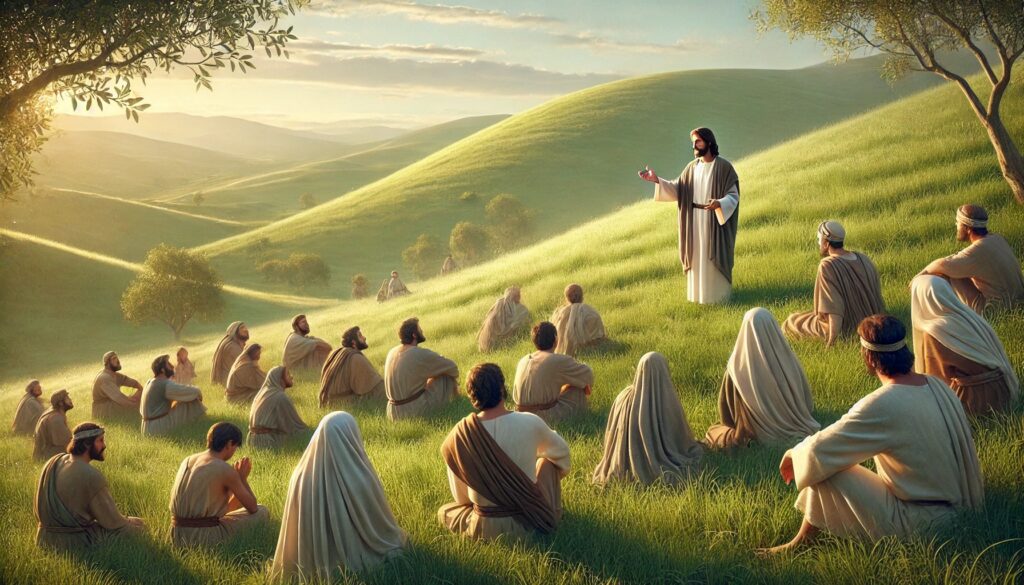
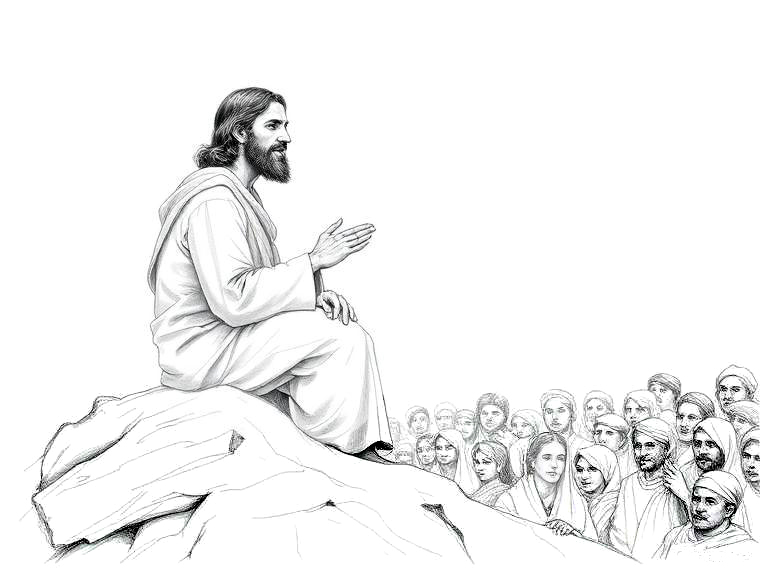
Sermon on the Mount

Sermon on the Mount

Gary Eugene Howell uses the Berean Standard Bible. The Holy Bible, Berean Standard Bible, BSB is produced in cooperation with Bible Hub, Discovery Bible, OpenBible.com, and the Berean Bible Translation Committee. The Text of the Berean Standard Bible was dedicated to the public domain as of April 30, 2023.

Verses 1-2

When Jesus saw the crowds, He went up on the mountain and sat down. His disciples came to Him, and He began to teach them, saying:

Commentary:

Verse one states that when Jesus saw the crowds…. Well, where did all these people come from? And why are they there? Remember, When Jesus started healing people, word about him spread fast. People were coming from all over Israel, hoping that Jesus might heal them or one of their family members. They all wanted Jesus to do something for them.

I can not speak to the status of medical practices during the time of Jesus, but I’m willing to assume that even the simplest of medical issues, probably went untreated 2,000 years ago. When word began to spread that a man could heal individuals of their ailments, that news brought out thousands of people.

Jesus begins to teach them saying:

Verse 3

Blessed are the poor in Spirit, for theirs is the kingdom of heaven.

Commentary:

This is referring to those who are humble. It’s not referring to people who are financially disadvantaged. Matthew chapter 23 states that:

Whoever exalts himself will be humbled, and whoever humbles himself will be exalted. (Matthew 23:12)

Faith begins with humility. Salvation is a gift to those who have faith. Thus, what Jesus means by saying those “poor in spirit” is, blessed are the humble for theirs is the kingdom of heaven.

Verse 4

Blessed are those who mourn, for they will be comforted.

Commentary:

This is speaking of repentance. Those who mourn over their sins and sinful behavior will be forgiven and in being forgiven will thus be comforted.

Verse 5

Blessed are the meek, for they will inherit the earth.

Commentary:

I believe this to be an end times prophecy. Meekness is like that of humbleness. God exalts those who are humble and meek, yet humbles the proud and those who exalt themselves.

So, when Jesus says the Meek will inherit the earth. He’s talking about those who will enter into the Millennial reign of Christ. They will inherit the earth because they’ll be the only ones remaining on earth after Christ returns and his wrath kills everyone else. (see Revelation 19) The meek will then have the whole earth to themselves.

Verse 6

Blessed are those who hunger and thirst for righteousness, for they will be filled.

Commentary:

Today, via the internet, we can watch a lot of videos in which someone like Frank Turik, Jeff Durbin or Cliffe Knechtle go out on the streets or to a college campus and debate with people about Christianity. On nearly every occasion, what we see, by the nature of the questions people ask, is that they are not searching. It appears that they don’t hunger and thirst for righteousness. They don’t actually want to know about God and his character. Instead, for many of them, it appears they just want to be antagonistic. They ask questions because they want to argue. But the person who is seeking God, the person who hungers and thirsts for righteousness, asks questions because they genuinely want to know the answer. They are seeking to understand God.

The end of verse six says, “for they will be filled.” Filled with what? The Holy Spirit.

Jesus Christ and the infilling of the Holy Spirit is what makes a person righteous in God’s sight. We, in and of our own selves can not achieve righteousness. We don’t get extra credit points for helping a turtle cross the road or performing other good deeds. Our righteousness is bestowed upon us because of Jesus’s righteousness. When we put our faith in Christ, and in so doing, receive the Holy Spirit, we put on the righteousness of Christ.

Verse 7

Blessed are the merciful, for they will be shown mercy.

Commentary:

This is very much a lesson in sowing and reaping. By giving mercy, we will be given mercy.

Verse 8

Blessed are the pure in heart, for they will see God.

Commentary:

The implication herein is that if one’s heart is not pure; they will not see God. In Matthew chapter fifteen Jesus states,

“For out of the heart come evil thoughts, murder, adultery, sexual immorality, theft, false testimony, and slander. These are what defile a man…” (Matthew 15:19-20a)

When we have a relationship with Jesus Christ, our desire for sin fades and what comes out of our hearts is less evil than it previously was. Instead, our desires begin to align with God’s will for our lives.

Verse 9

Blessed are the peacemakers, for they will be called sons of God.

Commentary:

When we talk about peacemakers, English language speakers might immediately think of someone who prevents war. “Peace in our time” was a declaration by British Prime Minister Neville Chamberlain when he foolishly believed that he himself had prevented World War II, after his meeting with Adolf Hitler.

But I strongly doubt that the absence of war is the proper interpretation here because of what Jesus said in Matthew chapter ten.

Do not assume that I have come to bring peace to the earth; I have not come to bring peace, but a sword. (Matthew 10:34)

However, when a person is filled with the Holy Spirit, they experience internal peace, even in the midst of war. So then who are the peacemakers? They would be those who bring the good news of the gospel.

How beautiful on the mountains are the feet of those who bring good news, who proclaim peace, who bring good tidings, who proclaim salvation, who say to Zion, “Your God reigns!”

Listen! Your watchmen lift up their voices, together they shout for joy. For every eye will see when the LORD returns to Zion. (Isaiah 52:7-8)

Verses 10-12

Blessed are those who are persecuted because of righteousness, for theirs is the kingdom of heaven. Blessed are you when people insult you, persecute you, and falsely say all kinds of evil against you because of Me. Rejoice and be glad, because great is your reward in heaven; for in the same way they persecuted the prophets before you.

Commentary:

Here in the United States, for the most part, we have freedom of religion, but don’t assume that by being a Christian, everything in life will go your way. As a Christian believer who tells other people about the good news of Jesus Christ, you will have people who insult you or falsely say evil things about you.

But we can’t be shy about the gospel or the name of the one who has given us eternal life. Paul writes in Romans chapter one,

“I am not ashamed of the gospel, because it is the power of God for salvation to everyone who believes, first to the Jew, then to the Greek.” (Romans 1:16)

There are, however, cultural norms in America, that if you violate those norms, it doesn’t matter whether you’re talking about Jesus or the weather outside, you’ll always get a negative response from people. In America, we were raised not to talk to strangers.

So you can’t just march up to a total stranger and say “Hey you, I want to tell you about Jesus”. You’re going to get a negative response.

However, if two strangers share a common circumstance, such as both of you are standing in the same line at the grocery store, or both of you are walking your dogs on the same street, Then it is within cultural norms to say hello and start a conversation with that person regarding the circumstance you both have in common, and then it’s possible that you could steer that conversation into the topic of faith.

Blessed is the person who is not ashamed of Jesus Christ.

Verses 13-16

You are the salt of the earth. But if the salt loses its savor, how can it be made salty again? It is no longer good for anything, except to be thrown out and trampled by men.

You are the light of the world. A city on a hill cannot be hidden. Neither do people light a lamp and put it under a basket. Instead, they set it on a stand, and it gives light to everyone in the house. In the same way, let your light shine before men, that they may see your good deeds and glorify your Father in heaven.

Commentary:

These are interesting verses because they speak of someone losing their saltiness (the NIV & ESV use the word saltiness). When reading verse thirteen, some people have attempted to assign application to the modern Christian. But they struggle because they know the Holy Spirit can not be lost, so they hem and haw about what this verse could mean but end up explaining something that’s convoluted and makes little sense.

Remember the context of what’s happening. The first word in verse thirteen is “You”. Who is Jesus speaking to? A big crowd of people during his sermon on the mount. These are Jewish, Israelites. They are God’s chosen people who were supposed to present the true and living God to the whole world. But they lost their saltiness because of unbelief. Paul writes in Romans chapter eleven,

“…because of their trespass, salvation has come to the Gentiles to make Israel jealous.” (Romans 11:11b)

Now if some branches have been broken off, and you, a wild olive shoot, have been grafted in among the others to share in the nourishment of the olive root, do not boast over those branches. If you do, remember this: You do not support the root, but the root supports you.

You will say then, “Branches were broken off so that I could be grafted in.” That is correct: They were broken off because of unbelief, but you stand by faith. Do not be arrogant, but be afraid. For if God did not spare the natural branches, He will certainly not spare you either.

Take notice, therefore, of the kindness and severity of God: severity to those who fell, but kindness to you, if you continue in His kindness. Otherwise you also will be cut off. And if they do not persist in unbelief, they will be grafted in, for God is able to graft them in again. For if you were cut from a wild olive tree, and contrary to nature were grafted into one that is cultivated, how much more readily will these, the natural branches, be grafted into their own olive tree! (Romans 11:17-24)

Because of unbelief, the Jewish people lost their saltiness. Losing one’s saltiness is in no way applicable to today’s spirit filled Christ follower who walks in faith. One can not lose the Holy Spirit. The verse is specifically talking about those Jewish people. From the day they walked out of Egypt, they operated their lives in unbelief and thus lost the saltiness they were supposed to have.

Salvation then, has been given to the gentiles who put their faith in Jesus Christ. They now are the salt of the earth and the light of the world, but Christians today can not lose their saltiness as the Israelites did because the Holy Spirit has now been poured out and one can not lose the Holy Spirit once acquired.

(I know that some people reading this are screaming Hebrews 6:4-6. Bear with me, we will get to the book of Hebrews).

While losing one’s saltiness is not applicable to us today, what is applicable is that salvation has come to the gentiles, making us now the salt of the earth and the light of the world.

There is a football stadium just three and a half miles from my home. When they hold a football game there, the stadium lights are so bright at night that they light up the clouds which pass over the stadium. Those illuminated clouds in turn, light up the whole town. If I’m outdoors on a game night walking my dog, I find myself checking my watch and wondering why it’s so bright out at this time of night. That’s when I look up and see the glow of the stadium and the clouds reflecting the stadium’s lights.

This is how Jesus wants us to be. We live in a world filled with darkness where people stumble and fall in the dark. Jesus wants you to be a light that illuminates your whole town and points people to Jesus.

Verses 17-20

Do not think that I have come to abolish the Law or the Prophets. I have not come to abolish them, but to fulfill them. For I tell you truly, until heaven and earth pass away, not a single jot, not a stroke of a pen, will disappear from the Law until everything is accomplished.

So then, whoever breaks one of the least of these commandments and teaches others to do likewise will be called least in the kingdom of heaven; but whoever practices and teaches them will be called great in the kingdom of heaven. For I tell you that unless your righteousness exceeds that of the scribes and Pharisees, you will never enter the kingdom of heaven.

Commentary:

There is a phrase I often use called “Rightly dividing the word of Truth”. It comes from the King James Version and is found in 2 Timothy 2:15. The reason I like this specific rendering of that verse is due to its imagery. The use of the word dividing, brings to my mind the image of a bible with many slips of paper sticking out of its pages marking where its owner has identified verses which he can now easily flip back and forth to.

He uses the Bible to interpret the Bible. This is an important concept that some people miss; and in missing it, they err in their understanding of certain Bible passages.

Verses seventeen and eighteen of Matthew chapter five are verses where this error of not using the Bible to interpret the Bible, (not rightly dividing the word of truth), often occurs.

If one reads verses seventeen and eighteen as a standalone statement, one may inevitably conclude that we are still under the law and that the law will be in effect as long as the earth exists. I have met many Christians who cling to that interpretation (and yet they do not follow the law). But when we read the entirety of the New Testament, it is without question that the resurrection of Jesus Christ and the outpouring of the Holy Spirit brought about a New Covenant.

Here are just three examples,

By speaking of a new covenant, He has made the first one obsolete; and what is obsolete and aging will soon disappear. (Hebrews 8:13)

And He has qualified us as ministers of a new covenant, not of the letter but of the Spirit; for the letter kills, but the Spirit gives life. (2 Corinthians 3:6)

Brothers, let me put this in human terms. Even a human covenant, once it is ratified, cannot be canceled or amended. The promises were spoken to Abraham and to his seed. The Scripture does not say, “and to seeds,” meaning many, but “and to your seed,” meaning One, who is Christ.

What I mean is this: The law that came 430 years later does not revoke the covenant previously established by God, so as to nullify the promise. For if the inheritance depends on the law, then it no longer depends on a promise; but God freely granted it to Abraham through a promise.

Why then was the law given? It was added because of transgressions, until the arrival of the seed to whom the promise referred. It was administered through angels by a mediator. A mediator is unnecessary, however, for only one party; but God is one.

Is the law, then, opposed to the promises of God? Certainly not! For if a law had been given that could impart life, then righteousness would certainly have come from the law. But the Scripture pronounces all things confined by sin, so that by faith in Jesus Christ the promise might be given to those who believe.

Before this faith came, we were held in custody under the law, locked up until faith should be revealed. So the law became our guardian to lead us to Christ, that we might be justified by faith. Now that faith has come, we are no longer under a guardian. (Galatians 3:15-25)

All of that was to say, without a doubt, that we are no longer under the law. Okay then, so what does Jesus mean when he says “Do not think that I have come to abolish the Law or the Prophets?

First of all, the phrase “the law and the prophets” refers to the sum total of the Old Testament, not merely the law of Moses. Recall from the book of Luke when Jesus, after his resurrection, was walking on a road with two disciples.

“And beginning with Moses and all the Prophets, He explained to them what was written in all the Scriptures about Himself.” (Luke 24:27)

The Mosaic law consists of ceremonial and ritual practices of sacrifices, dietary laws, clean and unclean regulations, festivals, and priestly rules. Under the New Covenant in Christ, these ceremonial laws are fulfilled in Him.

Everything that Jesus is saying here in Matthew 5, is a rebuke of the Pharisees and a rebuttal to their accusation that he is a law breaker. The Pharisees repeatedly accused Jesus of violating the law. Jesus says that he has come to fulfill the law, which is exactly what he is going to do on the cross. Jesus goes on to rebuttal the Pharisees by leveling at them an accusation of his own. He says, “whoever breaks one of the least of these commandments and teaches others to do likewise will be called least in the kingdom of heaven.”

This is exactly what the Pharisees have been doing. In Matthew chapter fifteen, when speaking to the Pharisees Jesus replied,

“And why do you break the command of God for the sake of your tradition? For God said, ‘Honor your father and mother’ and ‘Anyone who curses his father or mother must be put to death.’ But you say that if anyone says to his father or mother, ‘Whatever you would have received from me is a gift devoted to God,’ he need not honor his father or mother with it. Thus you nullify the word of God for the sake of your tradition. You hypocrites! Isaiah prophesied correctly about you: ‘These people honor Me with their lips, but their hearts are far from Me. They worship Me in vain; they teach as doctrine the precepts of men.” (Matthew 15:3-9)

So when looking at these verses in chapter five, understand that they are not a prescription for Christian life today. Instead, it is a rebuke of the Pharisees back then. And this point is succinctly made by Jesus in verse twenty when he proclaims, “unless your righteousness exceeds that of the scribes and Pharisees, you will never enter the kingdom of heaven.”

Jesus is saying that although the scribes and Pharisees believe themselves to be so righteous, they are not and they will not enter into the kingdom of heaven.

Verses 21-22

You have heard that it was said to the ancients, ‘Do not murder’ and ‘Anyone who murders will be subject to judgment.’ But I tell you that anyone who is angry with his brother will be subject to judgment. Again, anyone who says to his brother, ‘Raca,’ will be subject to the Sanhedrin. But anyone who says, ‘You fool!’ will be subject to the fire of hell.

Commentary:

God’s standards are much stricter than mans’. The reason of course is that God is able to judge the heart. We can only judge by what actually takes place. If someone murders someone, there is a dead body, or at least a missing person. We can investigate and solve a crime, and in a courtroom, we can declare that suspect guilty or not guilty.

God, however, doesn’t need evidence or forensics. He doesn’t need to investigate or to interview witnesses. Even if that person did not carry out the murder, God knows they had wanted to and thus, they are guilty.

Verses 23-26

So if you are offering your gift at the altar and there remember that your brother has something against you, leave your gift there before the altar. First go and be reconciled to your brother; then come and offer your gift.

Reconcile quickly with your adversary, while you are still on the way to court. Otherwise, he may hand you over to the judge, and the judge may hand you over to the officer, and you may be thrown into prison. Truly I tell you, you will not get out until you have paid the last penny.

Commentary:

Jesus is saying that there are priorities in worship. Bringing a gift to the alter while simultaneously having wronged a fellow believer is getting your priorities mixed up. First go to your fellow believer and reconcile your differences. That’s the higher priority.

Then Jesus suddenly changes the tone of the discussion. He previously said be reconciled to your brother, but now he talks about an adversary. That is substantially different. To me, a brother is a fellow believer. Perhaps someone in my congregation. But an adversary is someone I’m not friends with. They are someone I would likely prefer not to associate with. Jesus is saying that we need to reconcile with our adversary. This is very reminiscent of “Love your enemies”. Jesus is saying that it may not go well for you in this life if you don’t reconcile with your adversaries.

Verses 27-30

You have heard that it was said, ‘Do not commit adultery.’ But I tell you that anyone who looks at a woman to lust after her has already committed adultery with her in his heart. If your right eye causes you to sin, gouge it out and throw it away. It is better for you to lose one part of your body than for your whole body to be thrown into hell. And if your right hand causes you to sin, cut it off and throw it away. It is better for you to lose one part of your body than for your whole body to depart into hell.

Commentary:

As mentioned, a moment ago, God judges the heart. A person who commits adultery is guilty, but a person who desires adultery, even though they don’t actually do so, is also guilty in God’s eyes. He knows the intent of our hearts.

Jesus then proceeds to make some seemingly strange comments. If your eye causes you to sin, gouge it out, or if your hand causes you to sin, cut it off. Is this a literal instruction? No. Jesus is using hyperbole. If it were literal, the whole world would have neither eyes nor hands, nor any other parts of their body. Furthermore, we already know that sin comes from the heart, not the eyes or the hands.

So then what is Jesus telling us? We should be willing to take drastic measures to get sin out of our lives. However, here’s the irony of it, we can not overcome sin through our own strength. If we could, anyone could become sinless and could teach others to do the same. But sin is bound in our flesh! It’s like an ugly tattoo. You can’t get rid of it. So what then should we do?

We must draw near to Jesus Christ and allow the Holy Spirit to work in our lives, helping us turn away from sin. As we remain close to Him, the Spirit continues to transform us, teaching us to walk in greater obedience; not making us sinless, but helping us to sin less as we grow in faith.

Remember that salvation is by faith, but we’re not talking about salvation at this moment. We’re talking about gouging out your eye and cutting off your hand. We’re talking about repentance through the power of the Holy Spirit.

It is the Holy Spirit that helps us turn away from sin. The problem, however, is that people are inherently lazy and we are always prone to drifting away from God and back into sin. Thus, the work required in Christianity is not for salvation, it is for remaining near to God.

It is the hard work and self-discipline of remaining near to God that allows us to be continually reminded of our need to rely upon the Holy Spirit.

It takes hard work and self-discipline to read from the word of God every day even when you don’t feel like it. It takes self-discipline to spend quality time in prayer every single day even when you have a long list of other things you need to do and a schedule that requires you to be certain places at certain times. It requires a well-disciplined time-blocked schedule in order to attend both church each week and a monthly group Bible study. It takes pain, discomfort and self-discipline as well as hard work to consistently fast and put the flesh under subjection. It takes self-discipline to go to bed early and get out of bed early every day so that you have the time to spend sitting at the feet of Jesus Christ before going to work. It takes sacrifice and self-discipline to prioritize God over sports, hobbies, recreational activities and all the other distractions that use up the 168 hours you’re given each week.

When it comes to getting a particular sin out of your life, let me give you this tip. Use sin as a tool to draw closer to God. That sounds weird! I know, but bear with me.

At the time my daughter was born, I was working at a company that employed thousands of people. One of my responsibilities was to keep track of an assortment of approximately 200 various tools.

Like library books, employees would come to me and check-out certain tools. If those tools were not returned within a given period of time, I knew who checked them out and where to find them.

One of the tools I was responsible for keeping track of was a Geiger Counter. Its purpose was to measure radioactivity. It made a clicking sound when in the presence of a radioactive material. The closer the Geiger counter got to something radioactive, the faster the Geiger counter would click. And the more dangerous the radioactive material, the faster the Geiger counter would click, warning the user that they needed to back away.

Now let’s imagine that our propensity toward sin can serve as a measuring tool in some ways similar to a Geiger counter.

When a person is in close relationship with Jesus Christ, their sin nature lessens and begins to fade. Their habitual sins might vanish all together. But when that same person begins to drift away from God, sin re-emerges.

We must pay closer attention, therefore, to what we have heard, so that we do not drift away. (Hebrews 2:1)

We do not have the ability to overcome our own sin. If we did, there would be plenty of perfect people in the world. However, there is someone who can overcome our sins, and that person is Jesus Christ. Therefore, since it is impossible for us to overcome our own sins, but Jesus Christ can, it stands to reason that the only thing we can do to lessen and, in some cases, even get rid of certain sins all together is to run to Jesus. To draw near to Him. To hide behind Jesus. To let him be our shield against Satan and against our own ingrained tendencies and habits.

Like the Geiger counter alerting its user to something dangerous, a person can use their own return to habitual sin as a tool to alert them to something dangerous, namely that their distance from God has increased.

The Geiger counter is measuring something nearby (radioactivity). Your backsliding into old habitual sins is measuring something that is getting further away (your distance from God).

Anytime, that old habitual sin, you thought you overcame a long time ago, suddenly springs back to life, the first thing you should think is “ah ha, this sin is an indication to me that I’m beginning to drift away from God.” That then is an opportunity to first pray to the Lord for forgiveness (which he already gave you at the cross), and to ask for wisdom to understand where you are drifting. Perhaps you haven’t been in God’s word lately or have been reading it superficially for the sake of a check mark on your daily to-do list. Perhaps you’ve recently been neglecting prayer or neglecting to fellowship with Christians who are spiritually wiser than yourself.

It is an opportunity to look at yourself introspectively, and ask the Holy Spirit for help. Then you get back up, brush yourself off and draw nearer to God.

Draw near to God, and He will draw near to you. (James 4:8a)

For the past five years, I’ve worked from a home office. My window faces the street. All summer long I will see people from the neighborhood out walking, jogging, and bicycling up and down the street. The joggers often have on their jogging outfits giving me the impression that their effort to exercise is very intentional. However, come winter when it’s only 20 degrees outside, I will see zero people outside my window. Staying warm is of greater importance to them than exercising. (Okay, maybe they have a treadmill at home), but the point that I’m making here is that to draw near to Jesus Christ, and to remain close to him, we must desire Jesus more than we desire comfort and convenience. Again, salvation is not earned. But how many people backslide into sin merely because spending time at the feet of Jesus is not always convenient?

And without faith it is impossible to please God, because anyone who approaches Him must believe that He exists and that He rewards those who earnestly seek Him. (Hebrews 11:6)

Again, it is Christ who overcame our sins. So when Jesus says pluck out your eye or cut off your hand to get rid of sin, what he means by that is that you should go to any length to draw near to God and then remain near to God, because it is He, through the power of the Holy Spirit, that causes those habitual sins within you to fade. Even if drawing near to God is uncomfortable and inconvenient, you should desire Him more than your comfort and convenience. Jesus Christ has overcome your sins. If you draw near to Him he will draw near to you. Again, salvation is by faith not by works, but He rewards those who earnestly seek Him. What is that reward? A life that is led by the Holy Spirit.

Verses 31-32

It has also been said, ‘Whoever divorces his wife must give her a certificate of divorce.’ But I tell you that anyone who divorces his wife, except for sexual immorality, brings adultery upon her. And he who marries a divorced woman commits adultery.

Commentary:

God is against divorce. Why? Because marriage between a man and a woman represents the marriage between Jesus and the Church. Treating marriage flippantly is a sin.

The overall divorce rate in America is around 50%. Even among US Christians, the divorce rate is still 25%, meaning one out of every 4 Christian couples will get divorced. So if you’re a single young Christian who hopes one day to get married, what should you do?

There is a phrase in computer programing that says “Garbage in, garbage out”. What it means is that the quality of the output is largely determined by the quality of the input. So how does one avoid divorce? One way is to choose with great discernment the quality of the person they will marry.

The only person you should marry is someone who is filled with the Holy Spirit. And guess what? The only person they should marry is someone filled with the Holy Spirit. So if between the two of you, you are the one who is not yet filled with the Holy Spirit, you are the one who is not yet marriage material!

We can not see the Holy Spirit, so how do we know if someone is filled with the Holy Spirit? It’s my personal opinion that if you spend enough time with a person, listening to the things they talk about, you will discover what their priorities are. This is why it’s so important to refrain from intimacy before marriage because once you’ve crossed that line, it’s 100 times more difficult to have spiritual discernment about someone you’ve already made a physical commitment to.

I would say, if you are looking for a spouse, seek the Lord. If you want to get married, don’t search for a husband, search for Jesus. Jesus Christ knows the identity of every person on the planet and he has the ability to make your paths cross. Even if the person he has for you, lives a thousand miles away, he can cause your paths to cross.

My practical advice for those who want to get married is this:

If you attend a church whose congregation is all married couples and retirees. You should pray about switching churches. Go to a church where the truth of God’s word is being taught, but look for a place where there are a lot of people your age, in their 20’s and 30’s.

However, my advice to young Christian women is to not be deceived. I have seen young men enter into a church congregation because they assumed Christian girls are naïve and are easy prey. Such men can be readily spotted because they have a tendency to boast and brag about their own holiness, assuming that Christian girls will be impressed.

Again, if you avoid intimacy and instead spend a long time getting to know someone, their mouth will eventually reveal everything you need to know about that person.

Oh, yeah, and by the way ladies….We don’t live in the 1900’s anymore. If you sit around waiting for a man to pursue you, before you know it, you’re going to be 40 years old and still single. Walk up to him and say hello. I’m not telling you to pursue him. I am advising you to let him know you are approachable.

If you’re married and having marriage problems, present your cares and concerns to the Lord and then seek wise counsel.

Verses 33-37

Again, you have heard that it was said to the ancients, ‘Do not break your oath, but fulfill your vows to the Lord.’ But I tell you not to swear at all: either by heaven, for it is God’s throne; or by the earth, for it is His footstool; or by Jerusalem, for it is the city of the great King. Nor should you swear by your head, for you cannot make a single hair white or black. Simply let your ‘Yes’ be ‘Yes,’ and your ‘No,’ ‘No.’ Anything more comes from the evil one.

Commentary:

In my youth, I had understood this to mean that we should not make vows to one another, however, that’s not correct because we obviously make wedding vows. Today when I read this, what stands out to me is that the verse is specifically about not making vows to God.

Don’t promise something to God, that turns out later you can’t fulfill.

Verses 38-47

You have heard that it was said, ‘Eye for eye and tooth for tooth.’ But I tell you not to resist an evil person. If someone slaps you on your right cheek, turn to him the other also; if someone wants to sue you and take your tunic, let him have your cloak as well; and if someone forces you to go one mile, go with him two miles. Give to the one who asks you, and do not turn away from the one who wants to borrow from you.

You have heard that it was said, ‘Love your neighbor’ and ‘Hate your enemy.’ But I tell you, love your enemies and pray for those who persecute you, that you may be sons of your Father in heaven. He causes His sun to rise on the evil and the good, and sends rain on the righteous and the unrighteous. If you love those who love you, what reward will you get? Do not even tax collectors do the same? And if you greet only your brothers, what are you doing more than others? Do not even Gentiles do the same?

Commentary:

Jesus consistently preaches messages of love, forgiveness, patience, mercy, grace, etc. By loving our enemies, we avoid escalation into greater and greater sin.

In the United States, during the late 1800’s there were two families, the Hatfield’s and the McCoy’s. One day they argued over who owned a pig. Floyd Hatfield owned the animal but Randolph McCoy claimed it was his. That argument was all it took to make enemies of the two families. After which one side would do something mean to the other and the wronged side would feel the need for revenge. This escalated and escalated until the two families had a literal battle not unlike two militaries engaged in war. During this event many people from both families were killed.

Imagine what might have been if Floyd Hatfield had followed Jesus’s advice and simply let Randolph McCoy have the pig.

Verse 48

Be perfect, therefore, as your heavenly Father is perfect.

Commentary:

Be perfect? What is that about? First of all, let’s consider the context. All of Matthew chapter five has been Jesus addressing a crowd during his sermon on the mount. He’s been instructing the people on how to behave according to God’s will. He talked about being salt and light, about anger issues and reconciliation. He talked about not committing adultery, not getting divorced, and not swearing an oath to God. And he talked about loving your enemies.

Now he’s saying that the standard by which we should compare ourselves is God. This is very important, because many people think they’re going to get into heaven because they’re a good person. However, those who think they are a good person, draw that conclusion by comparing themselves to people more terrible than themselves. Murderers, rapists, gang members, drug dealers, etc…But Jesus is telling us here, that our righteousness is not ranked by comparing ourselves to the dregs of society. Instead, we need to compare ourselves against God’s perfection.

And bear in mind also, that when it comes to judgement, God examines the entirety of our lives. In your waning years you might be a wonderful grandpa who also volunteers at your church. But when you were 20 years old, you were a thief! How are the sins of your youth going to be covered when you stand before God to give an account?

It’s only through faith in Jesus Christ that we are made perfect. By putting our faith in Jesus Christ, our sins are nailed to the cross. When we stand before God, we are as white as snow. Our sins are cast as far as the east is from the west. Our perfection comes only from Jesus Christ.

Watch the video version for this Matthew chapter 5 commentary

Listen to the audio podcast episode for this Matthew chapter 5 commentary

Access the group bible study recourse for Matthew 5.

Commentary Matthew 4

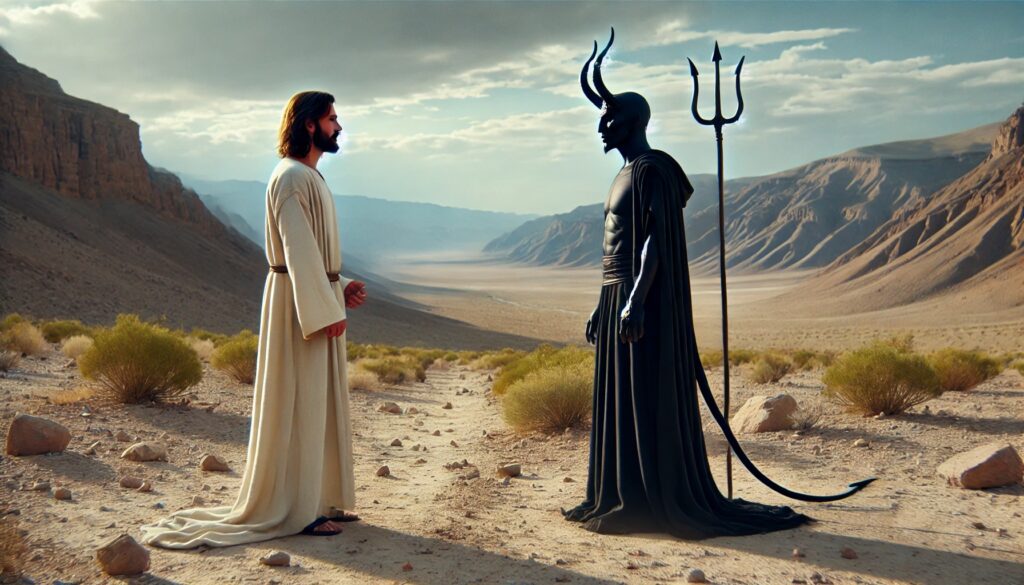
Jesus Tempted by the devil

Jesus tempted by the devil

Gary Eugene Howell uses the Berean Standard Bible. The Holy Bible, Berean Standard Bible, BSB is produced in cooperation with Bible Hub, Discovery Bible, OpenBible.com, and the Berean Bible Translation Committee. The Text of the Berean Standard Bible was dedicated to the public domain as of April 30, 2023.

Verses 1-2

Then Jesus was led by the Spirit into the wilderness to be tempted by the devil. After fasting forty days and forty nights, He was hungry.

Commentary:

Reading that verse, several things stand out to me;
• led by the spirit
• To be tempted
• The devil
• Fasting,
• forty days and forty nights
• Hungry.

Let’s examine each one.

Led by the Spirit

Recall from chapter three that the spirit descended onto Jesus like a dove when he was baptized. Jesus is filled with the Holy Spirit and that same spirit is now leading him. We too, should be led by the Spirit. In our daily lives, it should be our goal to rely not upon ourselves but upon the Holy Spirit for every circumstance.

Trust in the LORD with all your heart, and lean not on your own understanding (Proverbs 3:5)

But how does one do that? How do we rely upon the Lord?

I recommend starting with a morning prayer in which you pray something such as, “Lord this morning I want to present the entire day to you. Please be with me throughout today. Please lead me and be my guide.”

Jesus was led by the Spirit into the wilderness to be tempted by the devil. What’s that about? Why is that happening?

To be tempted

There is a Bible verse in which it says,

Therefore, since we have a great high priest who has passed through the heavens, Jesus the Son of God, let us hold firmly to what we profess. For we do not have a high priest who is unable to sympathize with our weaknesses, but we have one who was tempted in every way that we are, yet was without sin. Let us then approach the throne of grace with confidence, so that we may receive mercy and find grace to help us in our time of need. (Hebrews 4:14-16)

Jesus was tempted in every way that we are, yet was without sin. The encouragement to be drawn here is that regardless of what tempts you, Jesus is able to relate and understand. Terrible; would it be if Jesus could not relate to our temptation. My daughter is five years old and has not yet gained any appreciation for the value of a dollar. So when we go to a store and she sees an expensive toy, she has a fit when we tell her we can’t afford to buy it. The same child will pour a large glass of milk, take two sips from it and then pour the rest down the kitchen sink before we can even say “Stop!” Why does she do that? Because she lacks the ability to relate to, or understand how hard we had to work to earn the money to buy that gallon of milk.

Because Jesus was tempted in every way, he can perfectly relate to everything we may be tempted by. This then allows him to sympathize with our weaknesses.

The devil

Satan, Lucifer, the Tempter. There is a Bible verse which says;

When tempted, no one should say, “God is tempting me.” For God cannot be tempted by evil, nor does He tempt anyone (James 1:13).

Satan is a tool. I’ve heard skeptics ask “If God is all knowing, why did he create Satan, knowing he would rebel?” To understand the answer, one must first understand the purpose of life.

God created people to be in an eternal relationship with them. However, he wants these eternal relationships to only be with those who truly love him. And so, as a type of proof, God has placed us here, in these less-than-ideal circumstances in order to separate out those who love him from those who do not.

Now, he’s all knowing and he’s omnipresent, so he already knows the outcome, but none the less, the Bible says;

By His great mercy He has given us new birth into a living hope through the resurrection of Jesus Christ from the dead, and into an inheritance that is imperishable, undefiled, and unfading, reserved in heaven for you, who through faith are shielded by God’s power for the salvation that is ready to be revealed in the last time.

In this you greatly rejoice, though now for a little while you may have had to suffer grief in various trials so that the proven character of your faith—more precious than gold, which perishes even though refined by fire—may result in praise, glory, and honor at the revelation of Jesus Christ.

Though you have not seen Him, you love Him; and though you do not see Him now, you believe in Him and rejoice with an inexpressible and glorious joy, now that you are receiving the goal of your faith, the salvation of your souls. (1 Peter 1:3b-9)

The skeptic cries out, “Prove to me that there is a God!” but God replies, “Prove to me that you believe.” A life of 85 years next to the expanse of eternity is hardly even comparable. Imagine the size of a grain of sand next to the size of planet earth. This life is like the snap of a finger.

What is your life? You are a mist that appears for a little while and then vanishes. (James 4:14b)

Yet despite the fact that this life is so incredibly short compared to the length of eternity, none the less, it’s all the time that God needs to see and prove and to refine like gold, those who love him. This is in no way to suggest that God doesn’t already know our outcomes. Rather, it is for our benefit. Thus, Satan, the Tempter, serves a purpose, as a tool. Even though Lucifer’s actions are in rebellion against God.

And we know that God works all things together for the good of those who love Him, who are called according to His purpose. (Romans 8:28)

Fasting

What is the purpose of fasting in Christianity? It is to put the flesh under subjection. Sin is bound in the flesh and originates from the heart, which is why “follow your heart” is the worst advice ever given.

For out of the heart come evil thoughts, murder, adultery, sexual immorality, theft, false testimony, and slander. (Matthew 15:19)

By gaining mastery over the flesh, our hearts desires can not lead us into sin. We don’t do what the flesh says, we do what the spirit says.

… sin is crouching at your door; it desires to control you, but you must master it. (Genesis 4:7b)

Forty days and forty nights

Jesus fasted for forty days and forty nights. That happens to be exactly the amount of time that God caused it to rain upon the earth during Noah’s time. Moses, when he was with the Lord writing the ten commandments, he also fasted 40 days and 40 nights. It has been said that 40 is the number of testing.

He was hungry

After not eating for 40 days, it’s quite an understatement to say that Jesus was hungry, but we’re going to see in just a moment that it’s about keeping the flesh under subjection to the spirit.

Verses 3-4

The tempter came to Him and said, “If You are the Son of God, tell these stones to become bread.” But Jesus answered, “It is written: ‘Man shall not live on bread alone, but on every word that comes from the mouth of God.’”

Commentary:

Now let’s think about this for a moment. How often do you eat? I eat breakfast, lunch and dinner and sometimes a snack before I go to bed. But Jesus is saying that we can not live on food alone.

We were just talking about fasting, how would you feel if you went an entire day without eating any food? I’m talking about an entire 24 hours without anything to eat? That is exactly what you are doing to your soul, when you go an entire day without reading the word of God. You are starving your soul.

You need to be in the word of God every single day, 7 days a week. But what does it look like to read God’s word daily?

First, let me remind you that Salvation is by faith. Not by works. We’re not reading the Bible daily in order to earn some type of extra credit points for being a good person. No. That would be false doctrine. Instead, we are feeding the soul with the Word of God.

Again, I want to be clear, you should be receiving this as a challenge and a goal, not as a legalistic requirement.

First, if you don’t currently have a Bible, I recommend the Bearean Standard bible, BSB, the New Living Translation NLT, or the English Standard Version, ESV.

If you’re not currently reading the Bible, I would start with just five minutes a day, beginning in the New Testament. Build up some endurance to a point where you can read one chapter a day. That takes about five to fifteen minutes.

Why would you not want to spend time in God’s word daily?

On every occasion that we’re looking at today, when Satan tried to tempt Jesus, Jesus responded by quoting the word of God.

You can not defeat Satan through the strength of your own abilities. You have to rely upon God to fight your battles and to protect you.

Also, the only way to not be deceived, is to know the word of God well. And think about this for a good second. There is an entity who possesses all knowledge, including foreknowledge. He knows everything. He knows exactly what is going to happen to you today, tomorrow and the next day, etc.. etc.. Why would you not want to spend time with him?

Verses 5-7

Then the devil took Him to the holy city and set Him on the pinnacle of the temple. “If You are the Son of God,” he said, “throw Yourself down. For it is written: ‘He will command His angels concerning You, and they will lift You up in their hands, so that You will not strike Your foot against a stone.’ Jesus replied, “It is also written: ‘Do not put the Lord your God to the test.’”

Commentary:

Did you see that? Satan was referring to Psalms chapter 91. The devil was attempting to use the word of God against Jesus. This is why it’s so important to be ever seeing and ever perceiving, because false doctrine exists and false teachers abound. I can almost guarantee you, that in the town where you live, there is probably at least one church that teaches some form of false doctrine.

You have to know the word of God well enough, that you can hear what a particular pastor is saying and think to yourself, “Wait a minute, that’s not what the Bible says.”

You have to look for a church where the truth of God’s word is being taught. Remember also, if you get hurt by a church, it may be that God is trying to pull you out of there and redirect you to a different church. Now, that’s not always the case. Sometimes the problem is you. But don’t quit Jesus because you get hurt in a church. Go find a different church. When my wife and I were searching for a church, I made a spreadsheet of every church within a 15-minute drive from our house. We were shocked to see that there were over 200 churches within an 8-mile radius of our home. So there’s no excuse to say you’re not going to any church because you were hurt by one individual church. Again, God may have allowed that to happen in order to steer you to a different congregation.

What you should never do is just walk into a new church with open arms and rose-colored glasses. That’s how people get tricked. And then five years later when they finally discover that the pastor is a hypocrite, they feel so betrayed that they leave that congregation and quit church altogether.

My personal opinion is this, if you are looking for a church to attend, start at home by watching their live stream or listening to their podcast. Go through 3 or 4 sermons on double speed to see if they are teaching the truth. This you can do very rapidly and doesn’t require weeks and weeks of visiting a church. And by the way, if you’re a pastor, you should have a YouTube channel, an audio podcast and a blog where you publish your sermons. It requires little additional effort to take what you’ve already written and recorded from your Sunday services and post it to your church’s website.

Our attendance at church is not to benefit the preacher. His job is to serve you and I. His responsibility is to point us to Jesus. When you join a church, you are entering into an unspoken agreement that the pastor is going to be your spiritual leader. You would be astonishingly naïve if upon your first visit, you don’t mentally place him on a probationary period until you come to know his character and the quality of his spiritual walk with Jesus Christ. He should have to earn your trust.

Verses 8-9

Again, the devil took Him to a very high mountain and showed Him all the kingdoms of the world and their glory. “All this I will give You,” he said, “if You will fall down and worship me.”

Commentary:

But what is Satan doing here? He’s lying! Satan can not give all the kingdoms of the world to Jesus, because Jesus already owns all the kingdoms of the world.

I have no need for a bull from your stall or goats from your pens, for every beast of the forest is Mine—the cattle on a thousand hills. I know every bird in the mountains, and the creatures of the field are Mine. If I were hungry, I would not tell you, for the world is Mine, and the fullness thereof. (Psalm 50:9-12)

All the cattle on every hill, all the trees on every mountain and in every valley, Jesus already owns everything.

Through Him all things were made, and without Him nothing was made that has been made. (John 1:3)

Satan is the deceiver. He is a liar. Everything that comes out of his mouth is a lie. So when you have a choice between what God says, and what the World says, understand that one of those two is a lie. And God is not a liar.

…it is impossible for God to lie…(Hebrews 6:18b)

Verse 10

“Away from Me, Satan!” Jesus declared. “For it is written: ‘Worship the Lord your God and serve Him only.”

Commentary:

Again, I want to emphasize that in every temptation Satan presented to Jesus, Jesus replied “It is written”. How do we defeat Satanic and demonic influences in our life? How do we overcome temptation? It is by knowing and using the word of God.

For men reading this, I’ll give a practical example. Men are often tempted with lust. This is because their sexual triggers are visually based. When a man sees a beautiful woman, he may be tempted to lust. Therefore, every time you see a beautiful woman, say to yourself,

“The body is not intended for sexual immorality, but for the Lord (1 Corinthians 6:13)”

Verse 11

Then the devil left Him, and angels came and ministered to Him.

Commentary:

The devil saw that he was getting nowhere with Jesus, so the devil left. That’s the way you and I need to be. The devil can not hang around us because we are so grounded in the Word of God.

I want to issue you a challenge to perform two simultaneous Bible studies. The first is to listen to the entire New Testament in 90 days. You can do this easily in the Bible app. Find a 90-day, New Testament reading plan and then listen to it at 1.5x speed. With a minimal commitment of time each day, you can hear the entire New Testament read to you in just 3 months.

At the same time that you are doing that, perform a second Bible study of your choice in which you take your time going through a book of the Bible, slowly and carefully. In this bible study, you will read it, rather than listen to it. You’ll see the words on the page. Take notes and examine the Word of God carefully.

By doing these two Bible studies simultaneously, you’ll be able to get the big picture and the small picture all at the same time.

Verses 12-16

When Jesus heard that John had been imprisoned, He withdrew to Galilee. Leaving Nazareth, He went and lived in Capernaum, which is by the sea in the region of Zebulun and Naphtali, to fulfill what was spoken through the prophet Isaiah:

“Land of Zebulun and land of Naphtali, the Way of the Sea, beyond the Jordan, Galilee of the Gentiles— the people living in darkness have seen a great light; on those living in the land of the shadow of death, a light has dawned.”

Commentary:

In order to begin and continue his ministry, Jesus needed to keep himself both alive and out of jail. There are several occasions in the gospels when Jesus withdraws from a place because people were seeking to arrest him or wanting to kill him.

On this occasion, when Jesus heard that John the Baptist had been arrested, he may have been thinking that he’d be next if he didn’t withdraw. Jesus left Nazareth and went to Capernaum. Google maps says that the journey to Capernaum is 42 kilometers (26 miles) and describes the distance as requiring 10 hours to walk there.

Verse 17

From that time on Jesus began to preach, “Repent, for the kingdom of heaven is near.”

Commentary:

Jesus wants us to turn from our evil ways. Remember if you love Jesus, you will want to do things the way he wants you to.

Don’t think about Christianity as a set of rules. That is not what it is. Rather, think about a time that you went out on a date with someone. Before the date began, you wanted to take a shower, change your clothes, shave, or maybe you did your makeup and hair. Whatever the case; you wanted to do those things. If you want to be in a relationship with Jesus Christ, you will desire to stop doing what is wrong.

Now, don’t get mixed up. We don’t clean up our lives before coming to Christ. That’s not possible, because it is the Holy Spirit that gives you both the desire and the ability to repent.

Likewise, don’t get confused. We don’t earn our salvation by being a good person. In my example of the date, the person didn’t agree to go with you, only upon examining what you looked like after getting ready. They agreed to go on a date with you before you got ready. Once the date was agreed to, only then did you choose to take a shower and change your clothes and so forth.

We repent because we want to pursue God. We ask for the Holy Spirit, so that we are able to repent. We obey Jesus’s teachings because we love him.

Verses 18-22

As Jesus was walking beside the Sea of Galilee, He saw two brothers, Simon called Peter and his brother Andrew. They were casting a net into the sea, for they were fishermen. “Come, follow Me,” Jesus said, “and I will make you fishers of men.” And at once they left their nets and followed Him.

Going on from there, He saw two other brothers, James son of Zebedee and his brother John. They were in a boat with their father Zebedee, mending their nets. Jesus called them, and immediately they left the boat and their father and followed Him.

Commentary:

When I was younger, I would read these verses and think it was odd that Jesus called out to random strangers “follow me” and they dropped everything to do so, even leaving their father to pull in his net all by himself. But what I had failed to do when I was young was to connect together the event as described by Matthew, Mark, Luke and John.

When the police show up at the scene of a car accident, they ask both parties what happened. Each party tells their side of the story. By speaking to both parties, the officers get a complete picture of what took place. The same is true in the Bible. Matthew, Mark, Luke and John are the four people who recorded the events of Jesus’s life. By reading all of these accounts, we get a complete picture.

Matthew and Mark have similar accounts about How Jesus first met the disciples. Luke describes how Jesus performed a miracle allowing Peter to catch a huge number of fish in his net. John gives this account.

The next day John (the Baptist) saw Jesus coming toward him and said, “Look, the Lamb of God, who takes away the sin of the world! This is He of whom I said, ‘A man who comes after me has surpassed me because He was before me.’ I myself did not know Him, but the reason I came baptizing with water was that He might be revealed to Israel.” (John 1:29-31)

The next day John was there again with two of his disciples. When he saw Jesus walking by, he said, “Look, the Lamb of God!” And when the two disciples heard him say this, they followed Jesus. Jesus turned and saw them following. “What do you want?” He asked. They said to Him, “Rabbi, where are You staying?”

“Come and see,” He replied. So they went and saw where He was staying, and spent that day with Him. It was about the tenth hour. Andrew, Simon Peter’s brother, was one of the two who heard John’s testimony and followed Jesus. He first found his brother Simon and told him, “We have found the Messiah”. (John 1:35-41)

Now we have this picture that Andrew and John were introduced to Jesus by John the Baptist. Andrew then went and got his brother Peter and the three of them spent all day talking with Jesus. Being fully convinced that he’s the Messiah.

So then, when we return to Matthew chapter four, it makes more practical sense when we read that the next day As Jesus was walking beside the Sea of Galilee, He saw Andrew and Peter. They were casting a net into the sea, “Come, follow Me,” Jesus said, And at once they left their nets and followed Him.

So they weren’t robotically following the voice of a total stranger (which was how I interpreted these verses in my youth), rather they had just spent the previous day with Jesus and they knew who he was.

Verses 23-24

Jesus went throughout Galilee, teaching in their synagogues, preaching the gospel of the kingdom, and healing every disease and sickness among the people. News about Him spread all over Syria, and people brought to Him all who were ill with various diseases, those suffering acute pain, the demon-possessed, those having seizures, and the paralyzed, and He healed them.

Commentary:

What stands out to me? Jesus healed every disease and sickness among the people.

Today, however, it’s more likely that a person praying for healing will not receive a miracle. Why is that? There are several reasons.

First, I have heard from the eye witness accounts of missionaries, that miraculous healings happen more often in poor countries and places with drastic economic disparity than they do in the United States. I personally know missionaries who have seen people instantly healed on the foreign mission field.

Second, modern medicine is itself a blessing from God. If a person prays for a healing and they then go to their doctor and that doctor performs a procedure or a surgery and afterward the person is healed. Was their prayer for healing answered? Yes it was.

Somewhere, when I was a kid, I saw a TV show, in which two men were talking about God and gave this perfect example of how God so frequently works. The scene from that show has stuck with me all these years. I have no idea, today, what show it was, I can’t remember who the actors were, but if a reader of this commentary ever finds that show, maybe they can send me the name of it. It went like this; Two men were sitting at a bar talking about God. One of them begins to tell a story about the time he was in the Alaskan wilderness and found himself caught in a blizzard. It was a total whiteout and he couldn’t see anything. He couldn’t even figure out which direction he was walking. Night was rapidly approaching and the temperatures were dropping fast. He knew he was in great danger, and so for the first time in his life he prayed a prayer, “God, if you save me from this blizzard, I will worship you for the rest of my life.” The other man at the bar, stared anxiously at him and said, “What happened?” The man replied, “Nothing. Some Eskimo came by on a snowmobile and gave me a ride back to town.”

What was this man expecting? A miracle that defies explanation? But how does God most often work? Through other people using ordinary means. The character in this television show failed to recognize that his prayer was answered. Likewise, being cured in a doctor’s office is no less an answer to a healing prayer than is a miraculous healing that defies explanation.

Verse 25

Large crowds followed Him, having come from Galilee, the Decapolis, Jerusalem, Judea, and beyond the Jordan.

Commentary:

Once Jesus started healing people, word spread fast and he rapidly became famous. Everyone following him was hoping to get something from him, but as we will see, few of them actually put their faith in him, let alone understood who he was.

Listen to the commentary on Matthew 4 as an audio podcast episode.

Watch the video of this commentary on Matthew chapter 4

Download the bible study resource for Matthew chapter 4

Commentary Matthew 3

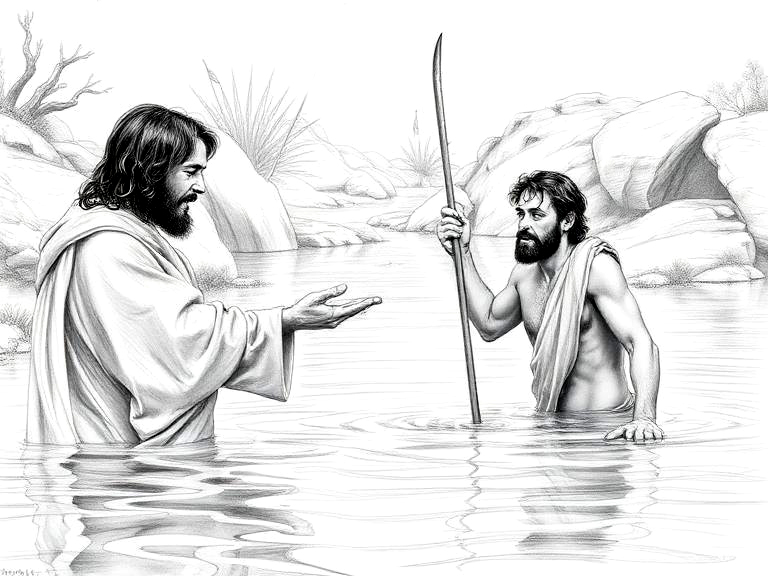
Jesus Baptized by John

Jesus Baptized by John

Gary Eugene Howell uses the Berean Standard Bible. The Holy Bible, Berean Standard Bible, BSB is produced in cooperation with Bible Hub, Discovery Bible, OpenBible.com, and the Berean Bible Translation Committee. The Text of the Berean Standard Bible was dedicated to the public domain as of April 30, 2023.

Prologue:

Jesus Christ and John the Baptist are cousins because their mothers, Mary and Elizabeth, were related. But even before he was born, John the Baptist knew that Jesus was the Messiah. When Mary was pregnant with Jesus and Elizabeth pregnant with John, the Bible says

When Elizabeth heard Mary’s greeting, the baby leaped in her womb, and Elizabeth was filled with the Holy Spirit. (Luke 1:41).

Verses 1-2

In those days John the Baptist came, preaching in the wilderness of Judea and saying, “Repent, for the kingdom of heaven is near.”

Commentary:

At the beginning of Matthew chapter three, Jesus and John are now adults and we see that John the Baptist has begun his ministry, preaching “Repent, for the kingdom of heaven is near”.

But what a coincidence, that’s the exact same thing that Jesus is going to say at the start of his own ministry. As a matter of fact, the very first words that Jesus preaches after returning from fasting in the desert, are “Repent, for the kingdom of heaven is near.”

So what do we make of that? When both the greatest profit who has ever lived and Jesus the Messiah are telling people to repent, it’s probably something very important, So let’s examine this and understand what they’re talking about.

But before we do, let me give you a reminder; how do we get into the kingdom of heaven? Is it by being a good person? No; because we can not earn salvation. If salvation could be earned, people would have something to brag about. They would be inclined to stand before God and say, “Look at how wonderful I was”.

But Ephesians chapter two states;

For it is by grace you have been saved through faith, and this not from yourselves; it is the gift of God, not by works, so that no one can boast. (Ephesians 2:8-9)

So we can not earn our salvation by being a good person or by doing good works. Salvation is by faith. Then what is the purpose of repentance? Why are both Jesus and John telling everyone to repent?

First of all, what does repent even mean?

I don’t like arguing with strangers on the internet, but sometimes I find myself doing so over the doctrines of Christianity. It was just recently that a Christian made a post stating that Jesus never said “Repent”. I entered into the conversation with my disagreement and the discourse quickly devolved into this person arguing with me over the meaning of the word repentance.

This commentary is very intentionally, not meant to be scholarly in nature. Its purpose is to be read by ordinary, regular people. It was not my intent to dive head first into Greek words, or Hebrew root words or various forms of verbs which often make bible commentaries a burden to read. However, on this occasion I think it’s necessary if we want to understand what Jesus and John are proclaiming.

When we look up the word Repent, we find the Greek word μετανοέω, which means To think differently. To reconsider. To morally feel guilt after doing something bad. As we proceed further into the book of Matthew, we’re going to see that Jesus wants us to love God and to love other people. In John 14 Jesus says;

If you love Me, you will keep My commandments. And I will ask the Father, and He will give you another Advocate to be with you forever— the Spirit of truth. The world cannot receive Him (The Holy Spirit), because it neither sees Him nor knows Him. (John 14:15-17a)

If Jesus Christ, asks you to do something, you can not just give him the big middle finger. You can’t reject Christ, and love Christ at the same time. Now we all stumble into sin, we all make mistakes and errors, but to look to Jesus and say, “I’m not going to do what you say!” is a rejection of Jesus.

Again, if Jesus asks you to do something and you refuse, that is an act of rejecting Christ. We can not reject Christ and enter into the kingdom of heaven. Fortunately, however, as long as you are alive, Jesus’s instruction, and John’s instruction, are still relevant. repent. In other words, as long as you are still living, you are still under God’s grace and there is still time available for you to accept Christ and to put your faith and trust in Jesus. But the moment you depart from your body, that’s the cut off. Time’s up.

What Jesus wants us to do is to turn from, that is, to think differently about our sins. He wants us instead to follow him and put our trust and reliance upon him. That is, in and of itself, the very definition of faith. You are putting your trust in Jesus Christ, Thus, when Jesus Christ says, “don’t do that, instead do this”, you are able to trust him and are willing to do what he has asked of you.

If Jesus asks you to do something, and you don’t do it, you are rejecting what he asked you to do. You are rejecting Christ.

Again, I want to emphasize, that I’m not referring to the stumbling into sin. We live in a dark and fallen world, and stumbles, trips and falls are unavoidable. But I’m talking about the very deliberate and intentional rejection of Christ’s commands and teachings which in and of itself, is a rejection of Christ.

Verses 3-6

This is he who was spoken of through the prophet Isaiah: “A voice of one calling in the wilderness, ‘Prepare the way for the Lord, make straight paths for Him.’”

John wore a garment of camel’s hair, with a leather belt around his waist. His food was locusts and wild honey. People went out to him from Jerusalem and all Judea and the whole region around the Jordan. Confessing their sins, they were baptized by him in the Jordan River.

Commentary:

John ate grasshoppers. To me, that’s disgusting. Why does the bible mention this? I think it may be to show John’s humbleness and to compare him to Elijah. John doesn’t wear fancy clothes and eat fine foods. He’s like a homeless person. He’s out in the wilderness, rather than in the city. He wears camel hair clothing and eats insects. I suspect that if you and I encountered john the Baptist today, we might be inclined to avoid him, a man at the river wearing rags and eating bugs. But many people in Israel heard about what he was doing, and went out there to see him and be baptized by him.

Verses 7-10

But when John saw many of the Pharisees and Sadducees coming to his place of baptism, he said to them, “You brood of vipers, who warned you to flee from the coming wrath? Produce fruit, then, in keeping with repentance. And do not presume to say to yourselves, ‘We have Abraham as our father.’ For I tell you that out of these stones God can raise up children for Abraham. The axe lies ready at the root of the trees, and every tree that does not produce good fruit will be cut down and thrown into the fire.

Commentary:

Many people today, both Christians and non-Christian alike, view Jesus as only the meek, mild, loving, compassionate person that came 2,000 years ago. But they never consider the Jesus that is coming back.

Our all loving Jesus is a God of Justice. And when He comes back, that period of Grace will be over. That’s when he will pour out justice and wrath.

The wrath of God is being revealed from heaven against all the godlessness and wickedness of men who suppress the truth by their wickedness. (Romans 1:18)

Jesus put before them another parable: “The kingdom of heaven is like a man who sowed good seed in his field. But while everyone was asleep, his enemy came and sowed weeds among the wheat, and slipped away. When the wheat sprouted and bore grain, then the weeds also appeared.

The owner’s servants came to him and said, ‘Sir, didn’t you sow good seed in your field? Where then did the weeds come from?’

‘An enemy did this,’ he replied. So the servants asked him, ‘Do you want us to go and pull them up?’

‘No,’ he said, ‘if you pull the weeds now, you might uproot the wheat with them. Let both grow together until the harvest. At that time I will tell the harvesters: First collect the weeds and tie them in bundles to be burned; then gather the wheat into my barn.’ (Matthew 13:24-30)

And when Jesus explained this parable to his disciples he said;

“The One who sows the good seed is the Son of Man. The field is the world, and the good seed represents the sons of the kingdom. The weeds are the sons of the evil one, and the enemy who sows them is the devil. The harvest is the end of the age, and the harvesters are angels.

As the weeds are collected and burned in the fire, so will it be at the end of the age. The Son of Man will send out His angels, and they will weed out of His kingdom every cause of sin and all who practice lawlessness. And they will throw them into the fiery furnace, where there will be weeping and gnashing of teeth. Then the righteous will shine like the sun in the kingdom of their Father. He who has ears, let him hear. (Matthew 13:37-43)

Verse 11

I baptize you with water for repentance, but after me will come One more powerful than I, whose sandals I am not worthy to carry. He will baptize you with the Holy Spirit and with fire.

Commentary:

John says that the one who is coming is more powerful than he is. John is referring to Jesus, the Messiah. John has been described in the bible (Luke 7:24-35), as the greatest of all prophets, but John says he’s not worthy to even untie the sandals of Jesus. This tells us that Jesus is more than a profit, he’s more than a good teacher, and as we continue into this New Testament Commentary, we’re going to see that Jesus is not only a mighty man, but that he is God himself.

Verse 12

His winnowing fork is in His hand to clear His threshing floor and to gather His wheat into the barn; but He will burn up the chaff with unquenchable fire.”

Commentary:

This is exactly what was just discussed a moment ago from the parable of the weeds and the wheat. But first notice that John says the winnowing fork is already in his hand. That was spoken 2,000 years ago. How much closer are we today to that moment when Jesus clears the threshing floor?

Verses 13-15

At that time Jesus came from Galilee to the Jordan to be baptized by John. But John tried to prevent Him, saying, “I need to be baptized by You, and do You come to me?”

“Let it be so now,” Jesus replied. “It is fitting for us to fulfill all righteousness in this way.” Then John permitted Him.

Commentary:

Jesus came to the Jordan to be baptized. Regarding his baptism, Jesus said “It is fitting for us to fulfill all righteousness”.

Jesus is saying that him being baptized fulfills all righteousness. It sound like baptism is pretty important and that without it, righteousness would not be fulfilled.

Is baptism required for salvation?

The Christian walk takes an entire lifetime. It’s not necessary for us to know every answer before we can follow Jesus Christ in Faith. I myself, am 53 years old and have been following Jesus a long time, yet I still don’t have all the answers.

Here’s what I do know. Salvation is by faith. The thief on the cross was not baptized. However, Peter said, “Repent and be baptized, every one of you, in the name of Jesus Christ for the forgiveness of your sins. And you will receive the gift of the Holy Spirit. (Acts 2:38)

Again I say! It’s not necessary for you to be a theologian in order to follow Jesus! Just go get baptized, follow Jesus and then don’t worry about it. I’m not going to have consternation over a theological debate. Just get baptized, and afterwards give praise to Jesus. It’s not necessary to fully understand every theological discussion before you can have faith.

So then what’s the answer? Is baptism required for salvation? The answer is, “I don’t know.” But I’m not going to worry about it because I’ve already been baptized and I’ve put my faith in Jesus. You should do the same. Fulfill righteousness.

Verses 16-17

As soon as Jesus was baptized, He went up out of the water. Suddenly the heavens were opened, and He saw the Spirit of God descending like a dove and resting on Him. And a voice from heaven said, “This is My beloved Son, in whom I am well pleased!”

Commentary:

What is that about? That’s the Holy Spirit. As we proceed through the gospels and The New Testament as a whole, we’re going to see the value and importance of having the Holy Spirit in you. So if you have never received the Holy Spirit before, know this:

Matthew chapter seven says;

Ask, and it will be given to you; seek, and you will find; knock, and the door will be opened to you. For everyone who asks receives; he who seeks finds; and to him who knocks, the door will be opened. (Matthew 7:7-8)

So if you ask for the Holy Spirit, if you seek the Holy Spirit, If you knock he will answer. Because what did it say there in verse 8? “For everyone who asks receives”.

What then does that look like? How does one ask? Very Simple….”Lord, may I have the Holy Spirit.”

Ask that, and keep asking until you receive the Holy Spirit. Remember that verse said that the person who seeks, finds. The Holy Spirit will be given to you if you ask, seek and knock.

View the group Bible Study resource for Matthew chapter 3

Listen to the audio podcast episode for this Matthew chapter 3 commentary

Watch the video for this commentary on Matthew chapter 3

Commentary Matthew 2

Commentary Matthew 2

Gary Eugene Howell uses the Berean Standard Bible. The Holy Bible, Berean Standard Bible, BSB is produced in cooperation with Bible Hub, Discovery Bible, OpenBible.com, and the Berean Bible Translation Committee. The Text of the Berean Standard Bible was dedicated to the public domain as of April 30, 2023.

Verses 1-3

After Jesus was born in Bethlehem in Judea, during the time of King Herod, Magi from the east arrived in Jerusalem, asking, “Where is the One who has been born King of the Jews? We saw His star in the east and have come to worship Him.” When King Herod heard this, he was disturbed, and all Jerusalem with him.

Commentary:

The king James, the ESV and the NLT versions of the Bible describe these as Wise Men, However, it seems, at least from our position of hindsight, that they may have been displaying a bit of naivete in the fact that when they arrived in Jerusalem they were asking about the “New King”.

When King Herod heard about this, is it any wonder that he was upset? Did the magi not consider that their inquiries about the New King, might perhaps make the current king jealous? Did they not consider that he might be unwilling to give up his power, and might be inclined to do harm to a political rival?

Verses 4-8

And when he had assembled all the chief priests and scribes of the people, he asked them where the Christ was to be born. “In Bethlehem in Judea,” they replied, “for this is what the prophet has written:

‘But you, Bethlehem, in the land of Judah, are by no means least among the rulers of Judah, for out of you will come a ruler who will be the shepherd of My people Israel.’

Then Herod called the Magi secretly and learned from them the exact time the star had appeared. And sending them to Bethlehem, he said: “Go and search carefully for the Child, and when you find Him, report to me, so that I too may go and worship Him.”

Commentary:

“For out of Bethlehem will come a ruler”… King Herod didn’t like the sound of that at all. Herod didn’t want to give up even one inch of his power to a new ruler. So we’re going to see that Herod is lying to the Magi about wanting to go and worship the Christ.

I believe King Herod, was acting as Satan’s puppet to carry out Lucifer’s plan. From the day Satan was kicked out of heaven, until he is cast into the Lake of Fire in the book of Revelation, we see Satan continuously trying to foil God’s plans. Satan knows these prophecies better than the Chief Priests and Scribes. He knows very well that the Christ will come from Bethlehem. So if Satan can kill the Messiah as an infant, God’s plans will be ruined. But Satan is a perpetual failure and God, on the other hand, is Omnipresent, already knowing the end from the beginning.

Remember what happened long ago, for I am God, and there is no other; I am God, and there is none like Me. I declare the end from the beginning, and from ancient times what is still to come. I say, ‘My purpose will stand, and all My good pleasure I will accomplish.’ (Isaiah 46:9-10)

In a game of chess, if you knew ahead of time every move your opponent was going to make and you knew every possible chess move to counter your opponent, there is no possible way you could lose. That is how God is with Satan. Satan is not omniscient nor omnipresent. Satan is in one place at one time roaming about the earth, “and walking back and forth in it” (Job 1:7). God is going to win no matter what. As a matter of fact, we’re going to see Satan get defeated right here in the book of Matthew.

Verses 9-10

After they had heard the king, they went on their way, and the star they had seen in the east went ahead of them until it stood over the place where the Child was. When they saw the star, they rejoiced with great delight.

Commentary:

I find the story of the Magi from the east following a star until it stood over the place where Jesus had been born to be fascinating. Were they the only ones who could see this star? One would think that such a sight would bring out all of Jerusalem if everyone was able to see this traveling star. And the fact that the star “stood” over the place where Jesus was, causes me to suspect that this star was something far greater than a distant twinkling object in outer space. I suspect that this star was actually an angel which they described as appearing like a star in the night sky. This angel led the magi to Jesus and finally stood directly on top of the location where Jesus was.

Verse 11

On coming to the house, they saw the Child with His mother Mary, and they fell down and worshiped Him. Then they opened their treasures and presented Him with gifts of gold and frankincense and myrrh.

Commentary:

I’d like to make a few observations. First, the magi fell down and worshipped Jesus, not Mary. Second, what does it mean that they fell down and worshiped him? The magi are not merely bringing birthday gifts to a child. They are worshipping Jesus. The magi correctly understand that Jesus is divine. Throughout the entire Bible, from Genesis to Revelation, we are shown the divine nature of Jesus, (Genesis 3:15), (Revelation 22:13). Anyone who claims the bible never says that Jesus is God is like someone putting their fingers in their ears and saying “la, la, la, la, I can’t hear you”.

Verse 12

And having been warned in a dream not to return to Herod, they withdrew to their country by another route.

Commentary:

This is apparently the first time these wise men come to understand that Herod was not sincere in what he had previously told them. Notice that God spoke to them in their dreams. Throughout the text of the Bible, God spoke to 16 different people through their dreams.

Abimelech – Genesis 20, Jacob – Genesis 28 & 31, Laban – Genesis 31, Joseph – Genesis 37, The Cupbearer and the Baker – Genesis 40, Pharaoh – Genesis 41, Midianite Soldier – Judges 7, Solomon – 1 Kings 3, Nebuchadnezzar – Daniel 2 & 4, Daniel – Daniel 7–8 & 10, Joseph – Matthew 1–2, The three Wise Men – Matthew 2, Pilate’s Wife – Matthew 27.

Verses 13-15

When the Magi had gone, an angel of the Lord appeared to Joseph in a dream. “Get up!” he said. “Take the Child and His mother and flee to Egypt. Stay there until I tell you, for Herod is going to search for the Child to kill Him.”

So he got up, took the Child and His mother by night, and withdrew to Egypt, where he stayed until the death of Herod. This fulfilled what the Lord had spoken through the prophet: “Out of Egypt I called My Son.”

Commentary:

Joseph knew the Lord was speaking to him, and he obeyed immediately—in the middle of the night. He didn’t wait until morning. He didn’t pray about it for a few days. He didn’t consult with anyone—not even the kind of spiritual advisors we might turn to today, like a pastor or church elders. He simply obeyed. And by doing so, he saved Jesus’s life.

God equals life. As we proceed further into this New Testament commentary, we will soon see that faith in Jesus Christ is the key to life. How do we gain eternal life? It is through Jesus Christ. He is the one who conquered death.

Verses 16-18

When Herod saw that he had been outwitted by the Magi, he was filled with rage. Sending orders, he put to death all the boys in Bethlehem and its vicinity who were two years old and under, according to the time he had learned from the Magi. Then what was spoken through the prophet Jeremiah was fulfilled:

“A voice is heard in Ramah, weeping and great mourning, Rachel weeping for her children and refusing to be comforted, because they are no more.”

Commentary:

Herod was so fearful of losing his power that he was willing to send orders that every boy under the age of two in Bethlehem be killed.

What perplexes me about this story is that the soldiers under King Herod’s command were willing to obey the king’s orders to kill the babies and toddlers in Bethlehem. What sort of cowardice, barbaric, heathen would obey such an order? But yet they did.

But this is a familiar story. Remember what happened in Exodus Chapter 1?

Then Pharaoh commanded all his people: “Every son born to the Hebrews you must throw into the Nile…(Exodus 1:22a)

Pharaoh ordered that all Hebrew baby boys be thrown into the Nile River where they were presumably eaten by crocodiles.

Remember, Moses was the one who, through God’s intervention, led the Israelites out of the bondage of slavery. Moses represents Jesus bringing us out of the bondage of sin.

So when Moses was born, Satan persuaded the government (meaning pharaoh), to kill babies. This was Satan, trying in vain to thwart God’s plans. Then when the Messiah was coming into the world, Satan again persuaded the government, (this time King Herod), to kill the babies in Bethlehem.

Where do we see today, a government passing laws to kill babies? Why is that happening? Satan is trying, still to this day, to thwart God’s plans. In the United States of America today, one million babies a year die in abortion. Why? What’s going on?

Acts 2:17 says:

In the last days, God says, I will pour out My Spirit on all people. Your sons and daughters will prophesy, your young men will see visions, your old men will dream dreams. (Acts 2:17)

Did you see that? Sons and daughters will prophesy and young men will see visions when God pours out his spirit in the last days. These are the last days; and so we see Satan doing the same thing again. When God wants to do a work through someone who was prophesied about in scripture, Satan comes along and tries to kill them when they’re a baby.

Verses 19-23

After Herod died, an angel of the Lord appeared in a dream to Joseph in Egypt. “Get up!” he said. “Take the Child and His mother and go to the land of Israel, for those seeking the Child’s life are now dead.”

So Joseph got up, took the Child and His mother, and went to the land of Israel. But when he learned that Archelaus was reigning in Judea in place of his father Herod, he was afraid to go there. And having been warned in a dream, he withdrew to the district of Galilee, and he went and lived in a town called Nazareth. So was fulfilled what was spoken through the prophets: “He will be called a Nazarene.”

Commentary:

It’s interesting to note that within just two years of killing all those babies in Bethlehem, Herod died. My strong suspicion is that his death may have been an act of God’s wrath exerting a small bit of justice.

And again, when the Lord spoke to Joseph, he acted immediately without question. However, I would like to point out that these interactions between God and Joseph are a rare occasion in which God explains the reasons for his instructions. God told Joseph to Go to Egypt because Herod was going to search for the Child to kill Him. And later God told Joseph to go back to Israel, because those seeking the Child’s life were dead.

In most cases, however, God does not explain himself. For example, Philip was in Samaria preaching the good news and crowds of people all paid close attention to Philip’s message. But then, seemingly out of nowhere and for no apparent reason God told Philip to,

“Get up and go south to the desert road that goes down from Jerusalem to Gaza.” (Acts 8:26)

No reason why; no explanation given. Just get up and go. Today, when God issues an instruction to someone, this is very often how he does it, without offering any explanation whatsoever. So then, we must ask ourselves, “Do we trust God?”

If God told you to get up and go to a certain location in your town, or to get up and move your family to another state, or to get up and become a missionary, but offered zero explanation as to why he wanted you to do those things, would you be willing to obey? Would you be willing to walk in the faith of believing that God knows what he’s doing?

Verse 22 of our text states that when Joseph learned that Archelaus was reigning in Judea, he was afraid to go there. Keep in mind that Joseph’s instructions were very broad, “go to the land of Israel”. Joseph is being obedient while simultaneously exercising his free will. He is doing what the Lord said by going back to the nation of Israel, but decides on his own that he doesn’t want to return to Bethlehem.

Afterward, he is yet again warned in a dream, confirming his concerns about returning to Bethlehem. Notice, however, that the Lord didn’t tell him to go to Nazareth. Joseph is exercising his free will again and makes that decision because that’s where he and Mary are both originally from. My advice to Christians today is to present every care and concern to the Lord and then afterward use your free will to make a decision. Let the Lord be your guide, then move forward and see what happens.

I have heard some Christians say that they are not going to make any move until God tells them to do so. I feel this is not how God operates. How can God open a door for you, a mile away, if you’re still at home sitting on your couch watching Netflix? To me, it’s an excuse to not do anything and is based either in fear or in laziness. God already told you to go and make disciples of all nations (Matthew 28:19). Therefore, ask God for opportunities and then make a free-will decision to get out there.

Regarding Joseph’s decision to go to Nazareth, he is fulfilling prophecy that Jesus would be called a Nazarene. This again demonstrates God’s omniscience. Before the world began, God knew that Joseph would make that decision and was thus able to have Isaiah write about it 700 years before Joseph was even born.

And later when Jesus is grown and begins his ministry, Nathanael, one of the twelve disciples is going to ask, “Can anything good come from Nazareth?” which further reveals to us Jesus’s humble origins.

View Matthew 2 bible study resource

Watch the video format of this commentary

Listen to the audio podcast format of this commentary

Commentary Matthew 1

Commentary Matthew 1

Abraham, King David and Jesus

Abraham, King David and Jesus

Gary Eugene Howell uses the Berean Standard Bible. The Holy Bible, Berean Standard Bible, BSB is produced in cooperation with Bible Hub, Discovery Bible, OpenBible.com, and the Berean Bible Translation Committee. The Text of the Berean Standard Bible was dedicated to the public domain as of April 30, 2023.

View Matthew 1 bible study resource

Verse 1

This is the record of the genealogy of Jesus Christ, the son of David, the son of Abraham:

Commentary

Jesus Christ is a direct descendant of King David and of Abraham. This, of course, fulfilled the prophecies that the Messiah would come from Abraham as well as from the line of David.

And through your offspring all nations of the earth will be blessed, because you have obeyed My voice.” (Genesis 22:18)

You said, “I have made a covenant with My chosen one, I have sworn to David My servant: ‘I will establish your offspring forever and build up your throne for all generations.’” (Psalm 89:3-4)

Key Takeaway:

Jesus is the only person in human history who could have possibly been the Messiah.

Many of the Jewish people today are still waiting for a coming messiah. However, because the Jewish people were scattered across the globe for more than a thousand years up until the 20th century and in the Holocaust, nearly 40% of the world’s Jewish population perished, the Jewish people today have lost the ability to trace their ancestry back to the original 12 tribes of Israel.

This means that no person claiming to be a messiah today could fulfil the prophecy of being from the line of David because no Jewish person today knows their ancestry that far back. Again, Jesus Christ is the only person who fulfills all the prophecies about a coming Messiah.

Verses 2-16

Abraham was the father of Isaac,
Isaac the father of Jacob,
and Jacob the father of Judah and his brothers.
Judah was the father of Perez and Zerah by Tamar,
Perez the father of Hezron,
and Hezron the father of Ram.
Ram was the father of Amminadab,
Amminadab the father of Nahshon,
and Nahshon the father of Salmon.
Salmon was the father of Boaz by Rahab,
Boaz the father of Obed by Ruth,
Obed the father of Jesse,
and Jesse the father of David the king.

Next:

David was the father of Solomon by Uriah’s wife,
Solomon the father of Rehoboam,
Rehoboam the father of Abijah,
and Abijah the father of Asa.
Asa was the father of Jehoshaphat,
Jehoshaphat the father of Joram,
and Joram the father of Uzziah.
Uzziah was the father of Jotham,
Jotham the father of Ahaz,
and Ahaz the father of Hezekiah.
Hezekiah was the father of Manasseh,
Manasseh the father of Amon,
Amon the father of Josiah,
and Josiah the father of Jeconiah and his brothers
at the time of the exile to Babylon.
After the exile to Babylon:
Jeconiah was the father of Shealtiel,
Shealtiel the father of Zerubbabel,
Zerubbabel the father of Abiud,
Abiud the father of Eliakim,
and Eliakim the father of Azor.
Azor was the father of Zadok,
Zadok the father of Achim,
and Achim the father of Eliud.
Eliud was the father of Eleazar,
Eleazar the father of Matthan,
Matthan the father of Jacob,
and Jacob the father of Joseph, the husband of Mary,
of whom was born Jesus, who is called Christ.

Commentary:

Verses two through sixteen identify the names of each person in Jesus’s genealogy from Abraham all the way to Joseph and Mary, a span of approximately 2,000 years.

Key Takeaway:

When you study the Old Testament accounts connected to this genealogy, you’ll see that many of those in Jesus’s lineage were troubled, sinful, and broken people. Some were liars, idolaters, adulterers, and even murderers. Jesus did not come from a line of perfect or noble people. He came through a long list of ordinary men and women, some of whom had burdened pasts; perhaps in some ways similar to the background you may have come from. Yet this genealogy shows God’s grace and the way He can work through imperfect people.

It’s a common misbelief that a person has to clean up their life before coming to God. That is an error. You cannot make yourself right with God on your own. It is God who restores you. It is through faith in Jesus Christ that you are made right before God.

Verse 17

In all, then, there were fourteen generations from Abraham to David, fourteen from David to the exile to Babylon, and fourteen from the exile to the Christ.

Commentary:

Matthew’s purpose is to demonstrate that Jesus is the rightful heir to David’s throne. The number 14 was likely intended as a memory aid for the Jewish readers of Matthew’s time.

Seeming Contradiction:

The genealogy of Jesus appears in both the books of Matthew and Luke. But the names differ in each account. One might be inclined to conclude there is some sort of error, however, we must recall what is written in 2 Timothy chapter 3 in which it states,

All Scripture is God-breathed and is useful for instruction, for conviction, for correction, and for training in righteousness, so that the man of God may be complete, fully equipped for every good work. (2 Timothy 3:16-17)

If we are to live by faith, we cannot approach the Word of God with a critical attitude, searching for faults or claiming it contains errors. The moment you conclude that something in the Bible is an error, you open the door to dismissing anything in scripture you don’t like.

Some people have referred to the differences in these two accounts of Jesus’s genealogy as a contradiction. However, whenever we encounter something in Scripture that appears to be a contradiction, we should first assume that the error lies in our own understanding, not in God’s Word. We can also be confident that, over the centuries, careful and capable scholars have already examined these concerns. In most cases, a brief online search will reveal thoughtful explanations that address every issue. But even if we don’t immediately find a satisfying answer, we can continue in faith, trusting that the error must be our own, rather than God’s. In time, further study may bring clarity. Not having an immediate answer should never weaken one’s faith.

The answer, however, is simply that Matthew wanted to highlight Jesus’s ancestry by tracing it through Joseph, connecting him to both Abraham and King David to show his fulfillment of prophecy regarding his identity as the Messiah. Luke, on the other hand, traces Jesus’s lineage through Mary, going all the way back to Adam.

Verses 18-25

This is how the birth of Jesus Christ came about: His mother Mary was pledged in marriage to Joseph, but before they came together, she was found to be with child through the Holy Spirit. Because Joseph her husband was a righteous man and was unwilling to disgrace her publicly, he resolved to divorce her quietly.

But after he had pondered these things, an angel of the Lord appeared to him in a dream and said, “Joseph, son of David, do not be afraid to embrace Mary as your wife, for the One conceived in her is from the Holy Spirit. She will give birth to a Son, and you are to give Him the name Jesus, because He will save His people from their sins.”

All this took place to fulfill what the Lord had said through the prophet:

“Behold, the virgin will be with child and will give birth to a son, and they will call Him Immanuel” (which means, “God with us”).

When Joseph woke up, he did as the angel of the Lord had commanded him and embraced Mary as his wife. But he had no union with her until she gave birth to a Son. And he gave Him the name Jesus.

Commentary:

When Joseph first learned of Mary’s pregnancy, he assumed she had been unfaithful. Yet after receiving God’s message, he accepted her. Notice that Joseph didn’t question, argue, or ask for further confirmation. He simply obeyed in faith.

The angel instructed Joseph, “you are to give Him the name Jesus, because He will save His people from their sins.” The purpose of Jesus’s coming is salvation. This is significant because sin is the true problem separating humanity from God. While many in Israel were longing for deliverance from Roman oppression and the restoration of their nation, these verses show that the deeper need was for the forgiveness of sin.

The Gospel points to the condition of the human heart. Throughout the Gospel, Jesus calls people to repentance and He ultimately gives His life as a sacrifice for sin. The message of the Gospel is that reconciliation with God is found through Jesus Christ, for sin is what separates us from Him, and it is through Christ alone that we are restored.

Practical Truth:

Matthew also emphasizes that these events fulfilled what the Lord had spoken through the prophet Isaiah. God keeps His word. What He promised, even generations earlier, He brings to pass.

You will find throughout your life that God’s timeline is never like your own. God may tell you something today about your future, and you may assume it will happen next week, next month, or even next year, but often it may not come to pass for ten, twenty, or even thirty plus years.

Watch the video format of this commentary

Listen to the audio podcast format of this commentary