

Category Archives: Blog

Blog posts by Gary Eugene Howell

Walking on Ice: A Picture of True Faith

Walking on IceA Christian is someone who puts their faith in Jesus Christ. Faith, then, is having complete trust in someone or something. As Christians, we believe in the existence of God and in the historical accounts of Jesus Christ. This level of belief might be described as head knowledge. “…anyone who approaches Him must believe that He exists…” (Hebrews 11:6b)

Faith, however, is not merely a mental acknowledgment of God’s existence. Faith is believing that what God has said is true, and allowing those beliefs to guide our actions.

For example, Continue reading

Serving at Church: Growing Your Faith, Helping Others, and Reaching More People for Christ

Serving at ChurchDo you serve in church? Statistics suggest that about 80% of Christians who read this will likely answer, “No.”


Some pastors have noticed that roughly 20% of their church’s congregation performs about 80% of the workload. Some congregations even find themselves pleading for volunteers to step in and help.

Serving at church is an important part of growing in our relationship with Jesus. When we offer our time and talents, we help the church function more smoothly and effectively. As a result, more people can be reached with the gospel through a congregation that is well organized and presents Christ in a faithful and excellent manner.
Continue reading

Why I Don’t Debate

Debate

Debate

Today, in 2025, it seems very popular for Christians to participate in debates on the Internet about the Bible, the existence of God, the authority of Jesus Christ, and other matters of faith. But I propose that such debates can be contrary to biblical teaching. Jesus said, “Do not give dogs what is holy; do not throw your pearls before swine” (Matthew 7:6a).

This is a clear warning from Jesus about giving sacred truths, like the gospel, to people who will despise or abuse them. We ought to have discernment about who is and who isn’t open to hearing the good news. Jesus also said “if anyone will not welcome you or heed your words, shake the dust off your feet when you leave that home or town” (Matthew 10:14).

This instruction to the disciples emphasizes not lingering where the message is rejected, but moving on to those whose hearts may be ready to receive it. In my opinion, there is a significant opportunity cost associated with debating someone who has already made up their mind in opposition to God. Every minute spent arguing with a hardened atheist is a minute not spent sharing the gospel with someone genuinely searching for God.
Continue reading

Editing the Editor

editing the editorThe methods I use to edit my writing with the help of AI.

Did you know it’s very difficult to proofread your own writing? That’s because you already know what you meant to say, so your brain fills in the gaps automatically. As a result, it tends to overlook the actual words and letters written on the page.

Every writer has experienced the frustration of proofreading a piece multiple times, only for someone else to immediately spot a glaring mistake.

I once paid $80 for a box of business cards. I must have proofread the card a dozen times before sending them to print. When they arrived, I eagerly showed them to my wife. But as soon as I handed her the first card, she glanced at it and gasped; I had spelled the name of my business wrong. No matter how many times I checked, my mind kept seeing what it expected to see, completely missing that two letters in the first word had been reversed. In the end, that entire $80 box of business cards went straight into the garbage can. Continue reading

Understanding the Importance of Context: Why It Matters

man reading bibleThe Bible stands as one of the most influential and widely read texts in human history, cherished by millions around the world as the inspired word of God. Yet, the interpretation of its verses often leads to diverse understandings and even controversies. In the midst of this complexity, one fundamental principle emerges: the significance of reading Bible verses within their contextual framework.

Context provides the backdrop against which individual verses gain depth, clarity, and accuracy in meaning. The Bible encompasses various genres, including historical narratives, poetry, prophecy, parables, and epistles, each with its unique style and purpose. Consequently, extracting isolated verses from their surrounding passages risks distortion and misinterpretation.
Continue reading

Do You Have to Read the Bible in Order?

No, you don’t. The Bible is a profound and extensive collection of Jewish and Christian texts, but it doesn’t demand a linear reading approach.
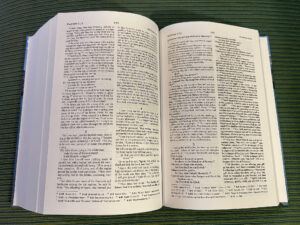
You’ll eventually want to read the entire Bible. However, if you’re just starting out, and have never read from the Bible before, it’s probably not a good idea to start at the beginning. As a new Christian, the Old Testament can get you mired down with its odd names, lengthy genealogies and monologs about unfamiliar weights and measurements.

The entire Old Testament is a foreshadowing of the coming of Jesus Christ. So, it’s much better for a new Christian to start by reading Continue reading

Nourishing Your Soul: The Value of Daily Bible Reading

Matthew 4:4 NLT, “But Jesus told him, “No! The Scriptures say, ‘People do not live by bread alone, but by every word that comes from the mouth of God.”

1 Peter 2:2 NLT, Like newborn babies, you must crave pure spiritual milk so that you will grow into a full experience of salvation. Cry out for this nourishment,

we’re reminded that life isn’t sustained solely by physical nourishment but also by the words from God’s mouth. Similarly, 1 Peter 2:2 compares our need for spiritual nourishment to that of a newborn craving milk.

Do not overlook the importance of feeding our souls through daily Bible reading.

Consider the analogy of going Continue reading

Ghosting vs No-Ghosting

Ghosting on Bible pages

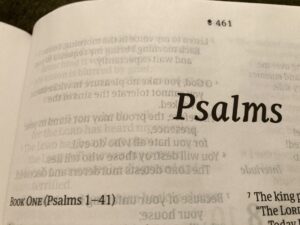
Expensive Bibles often use thin, delicate pages that are susceptible to a phenomenon known as ‘ghosting.’ Ghosting occurs when the text from the previous page subtly shows through onto the current page. For instance, while reading page 3, one might discern the faint impressions of text from page 2 through the translucent paper.
Continue reading

Why You Might Dislike the King James Bible

The King James Version (KJV) of the Bible holds a revered status among many Christians worldwide. Its historical significance and poetic language have made it a cornerstone of English literature. However, despite its popularity, I must admit that I harbor a certain degree of dislike for the King James Version, primarily due to its archaic and outdated language.

One of the fundamental reasons behind my dislike for the KJV Bible is its language. The English used in the KJV, while beautiful and rich in its time, has become increasingly difficult for modern readers to grasp. The thou’s, thee’s, and ye’s, along with other antiquated expressions, create unnecessary barriers to understanding the message of the Scriptures.

As a believer, I acknowledge the importance of engaging with the Bible regularly to deepen my faith and understanding. However, I find it counterproductive to wrestle with language that no longer resonates with contemporary speakers. Christianity faces numerous challenges in today’s world, and deciphering Elizabethan English should not be one of them.
Continue reading

The Value of Reading Christian Books


In the past I despised reading. It was a loathsome task for me.

I recall that between 2002 and 2006 it took me four years to read the entire Bible. Not because I was reading slowly and carefully and studying the scriptures diligently, but because I would read for a half hour a day over the course of two or three days and then not pick up the Bible again for three weeks.

I began to see my need for implementing personal self-discipline and afterward began reading the Bible with consistency and regularity even when I didn’t feel like it.
Continue reading